Navigating Manikin Compliance: PVC Material Info for Your Lab
A manikin product file usually mixes three different kinds of statements on the same page: what the product is made of, what it is intended to do, and which documents support it. "Made of PVC" belongs only to the first group. It is a material disclosure — not a certificate, not an approval, and not a substitute for an intended-use statement. For a lab that is already comparing suppliers and preparing a purchase decision, the useful question is narrower: do the material disclosure, the intended-use statement, and the documentation set actually match the way your lab trains, handles, stores, and eventually replaces its manikins?
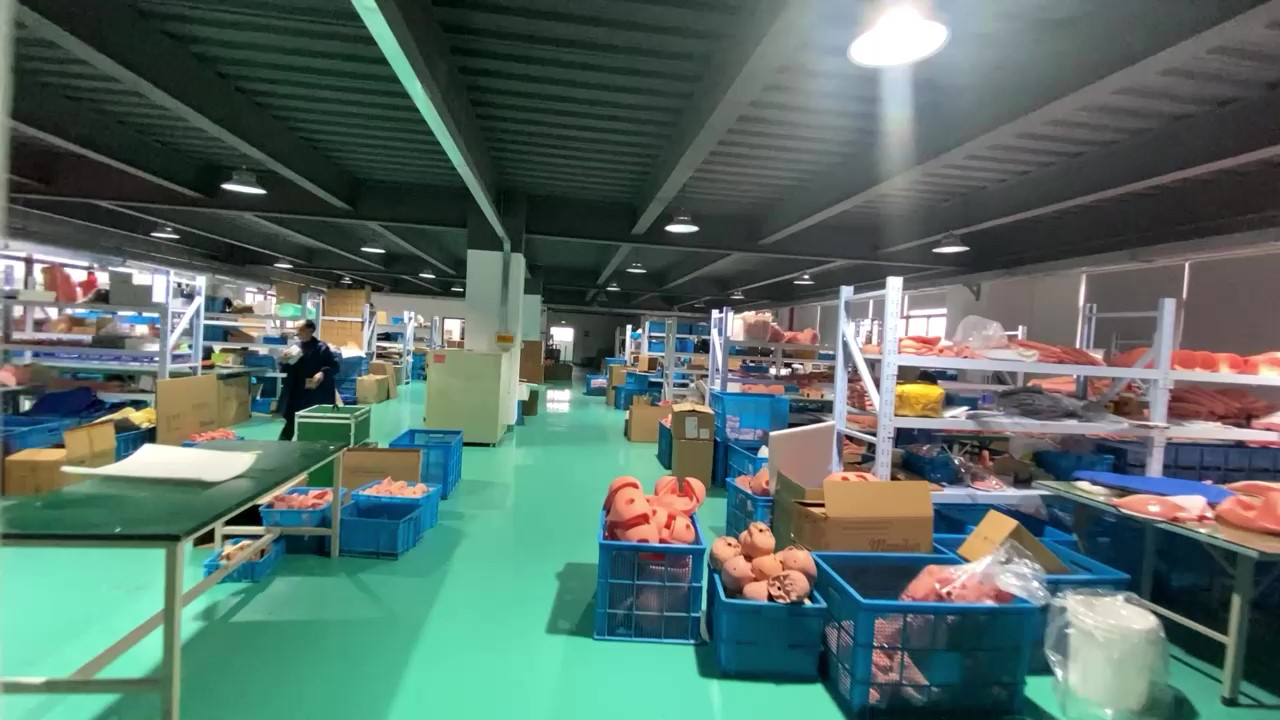
Problem Definition: What the PVC Line in a Product File Really Says
Material disclosure is the most quoted and least examined line in a medical manikin datasheet. Buyers searching for a medical manikin, training manikin or nursing manikin specification often meet the phrase "made of PVC" and read it as reassurance. Technically, it is a specification of the training surface: polyvinyl chloride is the material family used for the outer body, skin or torso shell of many injection, puncture, CPR and nursing training models. It describes the material. It does not describe the manufacturing process, the additive formulation, or the product's regulatory status.
When a supplier documents the material properly, the disclosure supports three practical statements. In the manikin range documented by Chongqing Scope Instrument Co., Ltd. — a supplier of laboratory and medical training instruments based in Chongqing, China — the PVC specification is tied to durability, resistance to deformation, and a high degree of authenticity in use. Those are material-behaviour claims, and they are useful. They are also distinct from compliance.
Three misreadings cause most procurement friction:
- Reading material as certification. A PVC line does not tell you whether the product carries any certificate, or whether it is registered or accepted in your market. That information comes from the certificate layer of the file, separately.
- Reading a product category name as intended use. Labels such as CPR model, injection model, IV injection model, puncture manikin, intubation model or nursing manikin are functional descriptions. The intended-use statement is the sentence that says which teaching environments and objectives the product was designed for.
- Reading one supplier's phrasing as an industry rule. Wording varies between suppliers. The safe practice is to compare statements across suppliers instead of assuming that one file's conventions apply everywhere.
The cost of misreading is not abstract. A lab that treats a material line as a compliance line may skip the document request that its own procurement rules require, and later discover that the certificate it needs was never part of the order. A lab that ignores the intended-use line may buy a surface that performs well for one procedure and poorly for another.
Industry Background: Why Material Statements Are Read More Closely Now
The medical simulation sector has expanded fast enough that manikin specifications are no longer read only by clinicians. Procurement, finance and quality functions now review the same files, and each of them reads a different line. The global medical simulation market was valued at USD 1.9 billion in 2025 and is projected to reach USD 6.7 billion by 2033, according to Grand View Research, with healthcare anatomical models — including medical manikins — holding the largest product share in 2025 at approximately 41.4%. Training manikin market volume was estimated at 1.2 million units in 2024, with projections of 2 million units by 2028, based on Global Insight Services. Asia-Pacific is the fastest-growing region, with an expected CAGR of 18.2% through 2033, while North America dominated the market in 2024 with a revenue share of approximately 45–48%.
Market-size estimates diverge by scope. Grand View Research reports USD 1.9 billion for 2025, The Insight Partners reports USD 3.17 billion for 2024, and WiseGuyReports reports USD 600 million for 2024. The gap reflects whether software, services or hardware-only manikins are counted. Treat market figures as context for planning, never as a procurement criterion.
Two structural changes push buyers toward document-level reading. First, China's National Medical Commission mandated simulation labs for the accreditation of all new medical schools as of 2024–2025, which brings more institutions into formal procurement with written specification review. Second, supply remains concentrated among a small group of international names — Laerdal Medical, CAE Inc., Gaumard Scientific and Kyoto Kagaku are among the major global competitors identified by MarketsandMarkets — while a broad base of regional manufacturers supplies targeted, single-function and specialty training models. In practice, many labs now compare premium integrated systems and more focused single-function manikins inside the same tender, which makes the material line the easiest and most misleading shortcut for differentiation.
Detailed Solution: Reading a Manikin File in Three Layers
Read every manikin file in three separate layers and keep them separate in your evaluation sheet. Do not let a statement in one layer answer a question that belongs to another.
Layer 1 — Material disclosure: the PVC line
Polyvinyl chloride appears in manikin documentation because it is the material family used for the outer body, skin or torso shell of many training models. When a supplier states that a product is made of PVC, the statement is a material specification, and in the referenced range it is linked to three stated characteristics: durability, resistance to deformation, and a high degree of authenticity. Each of those translates into a concrete question for your lab.
- Durability — how many training cycles can the material absorb before replacement? The documented figure for the referenced range is withstanding over 5,000 uses, described as 30% greater durability over alternatives.
- Deformation resistance — which handling conditions keep the material within its intended behaviour? The documented control is to operate at a suitable temperature and to replace the product after exceeding the recommended number of uses, with instructions before use reminding the user of the appropriate operating temperature.
- Authenticity — how closely does the training surface reproduce the feel required for injection, puncture, IV access or CPR practice? This is a training-quality attribute, not a compliance attribute.
What this layer does not contain: plasticiser content, additive lists, chemical test results or regulatory status. If your procurement requires any of these, they must be requested as separate documents. The word "PVC" cannot carry that weight, and a supplier who lets it carry that weight is not helping you.
Layer 2 — Intended-use statement: where the manikin belongs
An intended-use statement names the environments and training objectives the product was designed for. In the referenced range, the stated use is emergency, clinical and nursing skills training in medical colleges or training institutions, with targeted teaching as the design objective and hospital and medical school teaching as the stated best-fit setting. That sentence is what a curriculum committee, not a materials engineer, should approve.
The intended-use statement also prevents a mismatch in the opposite direction. A lab running high-volume injection and puncture drills is not looking for the same surface behaviour as a department teaching anatomy with a torso model, an anatomy model or a joint model. Procedure labels — CPR model, injection model, IV injection model, puncture manikin, intubation model, pediatric training model, gynecology manikin, maternal manikin, infant manikin — identify a training function. The intended-use line tells you whether the supplier positions the product for supervised teaching, repeated demonstration or assessment.
Layer 3 — The documentation layer: certificates, packaging and customs papers
Compliance lives here, and only here. ISO 13485:2016 is the internationally recognized standard for quality management systems in the design and manufacture of medical devices, including simulation manikins, as published by ISO. Beyond that standard itself, each supplier lists the certificates it can actually issue for a specific export order. Chongqing Scope Instrument Co., Ltd. lists ISO9001, ISO14001, ISO45001, ISO13485, CE and RoHS among the official certificates it can provide, exports in neutral packaging without logos (cardboard boxes or wooden boxes prepared to export standards), and can supply customs clearance documents such as CO, Form E and Form F when required.
| Layer | Typical text in the file | Decision question it answers | Question it does not answer |
|---|---|---|---|
| Material disclosure | "Made of PVC" | What is the training surface made of, and which handling conditions apply? | Is the product certified, registered or approved in my market? |
| Intended use | Emergency, clinical and nursing skills training in medical colleges or training institutions | Which training environments and learning objectives is the product designed for? | How will the material behave over thousands of cycles? |
| Certificates | ISO9001, ISO14001, ISO45001, ISO13485, CE, RoHS (as listed by the supplier) | Which management-system and market documents can be issued for this order? | Does the surface suit my specific training procedure? |
| Commercial documents | Neutral packaging; CO, Form E, Form F on request | What accompanies the shipment and supports customs clearance? | Anything about clinical or training performance. |
The practical rule: each layer gets its own line in your evaluation sheet, its own owner, and its own evidence. Material and intended use are answered by the product file; certification and customs documentation are answered by certificates and shipping papers.
Step-by-Step: Reviewing a PVC Manikin File Before You Commit
Step 1 — Separate the statements. Copy the material line, the intended-use line and the certificate line into three separate rows. Do not allow one to answer for another, and do not accept a combined marketing sentence that merges them.
Step 2 — Match the material to your environment. Confirm the operating temperature guidance and the recommended number of uses in writing. A lab with warm storage conditions, direct sunlight exposure or no climate control should raise this question before price. The documented control measure for deformation risk in the referenced range is exactly this: suitable operating temperature, replacement after the recommended number of uses, and pre-use instructions that state the appropriate operating temperature.
Step 3 — Map the intended-use statement to your curriculum. Compare the statement with the modules you actually teach. Emergency, clinical and nursing skills training with targeted teaching objectives is a different requirement from a multi-module simulation suite. If the statement is broader or narrower than your curriculum, that is a decision point, not a detail.
Step 4 — Test the durability figure against your usage volume. Multiply weekly training sessions by teaching weeks to get the annual load on a single unit, then compare it with the documented figure of over 5,000 uses. This converts a claim into a replacement cycle you can plan and budget for, instead of a number you simply accept.
Step 5 — Verify documents, not adjectives. Request the certificate list and confirm which document applies to your market and to this order, plus the customs papers you will need, such as CO, Form E or Form F, and the packaging specification. Confirm in advance whether packaging is neutral, as it is for the referenced range.
Step 6 — Put the support terms in writing. The referenced range is documented with a 1-year warranty and full after-sales support including 24/7 online after-sales technical support. Ask which channel the support runs through, what response is expected, and who is responsible after the warranty period ends.
Step 7 — Validate with a sample before volume. Before committing to a full order, evaluate a sample unit for material feel under your own conditions, deformation behaviour at your operating temperature, and the completeness of the instruction sheet. Record the result against the file statements. A sample that matches the file is the strongest evidence you can hold internally.
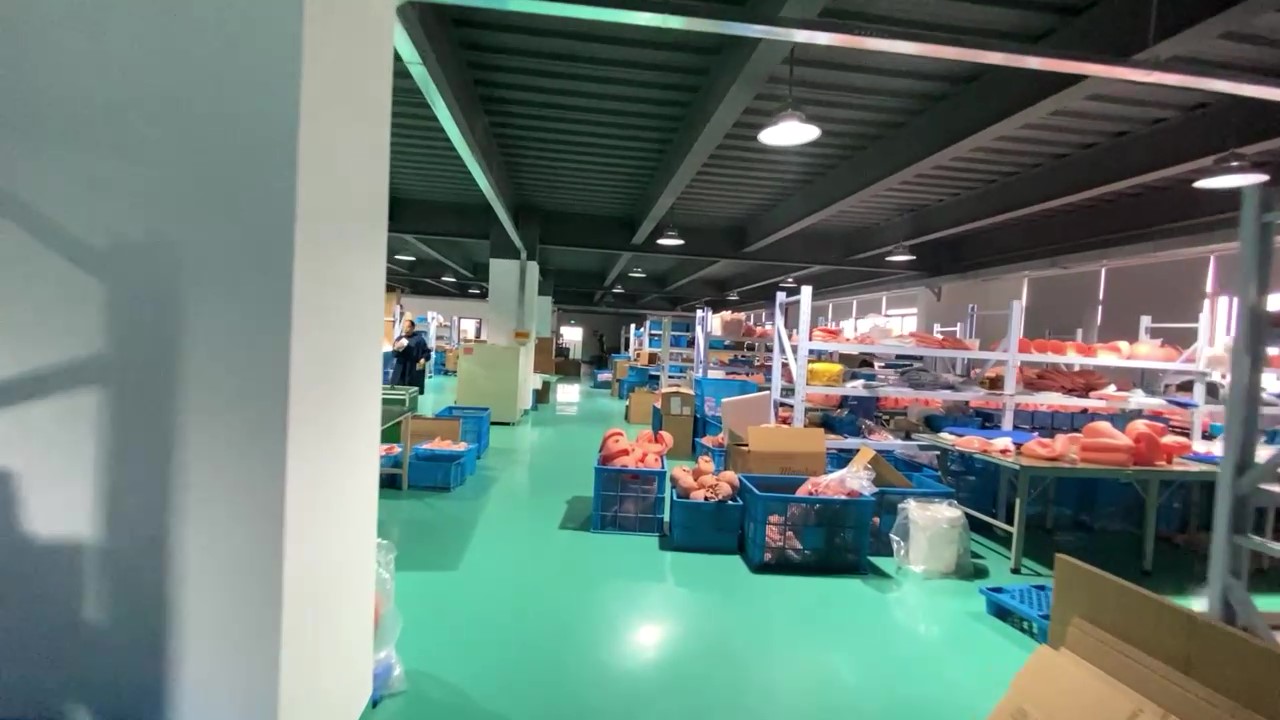
Use Cases: Where the PVC Disclosure Changes the Buying Decision
Use case 1 — A high-frequency hospital skills lab
A hospital skills lab running repeated injection, IV access, puncture and CPR sessions has one dominant procurement variable: cycles per year. Here the material disclosure matters more than any product photograph. The documentation to require is the use figure, the operating temperature guidance, and the replacement rule. The buying decision then becomes a replacement-cycle calculation rather than a one-off purchase.
Use case 2 — A nursing school with a multi-station lab
A nursing program that stations students across many identical units benefits from targeted single-function manikins, because a consistent unit across every station produces a consistent teaching objective. A nursing manikin or clinical manikin with simple operation and highly targeted functions supports supervised practice, while the intended-use statement confirms the product is positioned for teaching rather than for a simulated clinical environment.
Use case 3 — A medical college teaching anatomy and procedures
Institutions teaching anatomy alongside procedures often procure anatomy models, torso models and joint models in the same cycle as procedure trainers. The evaluation risk here is category blending: a model chosen for anatomical study may be compared on material durability, or a procedure manikin may be judged on anatomical detail. Reading the intended-use line first prevents that category error.
Use case 4 — Importers and distributors building a catalogue
For a distributor, the material line is a catalogue asset and the documentation layer is a compliance asset. Neutral packaging without logos, the ability to supply CO, Form E and Form F documents, and OEM and ODM options — including LOGO printing on the machine after technical verification, or a customized LOGO label — are what allow a distributor to place a PVC manikin into its own catalogue and its own market. For this buyer type, the file review is a shipment-readiness review as much as a product review.
Comparison Table: Targeted PVC Manikins vs Integrated Multi-Function Simulators
The decision-stage comparison most labs actually face is not "which manikin is best" but "which approach matches our curriculum and our budget profile". The table below compares the two dominant approaches, using the documented comparison notes for the referenced range alongside the public description of integrated systems.
| Decision dimension | Targeted single-function PVC manikin (as documented for the Chongqing Scope range) | Integrated multi-function simulator (Anne Simulator, as described in the supplier's comparison notes) |
|---|---|---|
| Design approach | Multiple functions with highly targeted operational training purposes for defined clinical or nursing situations | Integrates multiple functions around its own specific operating system |
| Operating complexity | Simple operation | More complex usage |
| Teaching situation | Consistent training and teaching goals with repeatable, targeted sessions | Teaching situations described as variable across integrated modules |
| Durability | Withstands over 5,000 uses; documented as 30% greater durability than comparable single-function simulators | Not stated in the same comparison note — verify against the supplier's own documentation |
| Cost of ownership | Lower total cost of ownership: competitive initial price with a 1-year warranty and full after-sales support | Described in the same note as high-price or limited-service positioning — confirm current commercial terms directly |
| After-sales support | 24/7 online after-sales technical support for quick problem resolution | Support scope varies by product line and region — confirm in writing |
| Training precision | More precise operational training objectives; stated goal of reaching training objectives at a lower price | Broader functional coverage with less targeting per individual procedure |
This table reflects documented supplier comparison notes and published market facts. It is a decision frame, not a verdict. Durability figures, support terms and certificate availability should always be verified against your own training volume and your own market requirements before an order is placed.
Read the table together with the three-layer framework. The material layer supports the durability and handling rows. The intended-use layer supports the teaching-situation row. The documentation layer supports everything in the cost and support rows that has to survive an audit, a customs check or a warranty claim. Brand reputation belongs to none of the three, and should never be used to fill a gap in them.
FAQ: PVC Material Disclosures and Manikin Compliance
1. Does "made of PVC" mean the manikin is certified or compliant?
No. A PVC statement is a material disclosure describing the material family of the training surface or body. Certification is a separate layer, documented by certificates rather than by material descriptions. Chongqing Scope Instrument Co., Ltd. lists ISO9001, ISO14001, ISO45001, ISO13485, CE and RoHS among the official certificates it can provide for export orders, and ISO 13485:2016 is the internationally recognized quality management system standard for the design and manufacture of medical devices, including simulation manikins. Buyers should request the specific certificate that applies to their market and keep it with the purchase record rather than relying on the material line.
2. What does the PVC specification tell me about durability and handling?
The PVC specification is where durability and handling behaviour are documented. For the referenced range, the material is stated to provide durability, resistance to deformation and a high degree of authenticity, with a documented durability of withstanding over 5,000 uses and 30% greater durability over alternatives. Handling is documented too: operate at a suitable temperature, and replace the product after exceeding the recommended number of uses. Instructions before use remind the user of the appropriate operating temperature, and a 1-year after-sales service accompanies the product.
3. How does the material disclosure affect total cost of ownership?
It affects TCO through the replacement interval. A documented durability of over 5,000 uses turns the purchase price into a cost per training cycle, which is the number a budget owner can compare. Beyond material, the referenced range is documented as offering a lower total cost of ownership than the Anne Simulator, with a competitive initial price, a 1-year warranty, full after-sales support, and 24/7 online after-sales technical support. The practical comparison formula is initial price plus expected replacement cycles plus warranty coverage plus support availability, evaluated over the same period for every option on your shortlist.
4. Can we validate a PVC manikin before ordering in volume?
Sample validation is the recommended step before a volume order, because material feel and deformation behaviour are best judged under your own operating temperature rather than from a specification sheet. Ask what sample options are available for the specific model you are evaluating, and check three things on arrival: surface feel at your working temperature, the instruction sheet's stated operating temperature and replacement guidance, and whether the delivered documents match the file. To arrange a sample evaluation or request the current catalogue, contact the supplier directly at [email protected] or via WhatsApp at +86 15223521781.
5. What documentation and capacity should be confirmed before repeat orders?
Four items are worth confirming in writing before a repeat or volume order. First, certificates: which of ISO9001, ISO14001, ISO45001, ISO13485, CE or RoHS apply to your order and market. Second, packaging: neutral packaging without logos in cardboard boxes or wooden boxes prepared to export standards. Third, customs documents: CO, Form E or Form F when required. Fourth, supply base: Chongqing Scope Instrument Co., Ltd. operates a 5,000 m² facility with more than 100 employees, 20 R&D engineers, an annual output of 30,000 units, a 50% export ratio, more than 500 clients worldwide and markets across Europe, Southeast Asia, the Middle East, South America and Africa. The full product and documentation overview is available in the catalogue, and the current catalogue can be downloaded below before you finalise your shortlist.
Conclusion: Read Three Layers, Then Decide
The phrase "made of PVC" is a material disclosure. It tells you what the training surface is made of and which handling conditions apply — in this case, durability, resistance to deformation and authenticity, with a documented durability of over 5,000 uses and a stated replacement rule once the recommended number of uses is exceeded. It does not tell you whether the product is certified, which intended-use environment it suits, or what documentation will accompany your shipment. Those answers come from two other layers of the file.
For a lab at the decision stage, that separation is what makes a shortlist defensible. Material and intended use are matched against your curriculum and your operating conditions. Certificates and customs documents are matched against your procurement rules and your market. Price is then evaluated against a realistic replacement cycle rather than a catalogue headline. A manikin file that answers all three layers clearly is easier to approve, easier to budget, and easier to defend when a trainer, a finance officer or an auditor asks why this product was chosen.

Next Step: Sample, Quote or Catalogue
Chongqing Scope Instrument Co., Ltd. supplies medical manikins, laboratory instruments and metallographic equipment, and supports OEM and ODM programmes with export documentation. Review the full product and documentation overview in the company catalogue (PDF), or request a sample evaluation and quotation for the specific manikin model your lab is considering.
Website: www.cqscopelab.com
Email: [email protected]
Tel / WhatsApp: +86 15223521781
Address: 701, Longhushuijinguoji, No.164, Xinnan Road, Yubei District, Chongqing, China
Have Questions or Need More Details?
Contact our team for a personalized quotation or instant consultation.
Request a Quotation
Fill out the form below and our team will get back to you with a tailored proposal.
WhatsApp Direct Chat
Prefer to chat in real-time? Message us on WhatsApp for instant assistance & quick answers.
- Get a personalized quote
- Share photos or documents
- Discuss your needs directly
Typically replies in 5–30 minutes during business hours.