
CPR480 vs CPR160: Choosing Between Feedback Levels for Your Training Room
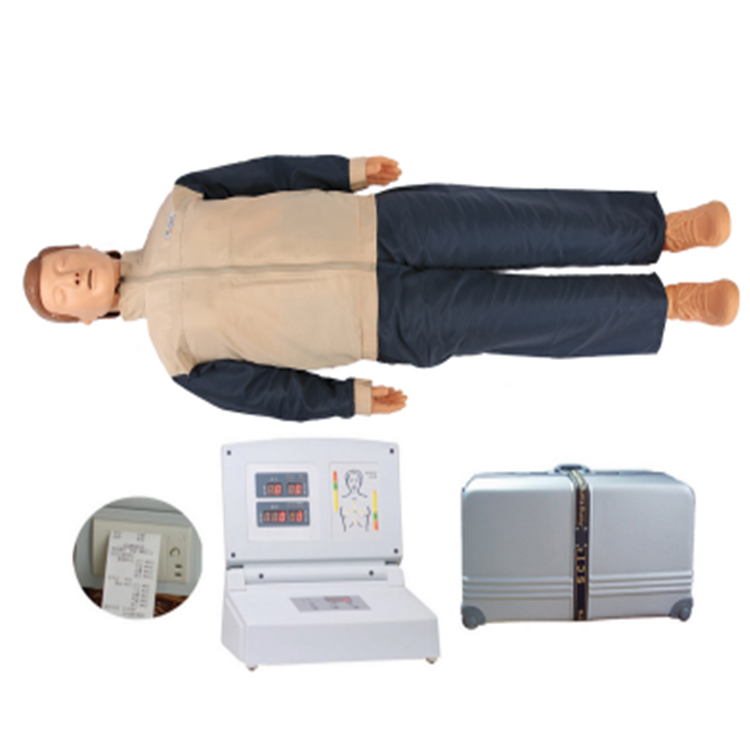
Cover: SC-CPR480 CPR Model — adult full-body CPR training manikin with dynamic compression feedback (Chongqing Scope Instrument Co., Ltd.).
Two CPR manikins from the same Chongqing Scope Instrument Co., Ltd. catalogue keep appearing on the same shortlist when a training centre standardises its resuscitation room: the SC-CPR480 and the SC-CPR160. They share a manufacturer, a PVC build, and the same five-cycle 30:2 training protocol. What separates them is the level of feedback each one gives a trainee, and the patient population each is built for.
This is a narrower decision than a general CPR manikin comparison. It is not about which model is superior. It is about which feedback layer your curriculum actually consumes. A room that teaches adult basic life support and issues printed assessment records has a different requirement from a room that teaches two-rescuer infant resuscitation with age-specific depth and volume thresholds.
Answer first: SC-CPR480 is the adult full-body option, with three-band compression depth feedback (green 5–6 cm, yellow under 5 cm, red over 6 cm), ventilation feedback across 500–1000 ml, training and assessment operation modes, and thermal score printing. SC-CPR160 is the infant option, with population-specific thresholds (correct compression ≥ 4 cm, correct tidal volume 30–50 ml), a 30:2 single-rescuer or 15:2 two-rescuer ratio, and a high-end computer digital monitor. Choose by patient population first, then by how much assessment documentation you need.
The Feedback Decision You Are Actually Making
In CPR manikin procurement, "feedback level" is usually treated as a single on or off feature. In practice it is three separate layers, and the two models do not cover them identically.
Layer 1 — real-time corrective feedback. Indicator lights, alarms and voice prompts that tell a trainee what is wrong while the compression is happening. Both models provide this, but through different mechanisms: the SC-CPR480 uses a dynamic barcode indicator light, the SC-CPR160 uses indicator lights combined with an alarm.
Layer 2 — quantitative feedback. Digital counting and numeric thresholds that tell a trainee how much. Both models list digital counting displays and real-time digital count readouts. The numbers themselves are not interchangeable, because adult and infant targets are different.
Layer 3 — documentation feedback. Output that lets an instructor score, archive or certify performance after the exercise. This is where the two specifications diverge most clearly: the SC-CPR480 product data lists assessment operation and thermal score printing, while the SC-CPR160 specification lists training operation and assessment operation with a computer digital monitor.
A buyer who asks only "which one has better feedback" will get an ambiguous answer. A buyer who asks "which feedback layer does my curriculum require, and for which patient population" gets a decision.
Why Feedback Granularity Became a Budget Line
CPR manikins sit inside a simulation category that has been steadily reclassified from a teaching accessory to a capital item. The published figures explain why feedback tier selection now appears in budget discussions:
- The medical training manikin segment was valued at USD 600 million in 2024 and is expected to grow to USD 1.2 billion by 2035 (WiseGuyReports, 2026).
- The wider medical simulation market was valued at USD 2.17 billion in 2024 and is projected to reach USD 4.48 billion by 2030 (MarketsandMarkets, 2025).
- Anatomical models accounted for approximately 41.4% of the simulation product segment in 2025 (Grand View Research, 2026).
- Purchase prices across the manikin category span from around USD 500 for low-fidelity basic CPR models to over USD 85,000 for AI-driven high-fidelity patient simulators (Grand View Research, 2026).
The implication for a training room is straightforward. The largest share of category volume sits in the low-to-mid fidelity range, where the difference between two models is measured in feedback specificity rather than in raw capability. Paying for a higher tier only creates value if the extra feedback layer is actually used by instructors and consumed by learners. These are third-party research figures; treat them as a planning frame and confirm everything against model-specific quotations.
The Two Models Under the Feedback Lens
SC-CPR480 — adult full-body feedback with three-band depth reporting
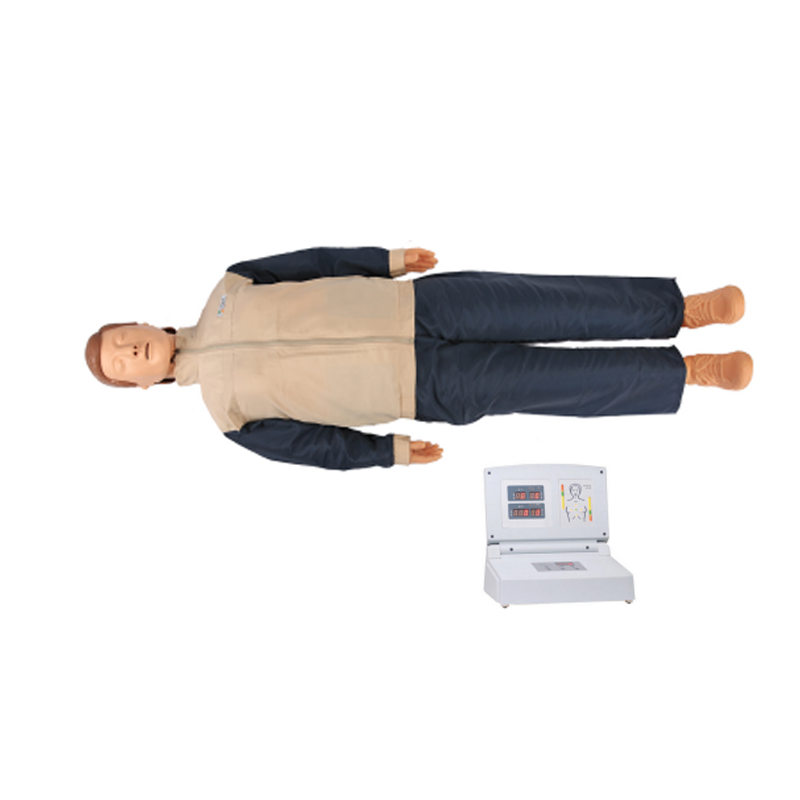
SC-CPR480 CPR Training Model — adult full-body resuscitation trainer with barcode depth and tidal volume feedback.
The SC-CPR480 external feedback design is built around a dynamic barcode indicator light. During manual chest compressions, the barcode displays pressing depth in three bands: the correct depth of 5–6 cm is shown by the green light, insufficient depth (less than 5 cm) by the yellow light, and excessive depth (greater than 6 cm) by the red light. That is a continuous visual reference rather than a pass or fail signal.
Alongside the depth bands, the unit provides a digital counting display that records the specific reason for a compression error — excessive pressing force, insufficient pressing force, incorrect pressing position, and the correct number of compressions. Language prompts give the same error cause in spoken form, and the language prompt setting and volume can be adjusted or switched off entirely.
Ventilation feedback follows the same logic. The dynamic barcode indicator light displays tidal volume, with the correct range of 500–600–1000 ml shown in green, and volumes that are too small or too large shown through the yellow or red barcode movement. A counting display records the reason for a blowing error — volume too large, blowing force too small — together with the number of correct breaths.
Protocol parameters are the standard ones: a compression to artificial respiration ratio of 30:2 for single or double rescuers, five cycles of 30 compressions and 2 breaths, and an operating frequency of at least 100–120 times per minute per the 2020 international standard referenced in the specification. The operation method covers both training operation and assessment operation, with universal assessment and customized assessment available. Operation time is measured in seconds.
Two further feedback functions are documented on the SC-CPR480 and not on the SC-CPR160. Pupil response can be checked: before an assessment operation and after it is completed, the model simulates the automatic dynamic change of pupils from dilation to contraction. Carotid artery reaction can also be checked — by hand touch during the compression operation, simulating automatic pulsation, and again after the assessment procedure is complete. Score printing is available through thermal printing of long and short transcripts.
The standard configuration ships with an advanced resuscitation full-body mannequin, an advanced display controller, a luxury hand-pushed human body hard plastic box, a resuscitation operation pad, power adapter, data cable, a barrier mask box of 50 sheets, four sets of replaceable lung sac device, one changeable face skin, two sheets of thermal printing paper, the 2020 latest international operation guide CD, a first aid manual, an instruction manual, and a warranty card with certificate of conformity.
SC-CPR160 — infant feedback with population-specific thresholds
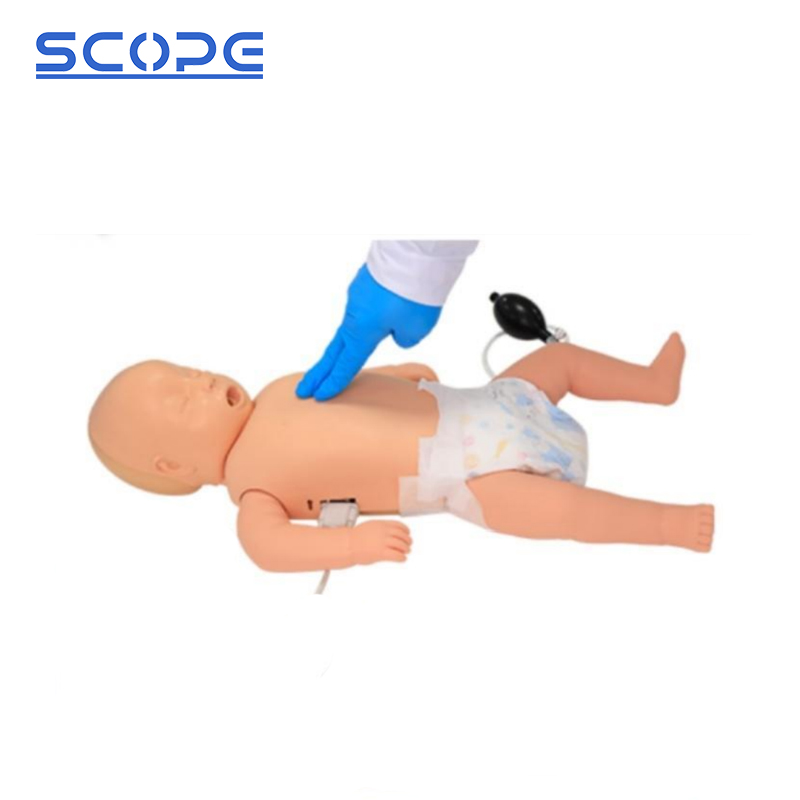
SC-CPR160 CPR Infant Model — infant resuscitation trainer with digital counting, indicator lights and voice prompts.
The SC-CPR160 is listed as an infant manikin within the CPR manikin category, and its feedback thresholds are set for that population. Compression feedback combines a digital counting display, an indicator light display and a voice prompt function. Correct pressing position and incorrect pressing position are distinguished by indicator light and alarm, with real-time digital counting and a voice prompt explaining the specific cause of the error.
Compression intensity is banded at a different point from the adult model: correct compression in the ≥ 4 cm area and incorrect compression in the < 4 cm area are shown by indicator light with error alarm, supported by correct and incorrect real-time digital count display and a voice prompt giving the specific reason for the error. This is the substantive technical difference between the two — an infant depth threshold is not an adult depth threshold.
Ventilation feedback works the same way at infant volumes. Insufflated tidal volume below 30 ml–50 ml triggers indicator light display and alarm with a real-time digital count and a voice prompt naming the cause. A tidal volume accurately delivered between 30 ml and 50 ml is confirmed by indicator light with real-time digital counting. If the insufflated tidal volume is too fast or too large and gas enters the stomach, the indicator light displays and alarms, the digital count updates in real time, and the voice prompt states the specific reason.
The compression to artificial respiration ratio supports both single-rescuer and two-rescuer infant protocols: 30:2 for a single person or 15:2 for two rescuers, over a total of five cycles. Operating frequency is again at least 100–120 times per minute per the 2020 international standard referenced in the specification. Operation method covers training operation and assessment operation. A hand-held ball is squeezed to simulate the beating of the brachial artery — the infant-appropriate pulse check rather than the carotid check documented on the adult model.
Power is handled differently as well. The SC-CPR160 works from a 220 V power supply with the output stepped down to 5 V through a voltage regulator, and it ships with a high-end computer digital monitor. The standard configuration includes the advanced infant CPR model, the high-end computer digital monitor, a luxurious human body hard plastic box, a box of CPR barrier masks (50 sheets), four sets of replaceable lung sac device, the 2020 latest international operation guide CD, a first aid manual, an instruction manual, and a warranty card with certificate of conformity.
What actually differs when you compare the two
Stripped of catalogue language, the gap between these two CPR manikins comes down to four documented points:
- Patient population. SC-CPR480 is an adult full-body mannequin; SC-CPR160 is an infant manikin.
- Threshold values. Adult compression depth is banded at 5–6 cm with tidal volume at 500–1000 ml; infant compression depth is banded at ≥ 4 cm with tidal volume at 30–50 ml.
- Reporting depth. The SC-CPR480 specification adds assessment operation with universal and customized assessment modes, operation time in seconds, pupil response checking, carotid artery reaction checking, and thermal score printing of long and short transcripts.
- Pulse simulation. Carotid pulsation on the adult model versus hand-squeezed brachial artery simulation on the infant model.
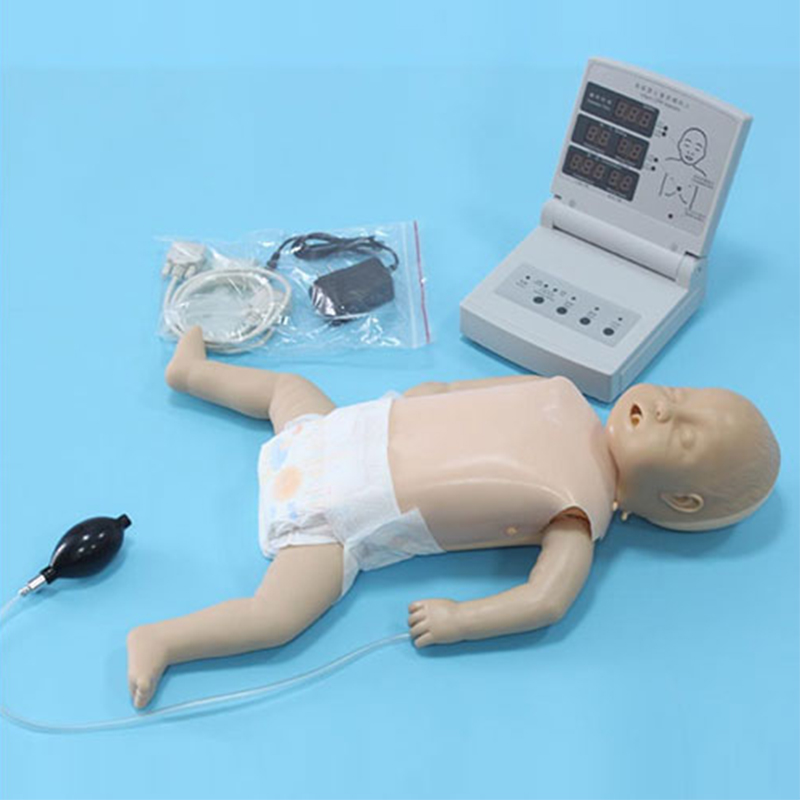
SC-CPR160 Infant CPR Manikin — digital monitor output for compression, hand position and tidal volume feedback.
A Five-Step Framework for Choosing Between the Two
Rather than comparing feature counts, work through the decision in the order a curriculum actually runs.
- Define the patient population trained in the room. If the room runs adult BLS and ACLS-style skills, the SC-CPR480 is the relevant model. If it runs neonatal or infant resuscitation modules, the SC-CPR160 is the relevant model. If both, you are buying two feedback systems, not one.
- Decide which feedback layer you need. Real-time corrective feedback only, quantitative counting, or documentation output that can be printed and archived. The SC-CPR480 specification is the one that lists thermal score printing and assessment operation modes.
- Check threshold alignment against your protocol. Confirm that the depth band and tidal volume band match the guidelines your institution teaches. Adult values of 5–6 cm and 500–1000 ml and infant values of ≥ 4 cm and 30–50 ml are not interchangeable between courses.
- Confirm the assessment workflow. Assessment operation exists on both models, but the SC-CPR480 adds universal assessment, customized assessment and printed transcripts, while the SC-CPR160 relies on its high-end computer digital monitor. Match this to how your instructors currently score and record learners.
- Validate the commercial terms before committing.Chongqing Scope Instrument Co., Ltd. publishes a minimum order quantity of 20 units, a production lead time of 30–45 days, a monthly capacity of 3000 units, and a one-year online warranty, with ODM customization available for appearance and functions.
Add a verification step between four and five if your procurement process allows it: request one unit of each model and run your own instructors against the thresholds before scaling the order.
Matching Feedback Level to Real Training Room Scenarios
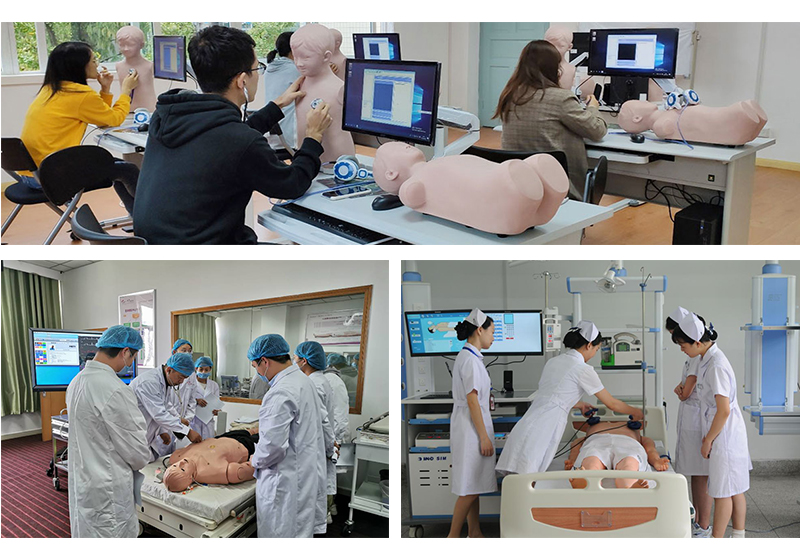
Medical Manikin Application — CPR manikins deployed in a medical school teaching environment.
Medical school adult life support module. The requirement is high trainee throughput with defensible assessment records. The SC-CPR480 alignment matters here: three-band depth feedback shortens instructor correction time, and thermal transcripts create an archive of assessment results without manual note-taking.
Nursing and pediatric modules. The requirement is infant-specific technique: shallow depth, low tidal volume, two-rescuer coordination. The SC-CPR160 threshold bands at ≥ 4 cm and 30–50 ml match this directly, and the 15:2 two-rescuer ratio supports the coordination drills that adult models cannot replicate.
Hospital in-service refresher room. Often the requirement is both: adult CPR competence maintenance and periodic pediatric refresher. A mixed room can justify one of each rather than trading feedback specificity for a single compromise specification.
Distributor demonstration room. If you resell rather than teach, the deciding factor is breadth of demonstrable feedback. Holding both models lets a distributor show adult three-band depth reporting and infant threshold feedback from the same supplier, which shortens the customer conversation.
One reference point from the manufacturer record: a medical manikin distributor in India ordered 500 units for medical teaching use. After one year of operation the result was recorded as stable operation, with the order highlighted as customized and durable. Application data for this product family lists medical school teaching, manual operation, an ambient temperature range of 0–35°C, and a handling requirement to keep the room temperature constant.
SC-CPR480 vs SC-CPR160 — Documented Feature Comparison
| Feature | SC-CPR480 | SC-CPR160 |
|---|---|---|
| Product type | CPR Model (CPR Manikin) | Infant Manikin (CPR Manikin) |
| Training population | Adult, full-body mannequin | Infant |
| Compression depth feedback | Dynamic barcode light — green 5–6 cm correct, yellow under 5 cm, red over 6 cm | Indicator light — correct ≥ 4 cm, incorrect < 4 cm, with error alarm |
| Hand position feedback | Incorrect pressing position recorded in the digital count and error log | Wrong position indicator light plus alarm and real-time digital count |
| Ventilation volume feedback | Barcode light — correct 500–600–1000 ml in green; too small or too large in yellow or red | Indicator light — 30–50 ml correctly displayed; outside range alarmed |
| Voice prompts | Chinese voice prompts; language prompt and volume adjustable, or switched off | Voice prompt function stating the specific cause of the error |
| Digital counting display | Yes, with recorded error reasons | Yes, real-time digital count display |
| Compression : respiration ratio | 30:2 single or double rescuer | 30:2 single person or 15:2 double rescuer |
| Operation cycle | Five cycles of 30 compressions and 2 breaths | Five cycles of 30 compressions and 2 breaths |
| Operating frequency | At least 100–120 times/min, 2020 international standard | At least 100–120 times/min, 2020 international standard |
| Operation method | Training operation; assessment operation (universal assessment, customized assessment) | Training operation; assessment operation |
| Operation time recording | Operation time measured in seconds | Not listed in the published product specification |
| Score printing | Thermal printing of long and short transcripts | Not listed in the published product specification |
| Pupil response simulation | Automatic dynamic change from dilation to contraction before and after assessment | Not listed in the published product specification |
| Pulse simulation | Carotid artery reaction: manual touch check plus automatic pulsation and post-assessment evaluation | Hand-held ball simulates the beating of the brachial artery |
| Power | Power adapter and data cable included | 220 V supply, output stepped to 5 V through a voltage regulator |
| Material | PVC | PVC |
| Key standard accessories | Full-body mannequin, display controller, hard case, resuscitation pad, adapter, data cable, 50-sheet barrier mask box, 4 lung sac sets, 1 face skin, 2 thermal paper sheets, CD, manuals, warranty card | Infant CPR model, high-end computer digital monitor, hard case, 50-sheet barrier mask box, 4 lung sac sets, CD, manuals, warranty card |
Table compiled from the published Chongqing Scope Instrument Co., Ltd. product specifications for SC-CPR480 and SC-CPR160. Values marked as not listed are absent from the product specification and are not claims about the physical unit.
Frequently Asked Questions
What certifications should a buyer verify before purchasing SC-CPR480 or SC-CPR160?
Chongqing Scope Instrument Co., Ltd. holds ISO9001, ISO14001, ISO45001, ISO13485, CE, and RoHS certifications. Because certification scope is defined per product family, buyers should request the certificate copies together with the quotation and confirm that the specific model being ordered is covered.
Can the feedback functions or the appearance of these CPR manikins be customized?
ODM production is available, covering customization of the appearance and functions of the product. Customization is subject to a quantity requirement, and the published minimum order quantity for manikin orders is 20 units.
How should a training centre budget for a higher feedback level?
Budget by feedback layer rather than by feature count. Published market research places manikin purchase prices between roughly USD 500 for low-fidelity basic CPR models and over USD 85,000 for AI-driven high-fidelity patient simulators, so the spread across tiers is far wider than the difference between two models inside the same tier. Define whether you need real-time corrective feedback, quantitative counting, or printed documentation, then request a model-specific quotation.
Can we evaluate a manikin before placing a full order?
Yes. Sample and quotation requests can be raised directly with Chongqing Scope Instrument Co., Ltd. by email at [email protected] or by WhatsApp on +86 15223521781, so the feedback thresholds and monitor behaviour can be checked against your own curriculum before committing to a bulk order.
What are the order quantity, production lead time and warranty terms?
The published minimum order quantity is 20 units, production lead time is 30–45 days, monthly capacity is 3000 units, and after-sales cover is a one-year online warranty. To move forward, download the product brochure at https://cdn.socialarks.com/sbsp/24782/common/2026/0512/6a02d2f8005e4.pdf or send your training-room specification to [email protected] for a model recommendation and quotation.
Conclusion: Match the Feedback Layer, Then the Model
The SC-CPR480 and the SC-CPR160 are not two versions of the same product at different price points. They are two feedback systems built for two different patient populations. The adult SC-CPR480 reports compression depth in three bands, tracks ventilation across 500–1000 ml, adds pupil and carotid feedback, and closes the loop with assessment operation and thermal score printing. The infant SC-CPR160 reports against infant thresholds — ≥ 4 cm depth and 30–50 ml tidal volume — and supports the 15:2 two-rescuer ratio that adult models do not.
For most training rooms the decision resolves in the first step of the framework: name the population you teach. Everything after that — assessment workflow, documentation needs, order quantity and lead time — is confirmation rather than comparison. If you teach adults and need archived assessment output, the SC-CPR480 specification is the closer match. If you teach infants, no amount of adult feedback depth substitutes for correct infant thresholds.
Chongqing Scope Instrument Co., Ltd. is a supplier of laboratory and medical training instruments based in Chongqing, China, producing CPR, clinical and nursing manikins under the Chongqing Scope brand. Its product certifications include ISO9001, ISO14001, ISO45001, ISO13485, CE, and RoHS. More information is available at www.cqscopelab.com.
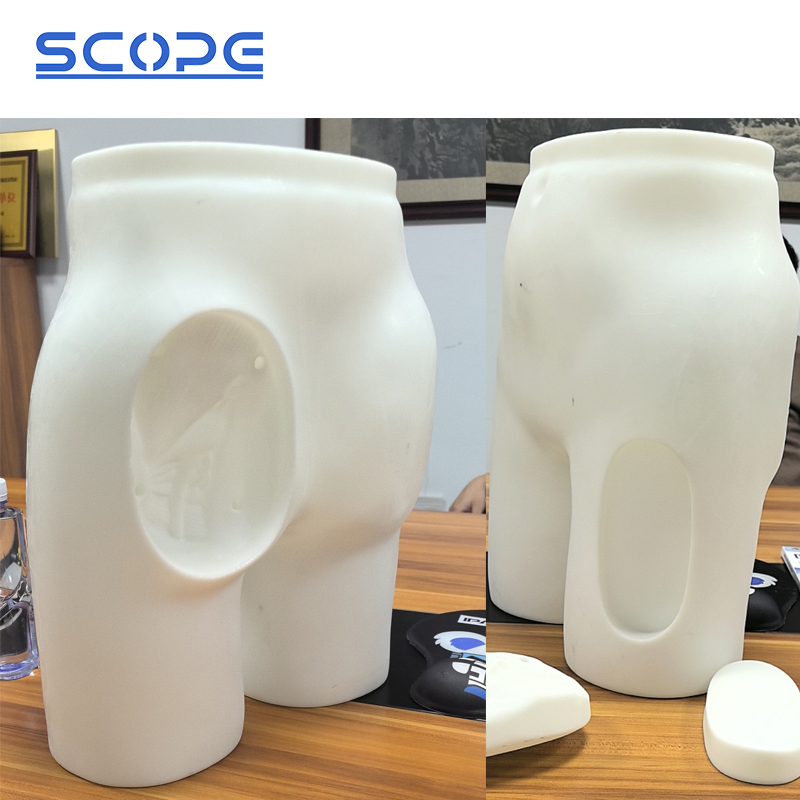
Chongqing Scope ODM Customized — appearance and function customization for manikin orders from 20 units.
Next step: send your training-room profile — patient population, assessment method and expected annual intake — and ask for the SC-CPR480 or SC-CPR160 specification sheet and sample terms.
Email [email protected] | WhatsApp +86 15223521781 | Brochure: download here
Have Questions or Need More Details?
Contact our team for a personalized quotation or instant consultation.
Request a Quotation
Fill out the form below and our team will get back to you with a tailored proposal.
WhatsApp Direct Chat
Prefer to chat in real-time? Message us on WhatsApp for instant assistance & quick answers.
- Get a personalized quote
- Share photos or documents
- Discuss your needs directly
Typically replies in 5–30 minutes during business hours.