
Manikin Supplier Capability & Delivery Assurance Audit
Manikin Supplier Capability & Delivery Assurance Audit
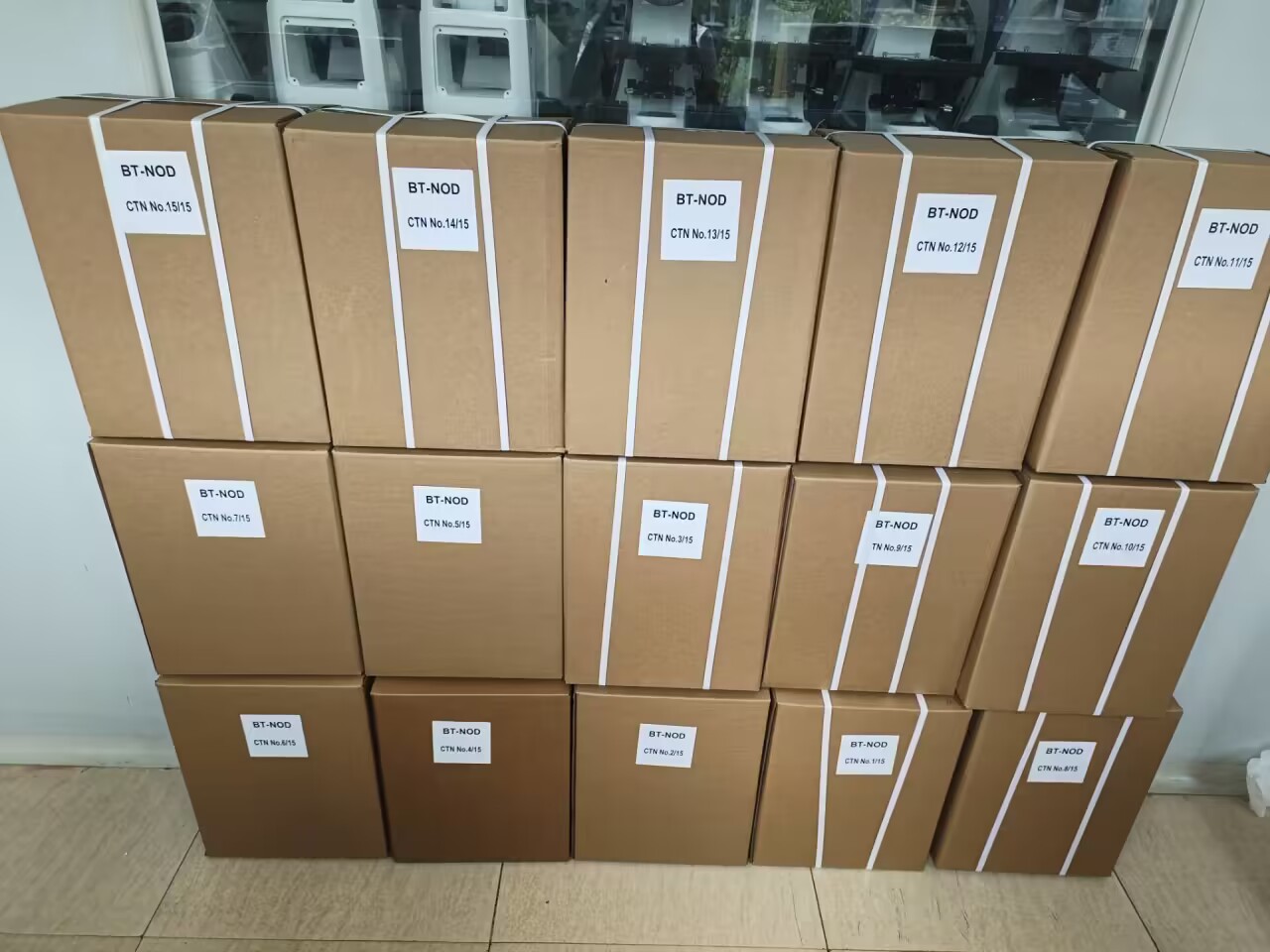
Manikin orders are won on capability and lost on delivery documentation. Packaging specification is part of the audit, not an afterthought.
A medical manikin supplier can pass every catalog check and still fail at the point where an order turns into a schedule. Capability and delivery assurance are two separate audits, and both must be closed before a purchase order is released.
This framework is written for the moment between supplier shortlisting and order release — the point where Evaluation becomes Execution. It runs five verification layers (product breadth, material and process, production capability, purchasing terms, and delivery assurance), followed by seven execution steps and two working tables a buyer can use directly in an evaluation file.
The worked example is Chongqing Scope Instrument Co., Ltd., a manufacturer and supplier of medical training manikins, microscopes, metallographic equipment and laboratory consumables based in Chongqing, China, exporting to Europe, Southeast Asia, the Middle East, South America and Africa. Model-level facts below come from that company's published product and purchasing documentation; where a specification is supplier-reported rather than independently tested, it is identified as such.
Problem Definition: Where Manikin Supplier Evaluation Breaks Down
Manikin procurement rarely fails because the wrong product category was chosen. It fails because a claim that was reasonable at sample stage was never converted into a term that could be enforced at production stage. Three failure patterns account for most of the loss.
Failure 1 — Category breadth is mistaken for production breadth. A supplier that publishes CPR, clinical, nursing, maternal, anatomy, injection, puncture and intubation categories may still outsource the tooling behind half of them. Category count says nothing about who controls the moulds, who sets the material grade, or who can re-run a discontinued model in two years.
Failure 2 — Material claims are accepted without process evidence. “PVC”, “imported elastomer” and “high-temperature moulding” appear in almost every manikin catalog. In practice those phrases describe at least three separate things: the polymer family, the mould material, and the forming process. A buyer who does not ask which of the three is meant cannot predict whether a skin will survive repeated needle puncture, or whether a replacement module ordered next year will fit the body already in the lab.
Failure 3 — Delivery is treated as a date rather than a documented process. A lead time is only as reliable as the order review behind it: confirmed model and configuration, confirmed quantity, confirmed packaging, confirmed export documents, confirmed inspection point. When those five items are not written down, the schedule has no owner.
The cost of these failures appears on the second and third order — mismatched spare parts, unplanned re-tooling, and acceptance arguments after the container has already left the port.
Industry Background: Why the Market Structure Increases the Need for Verification
Two independent estimates describe the same market from different angles, and the difference between them is itself useful to a buyer.
- The global medical simulation market, counting products, software and services, was valued at USD 2.17 billion in 2024 and is projected to reach USD 4.48 billion by 2030 (MarketsandMarkets).
- The physical manikin segment specifically was valued at USD 600 million in 2024 and is expected to grow to USD 1.2 billion by 2035 (WiseGuyReports).
- Within the wider simulation product mix, anatomical models held the largest single product share at approximately 41.4% in 2025 (Grand View Research).
- Unit prices across the category span from about USD 500 for low-fidelity basic CPR models to over USD 85,000 for high-fidelity, software-driven patient simulators (Grand View Research).
These two market values are not directly comparable — one includes software and services, the other covers physical manikins only — and both are commercial research estimates rather than government statistics. They are planning inputs, not demand guarantees.
The structural reading matters more than the totals. If anatomical and mid-fidelity training products carry the largest share of the product mix while high-fidelity simulators sit at the top of the price range, then most institutional purchase volume sits in the low-to-mid band. In that band, product service life is decided by skin and vein replacement, material consistency and the supplier's ability to re-supply the same part two or three years later — not by the length of a feature list.
The supply landscape reinforces the same conclusion. The most visible manikin manufacturers are concentrated in high-income economies — Laerdal Medical (Norway), Ambu A/S (Denmark), Gaumard Scientific (United States), Kyoto Kagaku (Japan) and 3B Scientific (Germany), each self-disclosing a distinct historical anchor category from CPR training to anatomy models to full-body simulators. Alongside them, export-oriented manufacturers in China, including Chongqing Scope Instrument Co., Ltd., compete on catalog breadth, customization and delivered cost. In that mixed field, the buyer's real task is not finding a supplier. It is separating manufacturing capability from catalog aggregation.
The Five-Layer Capability and Delivery Assurance Framework
The framework runs in one sequence. Each layer produces a document the buyer attaches to the next, so that by the time the purchase order is issued, capability is verified and delivery is documented rather than assumed.
Layer 1 — Product Breadth Audit: Verify Models, Not Categories
Category pages answer a marketing question. Model-level documentation answers a production question: whether the supplier can hold a specification across a family of products, or only across one hero SKU.
The practical test is to request detailed documentation for three models that sit in three different training domains. Using Chongqing Scope's published product data, three useful reference points are:
- SC-CK817 clinical manikin — a simulated standardized patient in supine position with a soft texture and lifelike appearance. Documented anatomical landmarks include the suprasternal notch, the upper edge of the sternal manubrium and the anterior superior iliac spine, all clearly palpable for puncture positioning. The model supports anterior superior iliac spine puncture training and sternal manubrium puncture training; the simulated bone marrow cavity can be penetrated with an obvious hollow feeling and bone marrow can be extracted. Skin and simulated bone marrow cavity are documented as easily replaceable.
- SC-F55-1 maternal manikin — a delivery and maternal-newborn training system rather than a single figure. Documented elements include a mechanical transmission device with two adapters for the delivery fetus, four selectable delivery speeds, fetal heart sound auscultation adjustable across a range of 80 to 180, simulation of cephalic presentation, breech presentation, airway obstruction, umbilical cord around the neck and placenta previa, and a six-stage cervical change module running from 0 cm dilation at −5 station to 10 cm dilation at +5 station. The same model documents pregnant CPR designed according to the 2020 International CPR Guidelines, plus a newborn with cord care, scalp vein puncture and arm vein puncture functions.
- SC-CPR480 CPR model — a feedback-equipped resuscitation trainer. Documented functions include a dynamic barcode indicator that separates compression depth into correct (5–6 cm), insufficient (under 5 cm) and excessive (over 6 cm) states; tidal volume feedback in the 500–1000 ml band; a 30:2 compression-to-ventilation ratio; an operating frequency of at least 100–120 compressions per minute; thermal printing of assessment results; pupil dilation-to-contraction simulation; and carotid pulse simulation.
Read together, those three documents say more than a 200-item catalog: the supplier documents state-dependent obstetric mechanics, electronic resuscitation feedback and anatomy-accurate puncture landmarks inside the same product system. That is the signature of a manufacturer rather than a listing agent — although the specifications remain supplier-documented until a sample is checked.
Layer 2 — Material and Process Verification
Material claims should be converted into four answers: which polymer, which mould, which process, and which replaceable parts.
Chongqing Scope's documentation shows how specific that answer can be. For the SC-HS4 IV injection model, the skin and muscles are documented as imported thermoplastic elastic mixed rubber, the nerves and blood vessels as imported latex materials, and the internal bones and joints of the arms as imported PVC cast from metal moulds at high temperature. The same source states that the outer skin surface is modelled on a real anatomical model, that the product resists deformation after disinfection and cleaning, and that it is designed for easy disassembly and replacement. For the SC-H4T intramuscular injection training mannequin, the documentation specifies an imported plastic elastomer material produced by stainless steel mould injection and sintered at high temperature.
At company level, the manikin range is described as made of PVC, selected for durability, resistance to deformation and a high degree of authenticity.
All of these are manufacturer-documented material descriptions rather than independently tested performance data, and buyers should treat them accordingly. The audit questions that follow are simple: can the supplier name the polymer grade, identify the mould type, and supply a replacement skin, vein or marrow module for the same model in a later order? A supplier that answers all three is a manufacturer. A supplier that answers only the first is likely a trader.
Layer 3 — Production Capability and Customization Scope
Capability verification covers two distinct promises: how much can be produced, and how much can be changed.
Documented production parameters for Chongqing Scope include a monthly capacity of 3,000 units, a production lead time of 30 to 45 days, and an MOQ of 20 units within its capacity-program documentation. Company profile figures list a 5,000 m² facility, more than 100 employees, an annual output of 30,000 units and an R&D team of 20 engineers. The company publishes OEM and ODM services, and specifically documents ODM production along with customization of product appearance and functions.
Two cautions belong here. First, the facility, headcount, capacity and R&D figures are company-published and also appear in a secondary press-style profile of the company; they are claims to be confirmed against factory evidence such as a current business registration, a quality-system certificate or an audit report — not figures to accept from a webpage. Second, annual output is normally stated company-wide rather than for manikins alone, so a buyer placing 500 units should ask what share of monthly capacity is allocated to manikins, and what the production calendar looks like around the requested delivery window.
Layer 4 — Purchasing Terms and Acceptance Criteria
Commercial terms are the part of the audit most often postponed to the quotation stage, which is exactly why they generate disputes later. The supplier's purchasing documentation states the following, and each line has a buyer-side implication:
- MOQ: 1 unit. A one-unit minimum allows a buyer to run sample and pilot orders before committing to volume. Capacity-program documentation separately lists 20 units, which is best read as the threshold at which customized production terms apply rather than a standard-order minimum.
- Delivery terms: EXW / FOB / CFR / CIF / DAP. Five available Incoterms mean the risk-transfer point is negotiable rather than fixed — a buyer without a freight forwarder will usually prefer DAP, while a buyer consolidating containers will usually prefer FOB.
- Acceptance criteria: Factory Inspection. Acceptance happens at the supplier's facility before shipment. That places the burden on the buyer to decide in advance who inspects, against which documented specification, and what the remedy is if the inspection fails.
- Payment terms: T/T. Bank transfer stages should be aligned with the inspection point so that payment follows verified milestones rather than calendar dates.
Export documentation belongs to the same layer. The company states that official certificates including ISO9001, ISO14001, ISO45001, ISO13485, CE and RoHS are available, that packaging is neutral with no logo in cardboard or wooden boxes prepared to export standards, and that customs documents such as CO, Form E and Form F can be provided on request.
Layer 5 — Delivery Assurance Through Documented Order Review and Sample Checks
Delivery assurance is a process rather than a promise, and it produces two artefacts: a written order review and a sample record.
A documented order review fixes eight items before production starts — model and configuration, quantity, material and colour specification, packaging type, marking and logo treatment, export documents required, lead time and ship window, and inspection point with criteria. Once those are written, the lead time becomes traceable and the acceptance step becomes enforceable.
A sample check is the second artefact. For manikins it should cover appearance and finish; joint and limb movement where applicable; functional feedback, such as compression-depth indication in the 5–6 cm band or tidal volume response in the 500–1000 ml band on a feedback-equipped CPR model; material feel and surface recovery after repeated puncture; and the fit of replaceable parts such as skin, veins, lung sacs or marrow modules.
Evidence that this process works at volume appears in the company's case record: a project in India covering 500 units supplied to a medical manikin distributor for medical teaching, delivered within a one-year project duration and reported as achieving stable operation, with customization and durability listed as the project highlights. That is a single company-reported case rather than a benchmark — but it demonstrates the type of record a buyer should request for their own category before committing to volume.
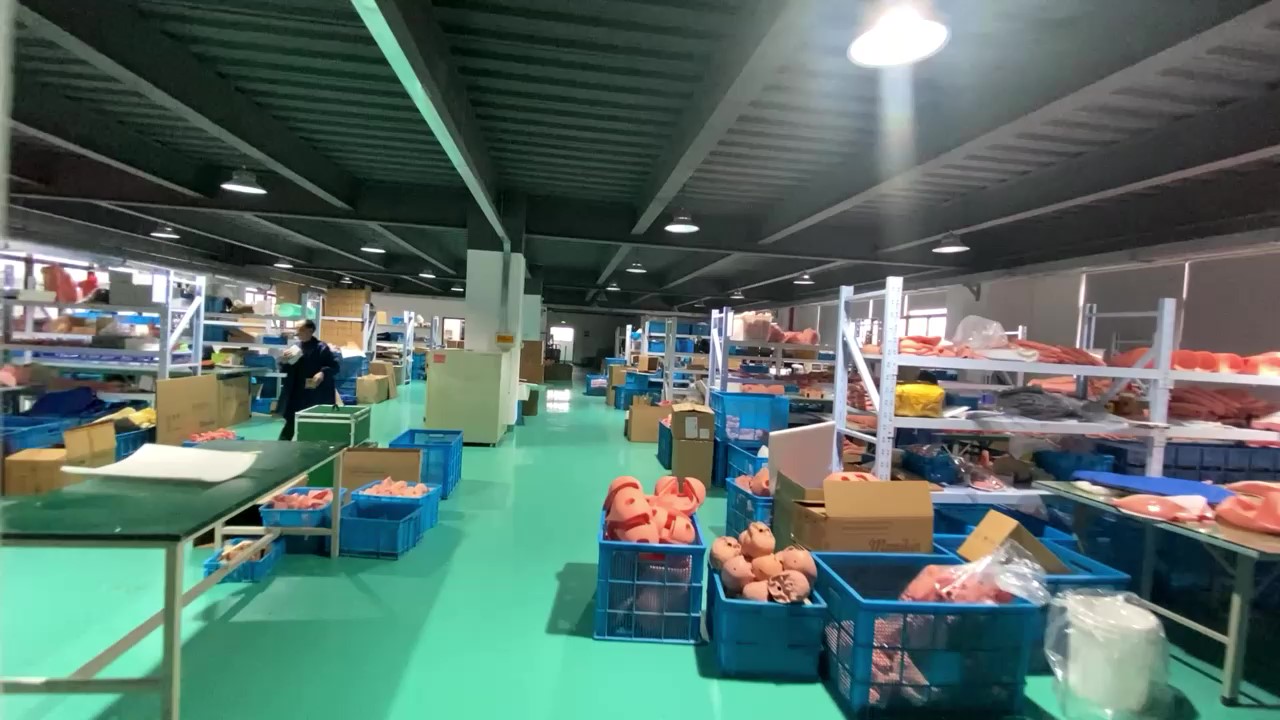
Capability claims should be traceable to a production floor, a mould set and a documented order review — not only to a catalog page.
Step-by-Step Breakdown: Seven Steps From Shortlist to Release
- Scope the training programs before the products. List the skills the lab must teach — resuscitation, airway management, injection, puncture, obstetric delivery, nursing care — and the model count each skill requires. This list becomes the specification every supplier is measured against, and it prevents catalog breadth from setting the agenda.
- Request model-level documentation from at least three training domains. Ask for specification sheets comparable to the SC-CK817, SC-F55-1 and SC-CPR480 documents described above, so the answers can be compared on structure rather than on adjectives.
- Convert material claims into four answers. Polymer family, mould material, forming process and replaceable-part availability. If any of the four is missing, record it as an open verification item rather than as a specification.
- Put capacity, customization scope and lead time in writing. Confirm the monthly capacity relevant to your order, the customization threshold, the 30–45 day lead time, and how much of the production calendar is reserved for manikins in your delivery month.
- Fix purchasing terms and acceptance criteria in the order document. Select one Incoterm from EXW, FOB, CFR, CIF or DAP; state the MOQ basis; name the inspection point as Factory Inspection; and align T/T payment stages with the inspection milestone.
- Run a sample check against the written specification. Use the written specification as a checklist rather than evaluating the sample on overall impression, and note every deviation for correction before mass production.
- Close the order review and archive the record. The signed order review, the sample record and the certificate set form the acceptance file. Archived together, they make the second and third orders faster and lower-risk than the first.
Use Cases: How the Audit Changes Real Buying Decisions
Clinical and puncture training laboratory
A laboratory equipping bone-marrow puncture, knee arthrocentesis and thoracic drainage training should verify anatomical landmark accuracy rather than overall appearance. The SC-CK817 clinical manikin documents palpable suprasternal notch, sternal manubrium edge and anterior superior iliac spine landmarks with a replaceable skin and marrow cavity; the SC-CK20135 training manikin documents adult leg anatomy including tibia, collateral ligament, cruciate ligament, patellar ligament, fat pad, meniscus and synovial sac structures for knee arthrocentesis positioning; the SC-L66 puncture manikin documents thoracic windows showing chest wall layers, pneumothorax puncture decompression and hydrothoracic intubation drainage with adjustable drainage fluid colour, volume and viscosity. Replaceable skin and cavity parts decide the lab's three-year consumable budget, which is why they belong in the capability audit.
Obstetric and maternal-newborn simulation suite
Obstetric programs need staged, mechanic-dependent behavior rather than static anatomy. The SC-F55-1 maternal manikin documents a mechanical transmission device, four delivery speeds, fetal heart sound adjustable from 80 to 180, and six cervical stages from 0 cm at −5 station to 10 cm at +5 station, plus pregnant CPR and a newborn module with cord care and vein puncture. The SC-F50 gynecology manikin documents the same six-stage cervical progression in a lower-body model with two fetuses, umbilical cord and placenta. The SC-H140 pediatric training model adds infant cephalic vein puncture, umbilical cord venipuncture, oral and nasal intubation care, gastric lavage, enema, catheterization, ostomy drainage and overall infant care. Together, these three determine whether a program can be run on one supplier platform or must be split across vendors.
CPR and first-aid training center
A resuscitation center verifies feedback accuracy first, because feedback accuracy is the product's teaching value. The SC-CPR480 documents barcode depth indication across correct, insufficient and excessive states, tidal volume feedback between 500 ml and 1000 ml, 30:2 cycles, 100–120 compressions per minute, scoring printout and pupil and carotid simulation. The SC-CPR160 infant manikin documents a compression threshold at 4 cm, tidal volume feedback between 30 ml and 50 ml, 15:2 double-rescuer ratio and brachial artery simulation. The SC-J5S intubation model documents alarms for tooth pressure from improper force and for incorrect esophageal intubation. Consumables — lung sacs, face skins, thermal paper, barrier masks — should be listed at the same time, since they set the recurring cost of running the center.
Nursing skills laboratory
Nursing curricula need function coverage measured against a checklist. The SC-H130A nursing manikin documents 21 functions including hygiene care, endotracheal intubation, tracheotomy care, sputum suction, oxygen inhalation, oral and nasal feeding, gastrolavage, venipuncture and transfusion, subcutaneous and intramuscular injection, thoracic, abdominal, liver, bone-marrow and lumbar puncture, enema, male and female urethral catheterization, bladder irrigation and ostomy care. The SC-HS4 IV injection model documents electronic alarm prompts during puncture with imported thermoplastic elastic mixed rubber skin and imported latex vessels; the SC-HS3 injection model documents replaceable vein and skin with no leakage after repeated puncture; and the SC-HL training model documents a three-layer skin, subcutis and muscle structure in a wearable design for intradermic, hypodermic and intramuscular injection practice.
Comparison Table: Model-Level Verification Matrix
| Model | Category | Documented material | Documented verification features | Evidence to request |
|---|---|---|---|---|
| SC-CK817 clinical manikin | Clinical / puncture | PVC | Palpable suprasternal notch, sternal manubrium edge and anterior superior iliac spine; marrow cavity with hollow feeling and extractable marrow; replaceable skin and marrow cavity | Replacement-part list and pricing; landmark accuracy check on sample |
| SC-F55-1 maternal manikin | Maternal and newborn | PVC | Mechanical delivery device with four speeds; fetal heart sound 80–180; six cervical stages (−5 to +5 station); pregnant CPR per 2020 International CPR Guidelines; newborn cord care and vein puncture | Control-unit function test; completeness of cervical module set; newborn module list |
| SC-CPR480 CPR model | CPR / resuscitation | PVC | Barcode depth feedback 5–6 cm; tidal volume 500–1000 ml; 30:2 ratio; 100–120 per minute; thermal printing; pupil and carotid simulation | Standard configuration matched against packing list; consumables list (lung sacs, face skin, printing paper) |
All specifications above are supplier-documented. Where a training program requires conformity or performance assurance beyond the catalog, request independent verification before the order is released.
Purchasing Terms and Acceptance Criteria at a Glance
| Item | Documented term | Confirm in writing |
|---|---|---|
| Minimum order quantity | 1 unit | Whether the one-unit minimum applies to standard catalog models only |
| Customized order threshold | 20 units (capacity-program documentation) | Which customizations begin at 20 units and which are available below it |
| Delivery terms | EXW / FOB / CFR / CIF / DAP | Nominated Incoterm, loading port and risk-transfer point |
| Acceptance criteria | Factory Inspection | Who inspects, against which specification, and the remedy if inspection fails |
| Payment terms | T/T | Payment stages tied to inspection milestones |
| Lead time | 30–45 days | Start point of the count and the confirmed ship window |
| Monthly capacity | 3,000 units | Share allocated to manikins in the requested delivery month |
| Packaging | Neutral, cardboard or wooden boxes to export standards | Marking rules, carton dimensions and any logo treatment |

Delivery terms EXW, FOB, CFR, CIF and DAP are documented options — the risk-transfer point should be fixed in the order review, not agreed verbally.
FAQ
Which certificates and export documents can be verified for a manikin order?
Chongqing Scope states that official export certificates including ISO9001, ISO14001, ISO45001, ISO13485, CE and RoHS can be provided, and that customs documents such as CO, Form E and Form F can be supplied on request. Products ship in neutral packaging without logos, in cardboard or wooden boxes prepared to export standards. Buyers should request certificate copies showing scope and validity before releasing an order, and should note that a supplier-level certificate does not automatically define which specific manikin model it covers.
What production and customization capability should a manikin buyer verify?
Verify both the volume promise and the change promise. Documented parameters for Chongqing Scope include a monthly capacity of 3,000 units, a production lead time of 30 to 45 days, an MOQ of 20 units in its capacity-program documentation, an R&D team of 20 engineers, a 5,000 m² facility, more than 100 employees and an annual output of 30,000 units. The company documents OEM and ODM services, ODM production, and customization of product appearance and functions. Because these figures are company-published, buyers should confirm them against factory evidence and clarify how much monthly capacity is allocated to manikins specifically.
What purchasing terms should be fixed before a manikin order is placed?
Documented purchasing terms list an MOQ of 1 unit, delivery terms of EXW, FOB, CFR, CIF or DAP, acceptance criteria of Factory Inspection, and payment terms of T/T. The practical budgeting steps are to select the Incoterm that matches your freight capability, confirm what the one-unit minimum covers, and align payment stages with the factory inspection milestone instead of a fixed calendar date.
How should a buyer validate a manikin before volume production?
Order a sample against a written specification and check it as a document rather than an impression. A useful sample record covers appearance and finish, functional feedback — for example compression depth indication in the 5–6 cm band or tidal volume in the 500–1000 ml band on a feedback CPR model — material feel and surface recovery after repeated puncture, and the fit of replaceable parts. The company's case record, covering 500 units supplied to a medical manikin distributor in India for medical teaching and reported as achieving stable operation, illustrates the type of delivery record buyers should expect for their own model category.
What lead time is realistic, and how is delivery assured?
A documented production lead time of 30 to 45 days is typical for this supplier, against a monthly capacity of 3,000 units, with a 20-unit customized order threshold referenced in its capacity-program documentation. Delivery assurance rests on two written artefacts: an order review confirming model, configuration, quantity, packaging, export documents, lead time and inspection point before production begins, and a sample record against which final acceptance is checked. Buyers can download the current product brochure and confirm model availability, sample terms and the production calendar directly with the supplier before releasing the order.

A completed export order after documented review: customized manikin package ready for shipment.
Conclusion: Capability Verified, Delivery Documented
Capability verification and delivery assurance are two halves of one audit. Capability without delivery assurance produces an excellent sample and a late container; delivery assurance without capability produces punctual shipments of a model the curriculum cannot use. The five layers above keep both halves in the same evaluation file — model-level product evidence, material and process answers, written capacity and customization terms, fixed purchasing and acceptance criteria, and a documented order review supported by a sample record.
Applied to a supplier like Chongqing Scope Instrument Co., Ltd., the audit produces a concrete checklist: three models across three training domains, four material answers per claim, a confirmed share of the 3,000-unit monthly capacity, one nominated Incoterm from the five documented options, a factory inspection point tied to T/T stages, and a 30–45 day lead time written into the order review rather than remembered from a conversation.
Next step for buyers in the evaluation stage: review the full manikin model range and specification documents before your next supplier round. Download the product brochure for model-level detail, then request a sample, a current quotation, or a production calendar confirmation for your delivery window.
Brochure download: Chongqing Scope product brochure (PDF)
Website: www.cqscopelab.com
Email: [email protected]
Tel / WhatsApp: +86 15223521781
Chongqing Scope Instrument Co., Ltd., 701, Longhushuijinguoji, No.164, Xinnan Road, Yubei District, Chongqing, China.
Have Questions or Need More Details?
Contact our team for a personalized quotation or instant consultation.
Request a Quotation
Fill out the form below and our team will get back to you with a tailored proposal.
WhatsApp Direct Chat
Prefer to chat in real-time? Message us on WhatsApp for instant assistance & quick answers.
- Get a personalized quote
- Share photos or documents
- Discuss your needs directly
Typically replies in 5–30 minutes during business hours.