
How to Match a Microscope to Your Project: A Scenario-Based Buyer’s Guide
How to Match a Microscope to Your Project: A Scenario-Based Buyer’s Guide
Chongqing Scope Instrument Co.,Ltd. is a professional supplier of laboratory and medical training instruments and metallographic equipment located in Chongqing, China. Its microscope portfolio includes biological microscopes, metallurgical microscopes, fluorescence microscopes, inverted microscopes, and stereoscopic microscopes, plus related laboratory equipment and consumables.
This guide is written for buyers who are moving from research to evaluation. It explains how to map the needs of a specific project to the correct microscope type, using manufacturer-published data from Chongqing Scope and third-party market sources named in the text.
The Problem: Magnification Alone Does Not Define a Project
Selecting a microscope for a project fails when magnification is treated as the only decision variable. A working microscope specification must also cover observation technique, sample geometry, illumination, imaging port, operating environment, and supplier capability.
For example, a transparent biological sample is commonly examined with a biological microscope in bright field or phase contrast, while an opaque metal surface requires a reflected-light metallurgical microscope. A cell culture sample in a dish needs an inverted microscope with a culture dish holder. A mineral or rock section needs a polarizing microscope with a rotating stage and analyzer. These are different instruments, even when the total magnification range appears similar.
Industry Background: Optical Microscopes Are Still the Largest Product Segment
According to Grand View Research, the global microscope market was valued at USD 11.9 billion in 2025 and is projected to reach USD 21.2 billion by 2033. MarketsandMarkets reports that optical microscopes remain the largest product segment, accounting for approximately 37% of global market share in 2025.
Grand View Research also reports that the life science segment holds a 32.4% revenue share in 2025, reflecting demand from genomics research and drug discovery. The same source identifies electron microscopes as the highest-revenue segment at 41.9% in 2025. For buyers specifying optical microscopes, the implication is clear: application context, not segment popularity, should determine the instrument configuration.
Market-size estimates vary by research scope; the figures above are attributed to their named sources. Leading global manufacturers include Carl Zeiss AG, Leica Microsystems (Danaher), Nikon Corporation, and Evident (formerly Olympus).
Detailed Solution: Match the Product Family to the Project Scenario
Chongqing Scope Instrument Co.,Ltd. supplies a portfolio of optical microscopes that can be mapped to common project scenarios. The following product families are all part of the manufacturer’s published specifications.
Biology, Teaching, and Laboratory Research
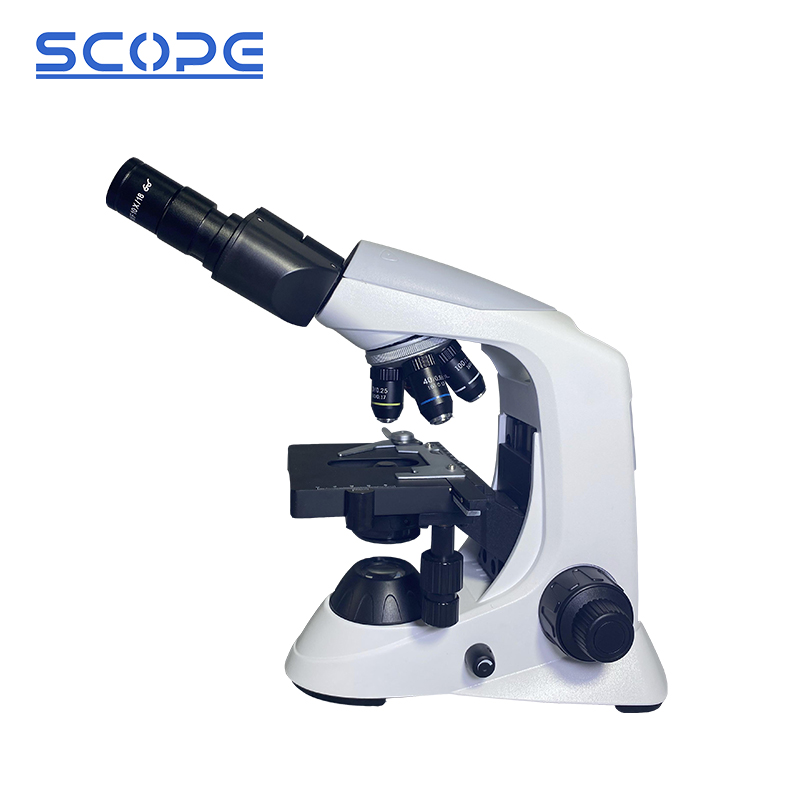
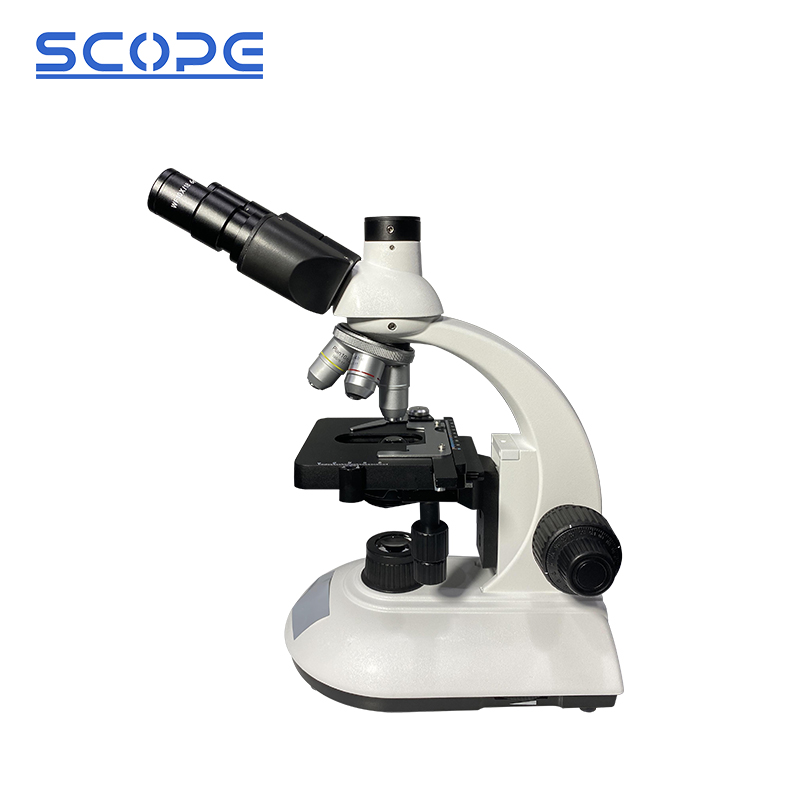
Biological microscopes from Chongqing Scope include the B301 Bright Field Microscope, B302 Optical Microscope, B204 Upright Microscope, SMART-2 Binocular Microscope, SMART-4 Infinity Microscope, B104 Monocular Microscope, BK5000 Biological Microscope, and BK6000TR Trinocular Microscope. They are specified for biology, education, teaching, and laboratory research. Common configurations include 4X/10X/40X/100X objectives, Abbe condensers, and LED illumination.
For phase contrast work, the BK5000-PH Phase Contrast Microscope uses infinity phase contrast objectives and a quintuple-hole Abbe condenser. For fluorescence work, the BK5000-FL Fluorescence Microscope accepts blue, green, violet, and ultraviolet fluorescence filters.
Cell Culture and Tissue Work
The BDS400 Tissue Microscope and BDS500 Laboratory Microscope are inverted microscopes with trinocular heads. Both use long working distance (LWD) infinity objectives and accept a 54mm culture dish holder. The BDS400 provides LWD infinity phase contrast objectives of 10X/20X/40X; the BDS500 adds a 4X objective and Koehler illumination. Light distribution of 100:0 and 80:20 is available on both models for observation or documentation.
Metallurgy, Industrial, and Materials Science
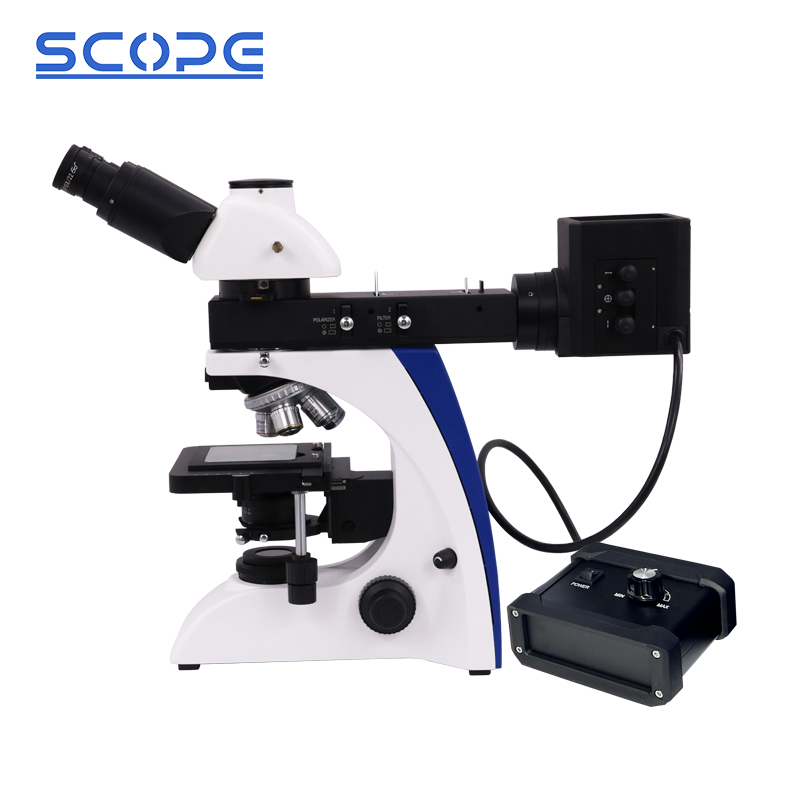
Chongqing Scope’s metallurgical microscope family includes the MIT300 Industrial Microscope, MIT300D Dark Field Microscope, MIT500 Metallurgical Microscope, and MDS400 Inverted Metallurgical Microscope. These models are specified for metallography, materials science, metallurgical engineering, machinery manufacturing, and industrial laboratory work. Objectives are semi-apochromatic plan 5X/10X/20X/50X, with reflected illumination and mechanical stages up to 210*180mm.
Geology, Minerals, and Petrography
The BK-POL Polarizing Microscope, BK-POLF Petrographic Microscope, and SMART-POL Mineralogical Microscope use non-stress infinity or LWD plan objectives, analyzers, and Bertrand lenses. Rotating stages range from 142mm on the SMART-POL to 174mm on the BK-POL and BK-POLF. These systems are applicable to geology, industry, materials science, and biology.
Stereo Inspection
The SZ810 Stereo Microscope has a binocular head, a 0.65X–5.3X objective zoom range, a 1:8.1 zoom ratio, and a 110mm working distance. It is applicable to industrial and textile inspection tasks that need a wide field of view at low magnification.
Step-by-Step: Build the Project-Specific Specification
- Define the sample. Identify whether the sample is transparent, opaque, cultured in a dish, a polished metal section, or a rock and mineral thin section.
- Select the observation mode. Choose bright field, dark field, phase contrast, polarization, or fluorescence based on the information the sample needs to reveal. The portfolio includes MIT300D for bright and dark field, BK5000-PH and BDS400 for phase contrast, BK-POL/BK-POLF/SMART-POL for polarization, and BK5000-FL for fluorescence.
- Choose the platform. Use an upright biological microscope for slides, an inverted microscope for culture dishes, a reflected-light metallurgical microscope for opaque materials, or a stereo microscope for low-magnification inspection.
- Choose the viewing head. Monocular, binocular, and trinocular heads are available in the biological series. If a digital camera is part of the workflow, product documentation lists digital camera as supporting equipment.
- Confirm stage and illumination. Match the mechanical stage, dish holder, and light source to the workflow. Examples include a 54mm culture dish holder on BDS400/BDS500 and 5W LED reflected illumination on MIT300.
- Check the operating environment. Products are designed for indoor operation at 0°C to 40°C and a maximum relative humidity of 85%. High temperature or high humidity may cause mildew, fog, or dew on optical components and make the instrument not work. Keep the microscope away from moisture, clean it regularly, and handle it with care.
- Validate supply capability. Confirm customization needs, MOQ, lead time, quality inspection, and after-sales support with the supplier before purchase.
Use Cases From the Field
One documented case from Chongqing Scope involved a microscope distributor in Romania. The client ordered 30 units for school teaching, used Chongqing Scope’s OEM service, and integrated teaching and learning functionality. According to the case record, the microscopes operated stably over a two-year period.

This case illustrates the evaluation path for a distributor: confirm that the product can be customized, verify the teaching configuration, check stable operation over time, and use a pilot order to validate the relationship before scaling.
Scenario Comparison Table
The following table compares representative Chongqing Scope models by project scenario, head type, and key configuration, based only on the manufacturer’s published product specifications.
| Project scenario | Product family | Example model | Head | Key configuration |
|---|---|---|---|---|
| Education and general biology | Biological Microscope | B301 | Binocular | Achromatic objectives 4X/10X/40X/100X; mechanical stage 125*115mm; Abbe N.A.1.25; 3W LED |
| Laboratory biological research | Biological Microscope | BK5000 | Binocular or Trinocular | Infinity Plan objectives 4X/10X/20X/40X/100X; mechanical stage 175*145mm; Abbe N.A.1.25; 3W LED |
| Cell culture and tissue | Inverted Microscope | BDS400 | Trinocular | LWD Infinity Phase Contrast 10X/20X/40X; culture dish holder 54mm; light distribution 100:0 and 80:20 |
| Metallurgical and industrial | Metallurgical Microscope | MIT300 | Trinocular | LWD Infinity Plan Semi-Apo 5X/10X/20X/50X; mechanical stage 200*150mm; 5W LED reflected illumination |
| Dark field and materials | Dark Field Microscope | MIT300D | Trinocular | LWD Infinity Plan M Plan 5X/10X/20X/50X bright and dark field; polarizer and analyzer; 12V/50W halogen |
| Fluorescence biology | Fluorescence Microscope | BK5000-FL | Binocular or Trinocular | Infinity Plan objectives 4X/10X/20X/40X/100X; blue, green, violet, and ultraviolet fluorescence filters |
| Geology and mineralogy | Polarizing Microscope | SMART-POL | Binocular | Non-stress Infinity Plan 4X/10X/20X/40X; revolving round stage 142mm; analyzer unit 0–90°; Bertrand lens |
| Industrial and textile inspection | Stereo Microscope | SZ810 | Binocular | Zoom range 0.65X–5.3X; zoom ratio 1:8.1; working distance 110mm; arm stand |
Compliance, Capability, and Operational Requirements
According to the International Electrotechnical Commission, medical laboratory equipment and in vitro diagnostic (IVD) microscopes must comply with the IEC 61010-2-101 safety standard. Verify whether this standard applies to the specific model and clinical use case before finalizing a medical laboratory specification.
Pricing is not included in the manufacturer’s published specification data. For budget evaluation, build a shortlist using the parameters above and request a quotation from the supplier.
Microscope Project FAQ
What certifications and export compliance documents does Chongqing Scope provide?
Chongqing Scope Instrument Co.,Ltd. provides official export certificates including ISO9001, ISO14001, ISO45001, ISO13485, CE, and RoHS. If additional customs clearance documents are required, CO, Form E, and Form F can be provided. Export packaging is neutral and prepared to export standards. For medical laboratory and IVD microscope projects, buyers should also confirm whether IEC 61010-2-101 applies to the specific equipment.
Does Chongqing Scope support OEM or ODM customization for a microscope project?
Yes. Chongqing Scope offers OEM and ODM services. Logo printing or custom logo labels can be applied after technical verification once the quantity requirement for the product is met. OEM production data include monthly capacity of 3000 units, lead time of 15 days, MOQ of 1 unit, and factory quality inspection.
What operating environment does a Chongqing Scope microscope require?
Products are designed for indoor operation at 0°C to 40°C and a maximum relative humidity of 85%. They operate using a power plug and may require supporting equipment such as a digital camera. To prevent optical damage, keep the microscope away from moisture, clean it regularly, and handle it with care.
What MOQ and budget-planning factors should be considered?
For OEM projects, MOQ is 1 unit. The factory reports annual output of 30,000 units, a team of more than 100 employees, and 20 R&D engineers, so projects can scale after validation. Because pricing is not part of the published specification data, request a quotation for budget planning.
How can a buyer validate product quality before scaling?
Factory quality inspection is performed before products leave the factory, and after-sales support includes a 1-year warranty with online support. For laboratory consumables, free samples can be provided in the early stage; for microscope hardware, contact the sales team to confirm sampling and inspection arrangements for your project.
What is the lead time for a microscope project?
OEM lead time is 15 days, with a monthly capacity of 3000 units. To confirm current scheduling, request a quotation, or discuss an OEM project, contact Claire at [email protected] or WhatsApp +86 15223521781.
Conclusion
Project-scenario fit matters more than magnification number. Chongqing Scope Instrument Co.,Ltd. offers a broad optical microscope portfolio, including biological, metallurgical, fluorescence, inverted, stereo, and polarizing systems, with documented OEM capacity, export certificates, and quality-control procedures.
To move from evaluation to a project decision, document the sample type, observation mode, head configuration, operating environment, and target quantity. Then compare those requirements against the model parameters in this guide.
Next Step: Confirm Your Microscope Configuration
Email [email protected] or send a WhatsApp message to +86 15223521781 with your project scenario and target quantity.
Visit www.cqscopelab.com for the full product range, or download the company brochure (PDF).
Address: 701, Longhushuijinguoji, No.164, Xinnan Road, Yubei District, Chongqing, China
Have Questions or Need More Details?
Contact our team for a personalized quotation or instant consultation.
Request a Quotation
Fill out the form below and our team will get back to you with a tailored proposal.
WhatsApp Direct Chat
Prefer to chat in real-time? Message us on WhatsApp for instant assistance & quick answers.
- Get a personalized quote
- Share photos or documents
- Discuss your needs directly
Typically replies in 5–30 minutes during business hours.