
Injection Manikins Compared: SC-HS3, SC-HS4, SC-H4T & SC-HL
Injection Manikins Compared: SC-HS3, SC-HS4, SC-H4T & SC-HL
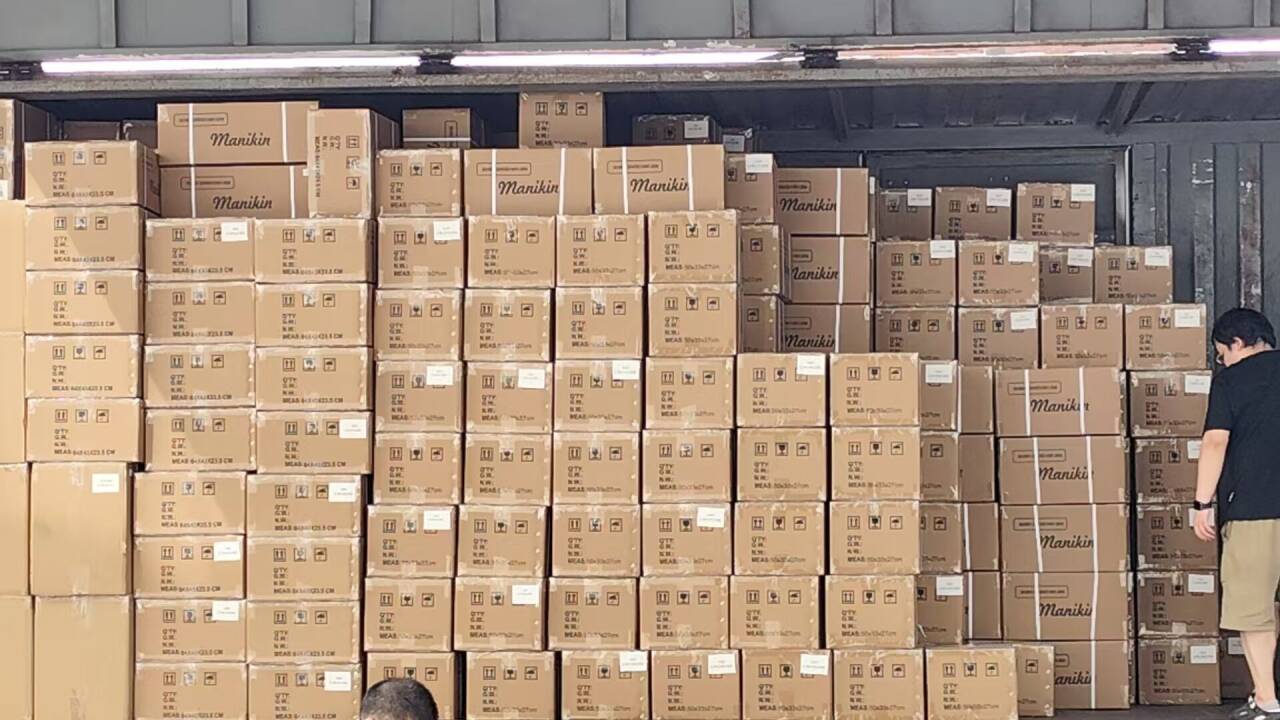
Injection training manikins are usually bought in small batches against a fixed curriculum, so the decision rarely turns on which model carries the longest feature list. It turns on whether the manikin rehearses the exact procedure your learners are assessed on, and whether the parts that wear out can be replaced without replacing the whole model.
Four injection-focused models from Chongqing Scope Instrument Co., Ltd. — a Chongqing-based supplier of laboratory and medical training instruments founded in 2017 — are often quoted together: the SC-HS3 Injection Model, the SC-HS4 IV Injection Model, the SC-H4T Training Mannequin specified for intramuscular injection training, and the SC-HL Medical Training Model. They come from one manufacturing family and share a PVC-based construction philosophy. That similarity is exactly why they need to be separated on paper before a purchase order is written.
- SC-HS3 Injection Model — single-site injection technique where the training goal is repeatable needle practice.
- SC-HS4 IV Injection Model — programmes that include intravenous access, where the injection site has to support vein work.
- SC-H4T Training Mannequin — intramuscular injection practice, most often inside a nursing curriculum.
- SC-HL Medical Training Model — broader medical training use, where injection is one part of a wider procedural demonstration rather than the only skill.
The Real Problem: Four Similar Manikins, Four Different Decisions
A buyer at evaluation stage usually receives one catalogue with four adjacent model names. The photographs look related, the descriptions reuse the same vocabulary, and the price difference is not explained by anything visible. Three specific problems then appear.
Vocabulary is not standardised. “Injection model”, “IV injection model”, “training mannequin” and “medical training model” are supplier designations, not regulated categories. The same words can describe a single-site pad on a compact base or a multi-site model with a replaceable vein. A buyer who compares names instead of procedures ends up comparing marketing labels.
Wear is concentrated in one place. On an injection manikin, the body shell rarely fails first. The skin, the pad and — where present — the vein module absorb every puncture. Two models quoted at similar unit prices can have very different running costs depending on how those modules are replaced and whether spares are ordered with the original shipment.
Acceptance criteria are missing from the order. Most purchase orders describe the model number and the quantity. They do not describe how many punctures the pad must tolerate before replacement, how the replaceable skin is seated, or what the supplier will do if a delivered unit does not match the approved sample. Without those lines, the comparison cannot be audited after delivery.
The practical fix is to stop comparing manikins and start comparing configurations: model plus procedure set plus wear-part supply plus acceptance terms.
What Category Data Says Before You Shortlist
Two published figures frame the purchase, and they must be read separately because their scopes differ. MarketsandMarkets values the global medical simulation market — products, software and services — at USD 2.17 billion in 2024, projected to reach USD 4.48 billion by 2030. WiseGuyReports values the medical training manikin segment specifically at USD 600 million in 2024, with a projected USD 1.2 billion by 2035. The two numbers are not additive: one covers a wider simulation category, the other a narrower physical-manikin category.
Two further data points shape how buyers should weigh specification. Grand View Research reports that anatomical models held the largest product share of the medical simulation sector at approximately 41.4% in 2025, which indicates that volume in this category is carried by practical teaching models rather than by flagship simulators. The same source places manikin price tiers from around USD 500 for low-fidelity basic models to over USD 85,000 for AI-driven high-fidelity patient simulators.
The implication for an injection trainer purchase is narrow and useful: the budget spread inside the injection segment comes from configuration — pad and skin design, replaceable modules, site count — not from whether the model exists at all. That is why the four SC models can sit in one quotation and still require four separate decisions.
Where the supplier sits in this landscape matters too. Chongqing Scope Instrument Co., Ltd. states that its medical manikin range covers CPR manikins, clinical manikins and nursing manikins, plus anatomical models, used for emergency, clinical and nursing skills training in medical colleges and training institutions. The company documents PVC as the material for its manikin range, citing durability, resistance to deformation and a high degree of authenticity. Its company-reported manufacturing profile is a 5,000 m² facility, more than 100 employees, annual output of 30,000 units and a 20-engineer R&D team, with export markets across Europe, Southeast Asia, the Middle East, South America and Africa.
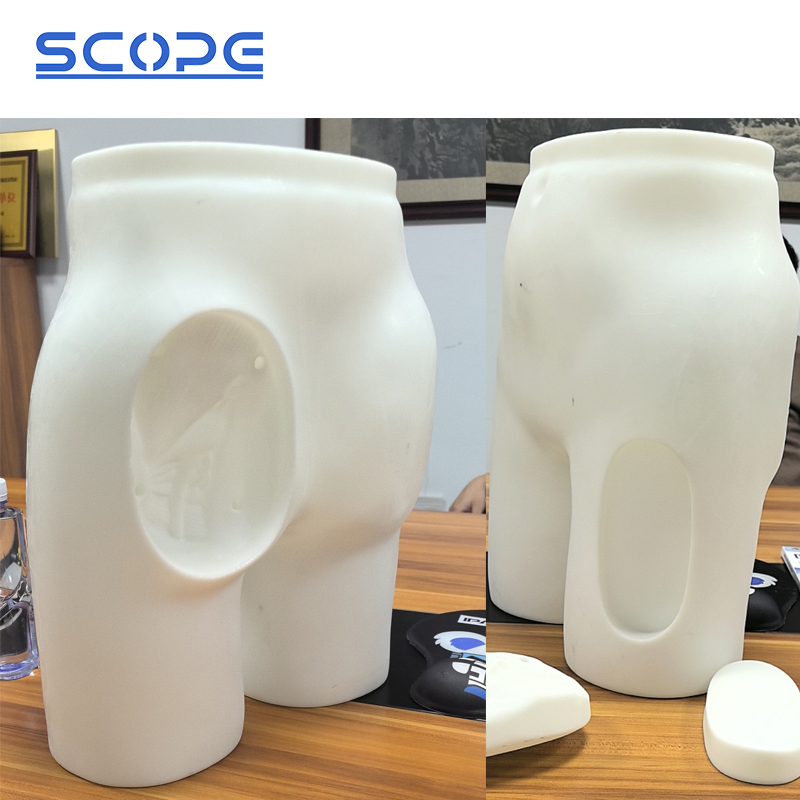
ODM customisation: appearance and function changes are confirmed after technical verification — Chongqing Scope Instrument Co., Ltd.
How SC-HS3, SC-HS4, SC-H4T and SC-HL Divide the Work
Read as a set, the four names describe positions on one spectrum: from a single injection site to a model that supports a wider procedural demonstration. The sections below explain what each position means for a training programme and what to write into the specification.
SC-HS3 Injection Model — repeatable technique on one site
The SC-HS3 is catalogued as an Injection Model. Its natural job is a cohort that must build basic injection technique before moving on to a live setting: correct angle, steady depth, clean withdrawal and a habit of inspecting the site between attempts. Because the value of the model is repetition, the specification question is not how many features it has but how the surface behaves after many punctures.
Two things belong in the request. First, ask which injection routes the model is built for — intradermic, hypodermic or intramuscular — and get the answer per model rather than per family, because “injection model” alone does not fix the answer. Second, ask for the pad and skin compound by name and ask what happens when a needle is inserted at a shallow angle, since intradermic practice loads the surface differently from deeper routes.
SC-HS4 IV Injection Model — where the vessel is the point
The SC-HS4 is catalogued as an IV Injection Model, which places it in a different assessment category: the learner is judged on entering a vessel, confirming position, and managing the site afterwards. That changes the specification. A solid injection pad can support technique practice indefinitely; an IV site cannot, because the vein channel is the part that degrades.
For an IV model, the operative questions are how the vein is formed, whether the vein and overlying skin are supplied as replaceable modules, and whether spares can be ordered in the same shipment as the manikins. A programme that buys SC-HS4 units without spare vein and skin modules usually discovers the gap in the second term, when the first cohort has used the site hardest.
SC-H4T Training Mannequin — intramuscular injection in a nursing curriculum
The SC-H4T is catalogued as a Training Mannequin and is specified for intramuscular injection training. It suits programmes where the assessed competency is a landmarked intramuscular site rather than a vessel: nursing schools, clinical skills laboratories and refresher courses for practicing staff.
Intramuscular practice puts a specific demand on the pad, because the learner must judge depth as well as position. If your specification calls for an electronic alarm that signals incorrect depth or angle, treat the alarm as a separately verifiable feature rather than an assumed one: ask what triggers it, whether it can be reset between learners, what powers it, and whether the alarm unit is a replaceable part. If no alarm is required, say so explicitly in the specification — it keeps the comparison honest across suppliers.
SC-HL Medical Training Model — coverage beyond one site
The SC-HL is catalogued as a Medical Training Model. Its role in this comparison is different in kind: it is the option for a laboratory that needs a model supporting a broader procedural demonstration, where injection is one component rather than the whole syllabus. Buyers considering SC-HL should list the procedures the model must support — for example injection, blood transfusion, hemospasia or arm puncture — and ask the supplier to confirm each one against the model in writing. A general designation is a starting point, not a specification.
Build and Material: The Part of the Specification Buyers Skip
Build is where four manikins from the same series diverge most, and where a quotation can look identical while delivering a different product. Six items are worth pinning down before the order.
- Skin and pad compound. Chongqing Scope documents PVC for its manikin range, citing durability, resistance to deformation and authenticity. Some suppliers instead specify an imported plastic elastomer pad or a composite for the puncture surface. The compound determines how the surface behaves after repeated puncture — whether needle marks close, whether the site tears, and how often the pad is replaced. Ask for the compound name in writing and test it with the needle gauge your programme actually uses.
- Shell forming method. Stainless steel mould injection produces consistent wall thickness and dimensional repeatability across a production run. That matters when you order 20 units or 500 and expect parts to be interchangeable between them. Ask which forming method is used and whether replacement parts come from the same tooling.
- Mould and sintering steps. Where a supplier references high-temperature sintering, it normally describes a production step for a specific component rather than the whole manikin. Ask which component, and ask what the step changes in surface finish or hardness — an answer that names the part is a better sign than an answer that repeats the phrase.
- Changeable vein and skin. Replaceable modules are the difference between a manikin with a maintenance cost and a manikin with a replacement cost. Confirm the module part numbers, the price per spare, and whether spares can ship with the first order.
- Alarm and feedback electronics. If electronics are specified, ask for the alarm logic, the reset method and the spare-part route. If electronics are not specified, exclude them in writing so that quotes remain comparable.
- Repeated puncture behaviour. State the number of puncture cycles your laboratory expects between pad changes — derived from your own class size and semester length — and ask the supplier to confirm or decline that figure. A supplier who will not commit to a number has told you something useful.
Commercial Terms That Belong in the Same Comparison
Model-level features are only half of a purchase decision at evaluation stage. The following terms are documented for Chongqing Scope and should be verified against your own order:
- Minimum order quantity: 20 units.
- Production lead time: 30–45 days.
- Monthly capacity: 3,000 units.
- Quality control: factory quality inspection before shipment.
- After-sales: 1-year warranty, supported online.
- Customisation: OEM and ODM services, including customisation of product appearance and functions, subject to quantity requirements; logo printing is carried out after technical verification, or a custom logo label can be produced and attached.
- Export documentation: ISO 9001, ISO 14001, ISO 45001, ISO 13485, CE and RoHS certificates are stated as available; CO, Form E and Form F can be provided for customs clearance.
- Packaging: neutral export packaging without logos, in cardboard boxes or wooden boxes, prepared to export standards.
Step-by-Step: From Four Model Names to One Purchase Decision
- Write the procedure list first. Set out every route the programme assesses — intradermic, hypodermic, intramuscular, intravenous — plus any related procedures such as blood transfusion, hemospasia or arm puncture. This list, not the catalogue, drives the shortlist.
- Map procedures to models. Assign one model per primary procedure: SC-HS3 for injection technique, SC-HS4 for IV access, SC-H4T for intramuscular injection, SC-HL where broader procedural coverage is needed. Where a model covers more than one route, have the supplier confirm each route individually.
- Specify the wear parts before the manikin. Decide the pad and skin compound, whether vein and skin modules must be replaceable, and how many spares ship with the first order. This is the single largest driver of running cost.
- Set acceptance criteria in advance. Define the puncture cycles expected between pad changes, the seating and fit of replaceable skins, the alarm behaviour if electronics are specified, and the visual and dimensional consistency required across the batch.
- Request an itemised quotation. Ask for unit price, spare modules, packaging and freight as separate lines, and confirm the 20-unit minimum order quantity against your pilot quantity. A single blended price cannot be compared across suppliers.
- Verify documentation. Request certificate copies with scope and validity dates, and confirm that the scope covers the model you are buying. Confirm customs documents — CO, Form E or Form F — at the same time, so clearance is not a separate negotiation.
- Plan the reorder cycle. With a 30–45 day lead time and a defined pad-replacement interval, set the spare-parts reorder point at the start of term rather than mid-term, when a stock-out directly interrupts teaching.
Where Each Configuration Earns Its Place
Nursing school, intramuscular injection module. A cohort rotating through landmarked intramuscular sites needs depth judgement more than vessel handling. The SC-H4T fits this position, provided the order includes spare pads sized to the number of students per rotation and, if specified, a verifiable alarm function.
Hospital skills laboratory, IV refresher training. Staff returning to cannulation and IV practice need a vein that can be re-set between learners. The SC-HS4 fits this position, and the purchasing decision should be driven by spare vein and skin availability rather than by unit price alone.
Distributor or private-label programme. A distributor assembling a teaching range for regional colleges needs a coherent set rather than a single model. A combination of SC-HS3 for technique and SC-HL for broader demonstration covers two distinct course needs, and both can be handled through the supplier's OEM and ODM route, including appearance and function customisation and logo application after technical verification.
That route has been exercised at volume. A medical manikin distributor in India took delivery of 500 units for medical teaching purposes; the project was completed within one year and reported stable operation, with customisation and durability cited as the defining highlights. For a buyer evaluating a first order, the transferable lesson is not the quantity but the sequence: configuration agreed first, durability demonstrated in service, then volume.
Side-by-Side Comparison
| Model | Catalogue designation | Training focus | Build notes to confirm | Features to verify on quotation |
|---|---|---|---|---|
| SC-HS3 | Injection Model | Injection technique and repeated needle practice on a defined site | Part of the PVC-documented manikin range; confirm pad compound | Supported injection routes; replaceable skin; pad replacement interval |
| SC-HS4 | IV Injection Model | Intravenous access and vein handling | Part of the PVC-documented manikin range; confirm vein formation | Replaceable vein and skin modules; spare part numbers and pricing |
| SC-H4T | Training Mannequin | Intramuscular injection training within nursing curricula | Part of the PVC-documented manikin range; confirm pad density | Depth judgement behaviour; electronic alarm logic and power source if specified |
| SC-HL | Medical Training Model | Broader medical training coverage where injection is one component | Part of the PVC-documented manikin range; confirm component build | Written confirmation of each supported procedure (e.g. blood transfusion, hemospasia, arm puncture) |
Commercial terms apply across the four models as supplier-level conditions, not as per-model claims: minimum order quantity 20 units, production lead time 30–45 days, monthly capacity 3,000 units, factory quality inspection, 1-year warranty supported online, neutral export packaging in cardboard or wooden boxes, and CO / Form E / Form F available on request.
| Acceptance check | What to request | Why it belongs in the order |
|---|---|---|
| Surface after repeated puncture | A written statement of expected puncture cycles between pad changes | Converts a vague durability claim into a replacement schedule you can budget |
| Replaceable modules | Part numbers, unit price and shipment with the first order | Prevents a model from becoming unusable over a missing skin or vein |
| Batch consistency | Confirmation that spares come from the same tooling as the manikins | Matters most on multi-unit orders where parts must interchange |
| Electronics | Alarm trigger, reset method, power source, spare-part route — or written exclusion | Keeps quotes comparable when some suppliers include feedback and others do not |
| Documentation | Certificate copies with scope and validity, plus customs documents | Certificate scope, not the certificate name, determines whether your model is covered |
Frequently Asked Questions
1. What compliance documents should accompany an order for SC-HS3, SC-HS4, SC-H4T or SC-HL?
Chongqing Scope Instrument Co., Ltd. states that official export certificates are available, including ISO 9001, ISO 14001, ISO 45001, ISO 13485, CE and RoHS. Company documentation records ISO 13485 (medical device quality management) and CE certification with the reference BKC22072375GC for its laboratory and medical training equipment. Ask for the certificate copies with scope and validity dates, and confirm in writing that the scope covers the specific model you are ordering — a certificate held for a product family does not automatically describe every SKU. Customs documents such as CO, Form E and Form F can be requested at the same time.
2. Can the four injection models be customised for our curriculum or private label?
The supplier offers OEM and ODM services, including customisation of product appearance and functions, and notes that dedicated customisation is available for some products as long as the quantity requirement is met. The stated minimum order quantity is 20 units, with monthly capacity of 3,000 units. Logo printing is carried out once technical verification is complete, or a custom logo label can be produced and attached to the machine. For curriculum-specific requests, describe the procedure set and the wear parts in the enquiry so the feasibility answer covers both.
3. What budget range should we plan for injection training manikins?
Grand View Research places medical manikin price tiers from around USD 500 for low-fidelity basic models to over USD 85,000 for AI-driven high-fidelity patient simulators. Within that range, the price of an injection trainer is driven by configuration — pad and skin compound, replaceable modules, site count and electronics. Request an itemised quotation separating unit price, spare modules, packaging and freight, and compare on that basis rather than on a single blended figure.
4. Can we evaluate a unit before committing to volume?
Published sampling terms for manikins are not available, so the practical approach is to request a pre-production evaluation unit and a short written sample agreement. Have it cover the exact configuration to be tested, who pays freight, and the acceptance criteria: surface condition after repeated punctures, fit of any replaceable skin or vein, and alarm behaviour where electronics are specified. Comparing the evaluation unit against your written criteria, rather than against a catalogue description, is what makes the sample meaningful.
5. What lead time applies, and how should we schedule delivery?
The stated production lead time is 30–45 days, against monthly capacity of 3,000 units, with factory quality inspection before shipment and a 1-year warranty supported online. Because the lead time is measured in weeks rather than days, place the order at the start of the term and set the spare-parts reorder point at the same time, so pad and skin replacements never arrive mid-rotation. To confirm lead time, MOQ and spare-part pricing for SC-HS3, SC-HS4, SC-H4T or SC-HL, send the procedure list and expected class size to [email protected].
Conclusion
The four manikins are not four quality levels of the same product. They are four positions on a spectrum: single-site injection technique with the SC-HS3, intravenous access with the SC-HS4, intramuscular injection in a nursing curriculum with the SC-H4T, and broader procedural coverage with the SC-HL. Choosing between them is a matter of matching the procedure list your learners are assessed on, then specifying the wear parts and acceptance criteria that decide the cost of running the model for a full academic year.
Two habits make that comparison reliable. First, ask for procedure confirmation per model in writing, because catalogue designations such as “injection model” are supplier vocabulary rather than standard definitions. Second, price the spares in the same line as the manikins, since pad, skin and vein modules absorb every puncture and determine how long the purchase stays in service.
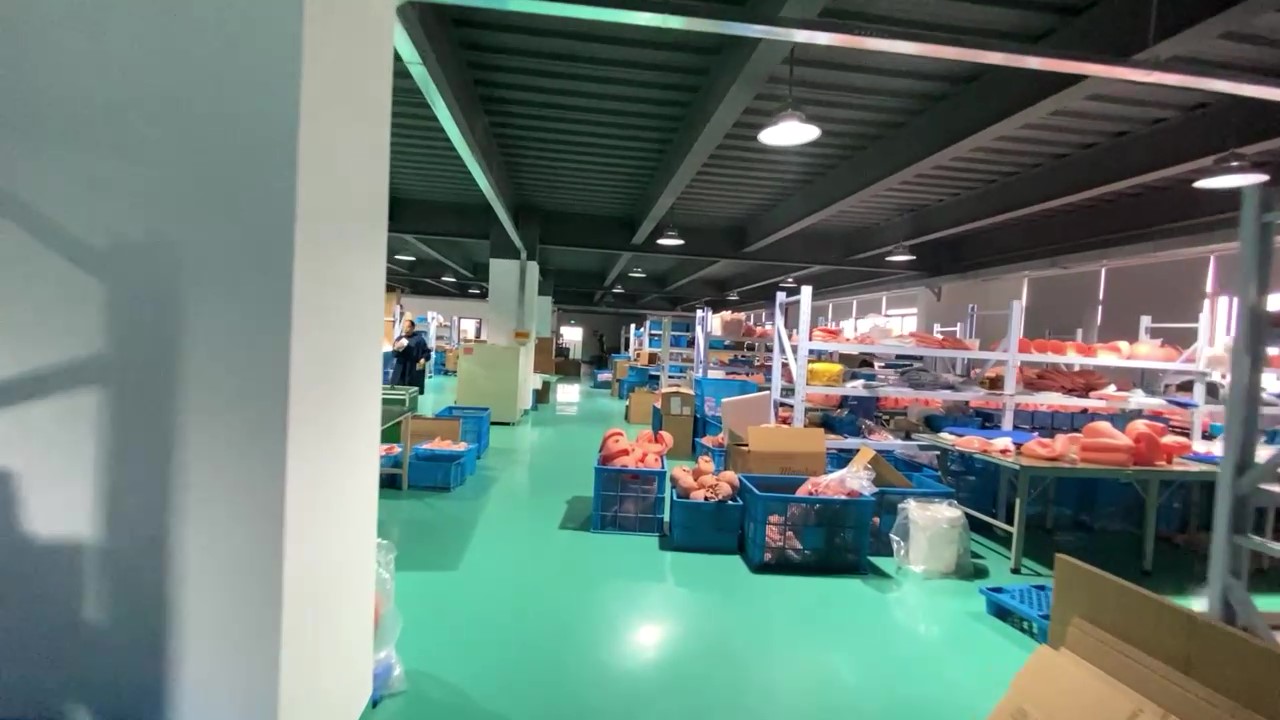
Manikin production at the Chongqing Scope Instrument facility, Chongqing, China.
Next step: compare configurations, not catalogue pages
Send your procedure list, expected class size and required documentation to Chongqing Scope Instrument Co., Ltd. and request an itemised quotation covering manikins, spare modules, packaging and freight for SC-HS3, SC-HS4, SC-H4T or SC-HL.
Contact: Claire · [email protected] · Tel / WhatsApp +86 15223521781
Address: 701, Longhushuijinguoji, No.164, Xinnan Road, Yubei District, Chongqing, China
Website: www.cqscopelab.com
Product catalogue (PDF, publicly accessible): Download the Chongqing Scope catalogue
Have Questions or Need More Details?
Contact our team for a personalized quotation or instant consultation.
Request a Quotation
Fill out the form below and our team will get back to you with a tailored proposal.
WhatsApp Direct Chat
Prefer to chat in real-time? Message us on WhatsApp for instant assistance & quick answers.
- Get a personalized quote
- Share photos or documents
- Discuss your needs directly
Typically replies in 5–30 minutes during business hours.