
Microscope Basics: Matching Instrument Families to Biology, Industry, and Materials Science
Microscope Basics: Matching Instrument Families to Biology, Industry, and Materials Science
An optical microscope is an instrument that uses visible light and a system of lenses to magnify small objects for observation. For first-time buyers, the challenge is not finding a microscope, but understanding which family of microscopes fits the intended application. This article explains the main microscope families — biological, metallurgical, inverted, polarizing, and stereo microscopes — and the key specifications that separate one model from another.
According to Grand View Research, the global microscope market was valued at USD 11.9 billion in 2025 and is projected to reach USD 21.2 billion by 2033. Optical microscopes remain the largest product segment, accounting for approximately 37% of global market share in 2025 (MarketsandMarkets). These figures reflect a broad and growing demand for instruments used in education, laboratory research, and industrial quality control.
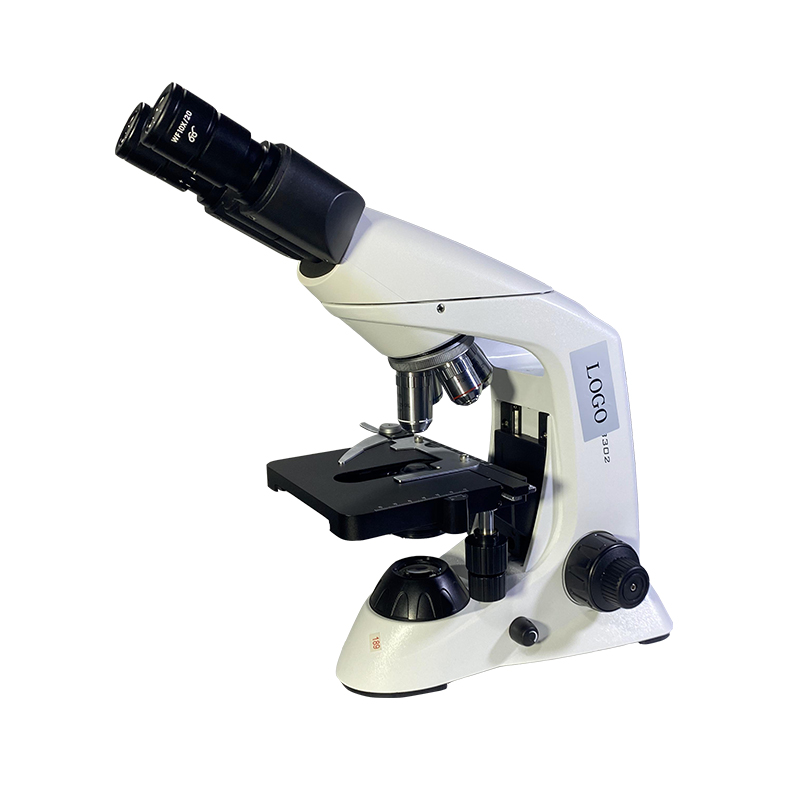
B302 binocular optical microscope — a representative upright biological microscope for routine laboratory work.
Why Microscope Selection Is More Complex Than Magnification
Many first-time buyers assume that a higher magnification number means a better microscope. Magnification, however, is only one part of the specification. Head configuration, optical system, objective quality, condenser, mechanical stage, illumination, and working distance all determine whether a microscope can perform a specific task.
A metallurgical microscope, for example, needs reflected illumination to inspect opaque metal samples, while a biological microscope normally uses transmitted light for thin tissue sections. An inverted microscope is designed for examining cell cultures from below, whereas an upright microscope observes samples from above. Selecting the wrong family leads to poor images, wasted budget, and project delays.
Industry Context: What the 2025–2033 Market Tells Us
The microscope market is not uniform. The life science application segment held a 32.4% revenue share in 2025, driven by genomics research and drug discovery (Grand View Research). This explains the high demand for biological, inverted, and fluorescence microscopes in laboratory environments. At the same time, industrial applications in materials science and metallurgy require reflected-light systems such as metallurgical microscopes.
On the supplier side, globally recognized manufacturers include Carl Zeiss AG, Leica Microsystems, Nikon Corporation, and Evident (formerly Olympus), according to MarketsandMarkets. Chinese suppliers such as Chongqing Scope Instrument Co., Ltd. serve a complementary role: they provide a wide range of optical microscopes, metallographic equipment, and supporting services for global buyers. Chongqing Scope, established in 2017, employs more than 100 staff and operates a 5,000 m² manufacturing facility with an annual production capacity of 30,000 units. Export business accounts for 50% of total sales, with major markets in Europe, Southeast Asia, the Middle East, South America, and Africa.
For buyers, the practical takeaway is this: both global and Chinese suppliers can deliver functional microscopes, but the decision should be based on specification fit, compliance, and supplier capacity for your specific order.
Detailed Solution: A Practical Map of Microscope Families
Biological Microscopes (Upright)
Biological microscopes are the most common family of optical microscopes. They are designed for observing stained or thin biological specimens in transmitted light. Chongqing Scope offers several upright biological models, including the B301, B302, B204, SMART-2, SMART-4, BK5000, and BK6000TR.
- B301 is a bright field biological microscope with a binocular head, quadplex nosepiece, Abbe condenser N.A. 1.25, and a mechanical stage of 125×115 mm. Illumination is 3W LED with DC input. It is intended for biology, education, and laboratory research.
- B302 is a binocular biological microscope with an infinity optical system. Its infinity achromatic EPlan objectives cover 4X, 10X, 40X, and 100X, with a WF10X/20mm eyepiece and a 145×140 mm mechanical stage.
- B204 is an upright biological microscope with a binocular head, plan objectives 4X/10X/40X/100X, and a 125×115 mm mechanical stage.
- SMART-2 is a binocular biological microscope with plan objectives and an Abbe condenser; it can be configured with 3W LED or 12V/20W halogen illumination.
- SMART-4 uses an infinity optical system with Plan objectives 4X/10X/40X/100X, a WF10X/20mm eyepiece, and a 145×140 mm stage.
- BK5000 is a teaching-and-research biological microscope with a binocular or trinocular head, infinity optical system, Plan objectives from 4X to 100X, and a 175×145 mm mechanical stage. It is constructed from stainless steel and glass.
- BK6000TR is a trinocular biological microscope with an infinity optical system, light distribution options of 100:0 and 80:20, a swing-out condenser N.A. 0.9/0.13, and an integrated stage of 182×140 mm. The trinocular head supports camera attachment for photomicrography.
For a first-time buyer, an upright biological microscope is usually the right starting point when the samples are mounted on slides and viewed through transmitted light.
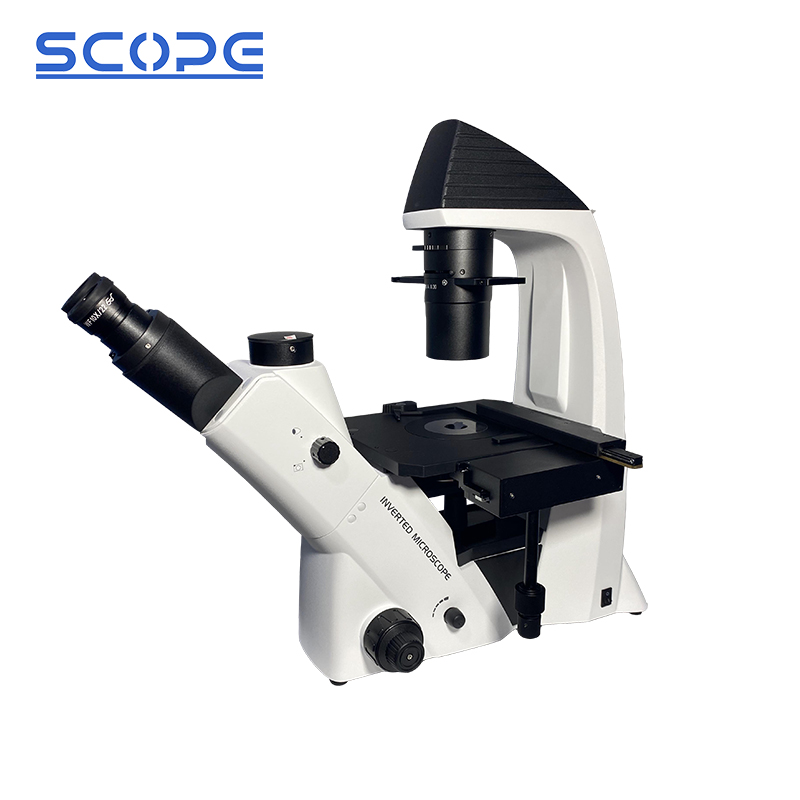
BDS400 inverted microscope for cell culture and tissue observation.
Inverted Microscopes
Inverted microscopes place the objective below the stage, allowing observation of living cells in culture vessels. This design is useful for cell culture, tissue engineering, and metallographic samples that are too thick or opaque for an upright stand.
- BDS400 is an inverted tissue microscope with a trinocular head, quintuple nosepiece, and LWD infinity phase contrast objectives at 10X, 20X, and 40X. The mechanical stage is 210×241 mm, and the culture dish holder has a 54 mm diameter.
- BDS500 is an inverted laboratory microscope with a trinocular head, a 4-hole rotating disc phase contrast condenser, and a mechanical stage of 210×241 mm. It is designed for biology, cell culture, and laboratory research.
- MDS400 is an inverted metallurgical microscope for metallographic and industrial use. It has a trinocular head, LWD infinity plan semi-apo objectives from 5X to 50X, a 210×180 mm mechanical stage, and a polarizing unit.
The inverted format is not a premium option; it is a functional requirement for samples that cannot be placed on a glass slide.
Metallurgical and Industrial Microscopes
Metallurgical microscopes are used to inspect metals, minerals, and engineering materials. They typically use reflected light because the surfaces under inspection are opaque.
- MIT300 is an industrial metallurgical microscope with a trinocular head, quintuple nosepiece, LWD infinity plan objectives, and a mechanical stage of 200×150 mm. Reflecting illumination is 5W LED DC input, and the polarizing unit includes both polarizer and analyzer.
- MIT300D is a dark field metallurgical microscope with M Plan 5X/10X/20X/50X bright-and-dark field objectives, light distribution options 100:0 and 80:20, and a 200×150 mm stage. Reflecting illumination uses a 12V/50W halogen lamp.
- MIT500 is a trinocular metallurgical microscope with a five-objective nosepiece, semi-apochromatic plan objectives at 5X/10X/20X/40X, and reflected/transmitted illumination using a 5W LED. The mechanical stage is 182×140 mm, with coaxial coarse and fine adjustment.
These models are commonly used in metallography, materials science, metallurgical engineering, and machinery manufacturing.
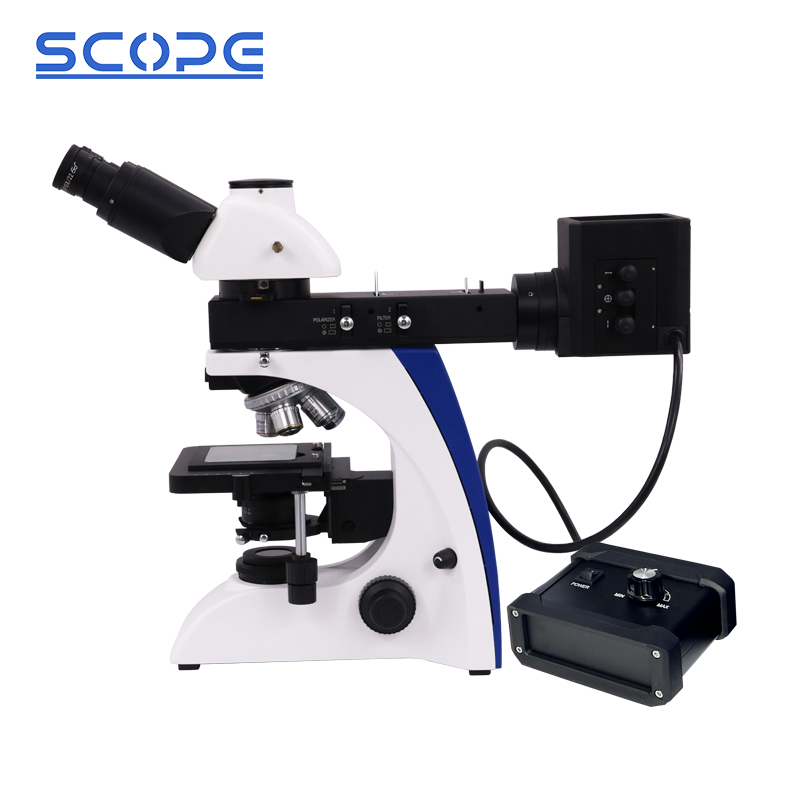
MIT500 metallurgical microscope for reflected-light inspection of metal and material samples.
Polarizing Microscopes
Polarizing microscopes are specialized instruments for geology, mineralogy, materials science, and biomedicine. They use polarized light and components such as an analyzer, Bertrand lens, and compensation slips to reveal optical properties of crystals and minerals.
- BK-POL is a binocular polarizing microscope with non-stress infinity plan objectives (4X, 10X, 20X, 40X), a revolving round stage of 174 mm, and a swing-out condenser N.A. 0.9/0.13.
- SMART-POL is a mineralogical microscope with a binocular head, a 142 mm revolving round stage, and an analyzer unit adjustable from 0 to 90 degrees. It supports 5W LED or 12V/30W halogen illumination.
- BK-POLF is a trinocular reflecting petrographic microscope with non-stress LWD plan semi-apo objectives at 5X/10X/20X/50X, a 174 mm revolving round stage, and reflecting illumination at 5W LED.
If your workflow involves identifying minerals, examining rock thin sections, or analyzing stress in transparent materials, a polarizing microscope is the appropriate category.
Stereo Microscopes
Stereo microscopes provide low magnification with a large working distance, making them suitable for inspection, dissection, and assembly tasks.
The SZ810 is a stereo microscope with a binocular head, arm stand, and coarse focusing knob. Its zoom objective range is 0.65X to 5.3X, with a working distance of 110 mm and a base of 330×300 mm. Typical applications include industrial inspection and textile examination.
Fluorescence Microscopes
Fluorescence microscopy is used in biological research to detect specific molecules that emit light after excitation. The BK5000-FL is a fluorescence microscope with a binocular or trinocular head, infinity Plan objectives from 4X to 100X, and fluorescence attachment options for blue, green, violet, and ultraviolet filters. It can be configured with a 5W LED or a 100W mercury lamp for fluorescence excitation.
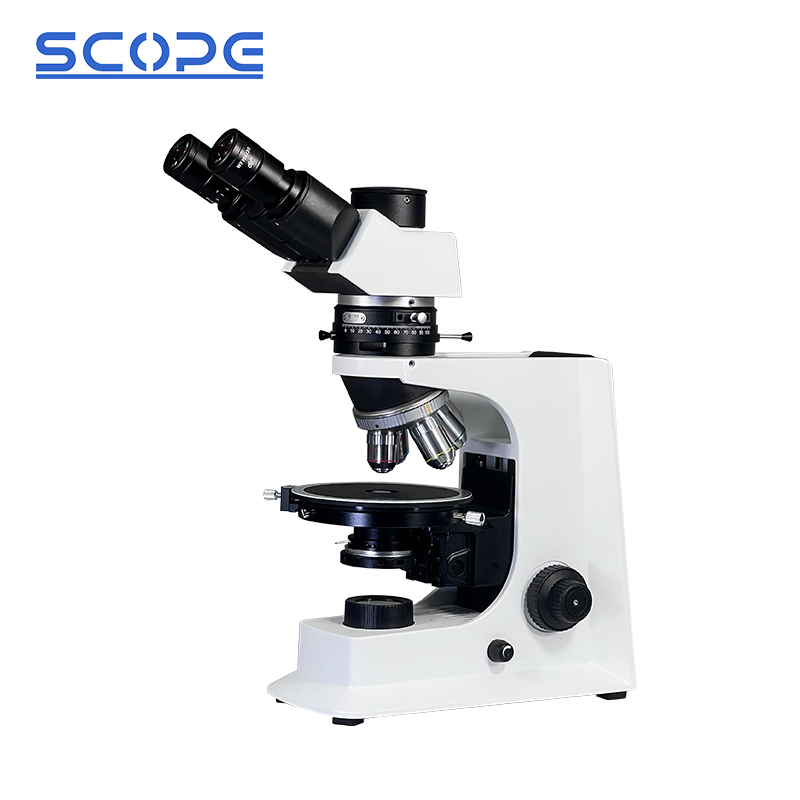
SMART-POL polarizing mineralogical microscope for geological and materials science applications.
Step-by-Step: How to Choose a Microscope at the Research Stage
- Define your sample. State whether the sample is transparent, opaque, mounted on a slide, cultured in a dish, or a solid surface. This single decision separates biological microscopes (transmitted light) from metallurgical microscopes (reflected light) and inverted microscopes (samples in culture vessels).
- Determine the observation mode. Bright field is the most common mode. Dark field and phase contrast are useful for unstained or low-contrast specimens. If you routinely need phase contrast, consider models with phase contrast objectives and turret condensers, such as the BK5000-PH or the BDS500.
- Check the optical system and objectives. An infinity optical system (models like B302, SMART-4, BK5000, BK6000TR) allows the addition of intermediate modules such as polarizers or fluorescence attachments without degrading image quality. The objective set should cover the magnification range needed for your samples.
- Evaluate ergonomics and imaging output. A binocular head is comfortable for extended observation; a trinocular head provides a photoport for camera attachment. Light distribution options of 100:0 or 80:20 let you switch between full visual observation and simultaneous camera output.
- Confirm compliance and after-sales support. For laboratory and IVD equipment, check relevant electrical safety standards such as IEC 61010-2-101. Ask the supplier for available certificates, documentation, and warranty terms before finalizing the purchase.
Use Cases: Matching the Right Microscope to Real Applications
School Teaching and Routine Laboratory Research
For biology classes and basic lab teaching, the B301, B302, B204, SMART-2, and SMART-4 are common choices. They provide 4X to 100X magnification coverage, simple coaxial focusing, and LED illumination for easy maintenance.
Cell Culture and Tissue Studies
The BDS400 and BDS500 inverted microscopes are designed for cell culture observation. The culture dish holder and long working distance condenser permit observation of living cells without opening the vessel.
Metallurgy and Materials Quality Control
For metal grain structure analysis and surface inspection, the MIT300, MIT300D, MIT500, and MDS400 provide reflected illumination and optional polarizing units. These instruments are used in metallurgical engineering, machinery manufacturing, and materials science laboratories.
Geology, Petrography, and Mineralogy
The BK-POL, SMART-POL, and BK-POLF are polarizing instruments for examining rock thin sections, minerals, and crystal structures. Non-stress objectives and rotating stages are key features for this application.
Industrial Inspection and Textile Examination
The SZ810 stereo microscope is suitable for observing larger objects at low magnification. Its 110 mm working distance leaves room for tools and manipulation during inspection.
Microscope Family Comparison Table
| Family | Representative Models | Head Type | Key Optical Feature | Typical Application |
|---|---|---|---|---|
| Biological (upright) | B301, B302, B204, SMART-2, SMART-4, BK5000, BK6000TR | Binocular or Trinocular | Transmitted light; Abbe condenser; 4X–100X objectives | Biology, education, routine lab research |
| Inverted | BDS400, BDS500, MDS400 | Trinocular | Objective below stage; phase contrast option | Cell culture, tissue study, metallographic inspection |
| Metallurgical / Industrial | MIT300, MIT300D, MIT500 | Trinocular | Reflected light; polarizing unit; 5X–50X objectives | Materials science, metallurgy, industrial QC |
| Polarizing | BK-POL, SMART-POL, BK-POLF | Binocular or Trinocular | Non-stress objectives; analyzer; rotating stage | Geology, mineralogy, petrography |
| Stereo | SZ810 | Binocular | Zoom 0.65X–5.3X; 110 mm working distance | Industrial inspection, textile examination |
Frequently Asked Questions
What compliance standards should I look for when purchasing a microscope?
For medical laboratory and IVD microscope applications, IEC 61010-2-101 is a relevant electrical safety standard. In addition, Chongqing Scope Instrument Co., Ltd. states that official export certificates — ISO9001, ISO14001, ISO45001, ISO13485, CE, and RoHS — can be provided for its products. Confirm with your supplier which standards apply to your region and application.
How can I compare microscope capability from specification sheets?
Focus on optical system, head type, objectives, condenser, stage, and illumination. For example, the BK6000TR is a trinocular biological microscope with an infinity optical system, Plan objectives from 4X to 100X, a WF10X/22mm eyepiece, and a swing-out condenser N.A. 0.9/0.13. These numbers indicate resolution potential, field of view, and flexibility for camera attachment.
How do I choose a microscope within a limited budget?
Budget decisions should start with sample type and the level of detail needed. For routine teaching biology, a binocular model such as the B301 or B302 with 4X/10X/40X/100X achromatic objectives is often sufficient. If you need photomicrography or advanced contrast, consider a trinocular model with infinity optics like the BK6000TR or a phase contrast model like the BK5000-PH.
Can I request a catalog before placing an order?
Chongqing Scope provides a public brochure for microscopes and related laboratory equipment. The brochure can be downloaded from the company website. For application-specific recommendations and configuration details, contact [email protected] or WhatsApp +86 15223521781.
How can I evaluate supplier capacity and lead time?
Lead time depends on production schedule, configuration, and inspection requirements. A useful capacity indicator is manufacturing scale: Chongqing Scope operates a 5,000 m² facility, employs more than 100 staff, and has an annual output of 30,000 units. Ask the supplier for current lead time and confirm it in writing before order confirmation.
Conclusion
Choosing a microscope starts with understanding the sample and the observation method, not with magnification numbers. Biological, inverted, metallurgical, polarizing, stereo, and fluorescence microscopes are built for fundamentally different workflows. By defining the application first and checking key specifications — optical system, head configuration, objectives, stage, illumination, and compliance — you can narrow the options before requesting a quote.
Download the Chongqing Scope brochure for a full product lineup, or contact the sales team to discuss configuration, OEM, and export documentation.
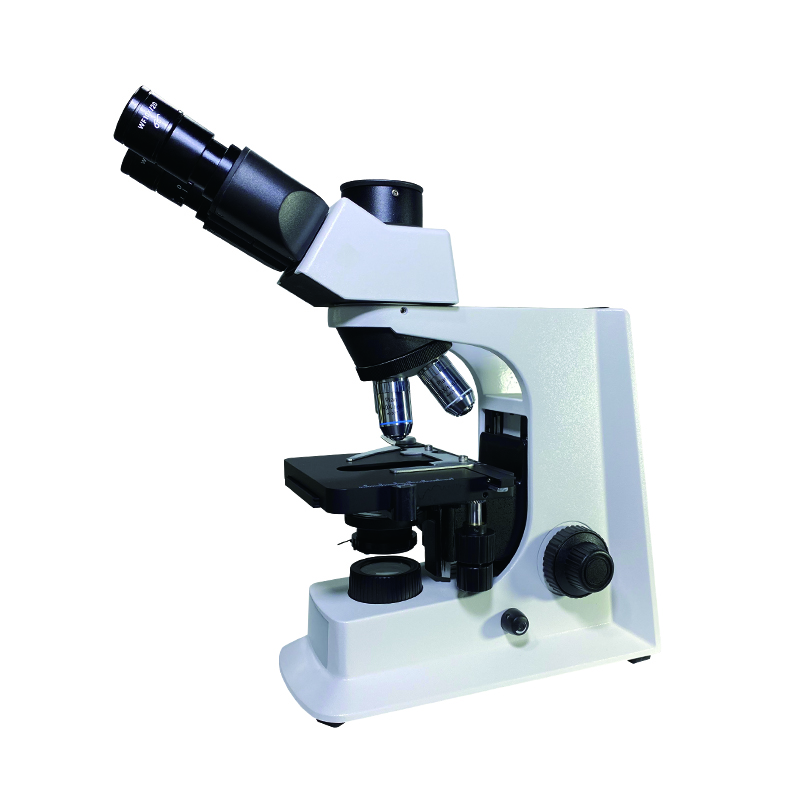
SMART-4 infinity microscope — a representative model for biology, lab research, and education.
Chongqing Scope Instrument Co., Ltd. is located at 701, Longhushuijinguoji, No.164, Xinnan Road, Yubei District, Chongqing, China. Visit www.cqscopelab.com or contact the team listed above.
Have Questions or Need More Details?
Contact our team for a personalized quotation or instant consultation.
Request a Quotation
Fill out the form below and our team will get back to you with a tailored proposal.
WhatsApp Direct Chat
Prefer to chat in real-time? Message us on WhatsApp for instant assistance & quick answers.
- Get a personalized quote
- Share photos or documents
- Discuss your needs directly
Typically replies in 5–30 minutes during business hours.