
2026 Buyer’s Guide to Selecting Microscopes for Specialized Research and Industrial Applications
Industry-Specific Requirements for Microscopes
Different application fields impose distinct technical demands on optical microscopes. Understanding these needs is the first step toward selecting a capable supplier.
- Biological & Biomedical Research: High-resolution imaging, fluorescence capabilities (e.g., BK5000-FL with blue/green/violet/UV filters), and phase contrast for live-cell observation are critical. Special requirements include keeping the product away from moisture, regular cleaning, and careful handling (content id: 111323). Supporting equipment such as a digital camera is often needed for documentation (content id: 111320).
- Industrial & Materials Science: Metallurgical microscopes like the MIT500 or MIT300D with bright/dark field objectives are essential for inspecting metal surfaces, coatings, and composite materials. Long working distance objectives, polarizing units, and stable LED illumination are preferred for routine quality control.
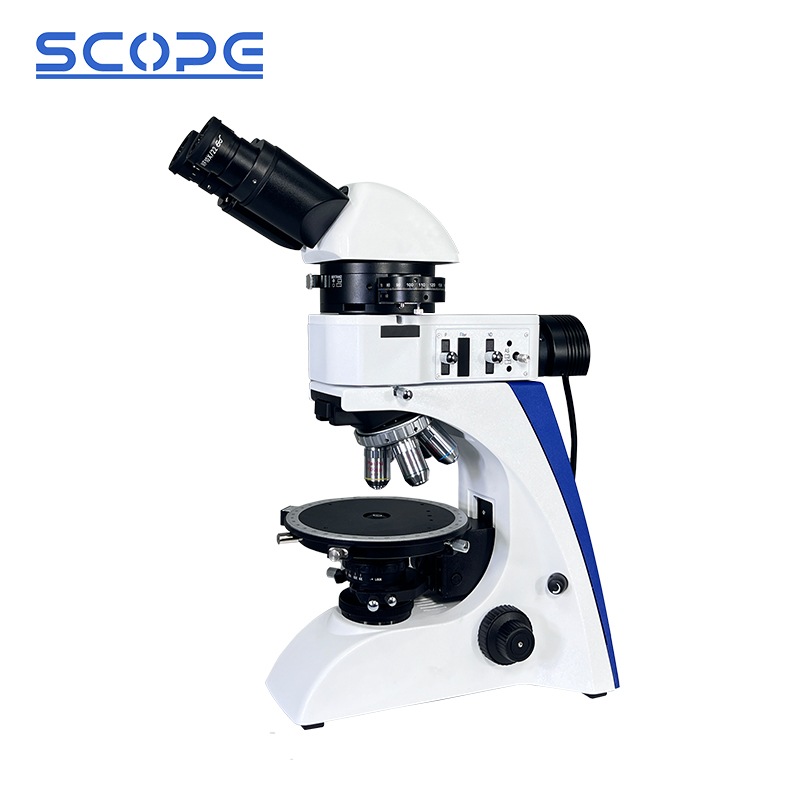
- Geological & Mineralogical Analysis: Polarizing microscopes (e.g., BK-POL, SMART-POL) with non-stress objectives, rotating stages, and compensators (λ/4, λ slip, quartz wedge) are required for identifying mineral phases and rock textures. Reflected light capability is also common for opaque samples.
- Education & Teaching: Durable, easy-to-operate biological microscopes (e.g., B204, B302) with bright-field optics and low maintenance are the standard. Schools often need a large number of identical units for consistent training.
These specific conditions highlight the importance of choosing a supplier that can tailor the instrument’s optics, illumination, and accessories to the end-use environment.
Three Essential Capabilities of a Dedicated Microscope Supplier
When evaluating potential vendors, procurement professionals should focus on the following core competencies:
1. Industry Customization Experience
A reliable manufacturer should offer flexible customization options. For instance, Chongqing Scope Instrument Co., Ltd. provides OEM and ODM services, including logo printing on the instrument body. With a monthly production capacity of 3,000 units and a minimum order quantity of 1 unit (content id: 111213), buyers can start with small trial orders or scale up as needed. The company’s 20+ R&D engineers support modifications to optics stages, lighting systems, and digital integration.
2. Regulatory Compliance and Certifications
Certificates ensure that the equipment meets international safety and environmental standards. The company holds CE (certificate no. BKC22072376GC, valid until 2032) and RoHS (certificate no. BKC-191103261C, valid until 2029) certifications for its microscope series. These documents cover models such as B203, BKXXX, SMXXX, and MDSXXX, demonstrating broad compliance with EU directives. In addition, ISO9001, ISO14001, ISO45001, and ISO13485 are available for the overall quality management system.
3. Robust Design for Harsh Environments
Microscopes used in hot, humid, or dusty laboratories require engineered resilience. The instruments feature low-voltage LED or halogen illumination (3W–50W) that reduces heat buildup and supports power bank usage for extended outdoor operation. Compared to traditional microscopes, the modern design offers a 25% lower total cost of ownership due to minimal maintenance and a long service life. The factory performs strict quality inspections before shipment (content id: 111197), and accessories such as dust covers and anti-mold treatments are provided to prevent fogging and fungus growth.
Case Study: A Romanian Distributor’s Experience
A microscope distributor in Romania ordered 30 units of the BK5000 biological microscope for school teaching projects. The instruments were delivered with an OEM branding configuration – the distributor’s logo was printed on the head, and the packages used neutral export packaging. The microscopes have been in stable operation for over two years, supporting both visual observation and basic digital imaging. The distributor highlighted the ease of integration with standard curricula and the responsive after-sales service provided by the manufacturer. This case illustrates how a well-equipped supplier can meet both technical and commercial expectations for educational applications.
Key Collaboration Points for Buyers
- Clarify Applicable Standards: Define the required optical configuration (e.g., infinity optics, phase contrast, polarizing accessories) and request relevant certificates (CE, RoHS, ISO). Confirm that the proposed instrument model is listed on the certificate scope.
- Arrange On-Site Evaluation or Sample Testing: If possible, perform a factory inspection or request a demo sample to verify image quality, mechanical stability, and ease of use. The supplier accepts factory inspection as part of the acceptance process.
- Define After-Sales Support: Ensure the contract includes a 1-year warranty and online technical support (content id: 111109). In case of issues, the manufacturer provides operation videos and spare parts without requiring professional on-site calibration.
- Logistics and Documentation: Confirm packaging method (cardboard or wooden boxes per export standards) and arrange for customs documents such as CO, Form E, or Form F. The supplier can provide these upon request.
Download the full company brochure for detailed specifications, certificates, and product lists:
Chongqing Scope Instrument Co., Ltd. – Company Profile (PDF)
Have Questions or Need More Details?
Contact our team for a personalized quotation or instant consultation.
Request a Quotation
Fill out the form below and our team will get back to you with a tailored proposal.
WhatsApp Direct Chat
Prefer to chat in real-time? Message us on WhatsApp for instant assistance & quick answers.
- Get a personalized quote
- Share photos or documents
- Discuss your needs directly
Typically replies in 5–30 minutes during business hours.