
Microscope Distribution Ecosystem 2026: Choosing a Long-Term Manufacturing Partner
Microscope Distribution Ecosystem 2026: Choosing a Long-Term Manufacturing Partner

What Is a Microscope Distribution Ecosystem?
For distributors and resellers planning long-term microscope lines, a microscope distribution ecosystem is a supply relationship built on production capacity, product breadth, export compliance, and repeatable after-sales service. It is the difference between buying boxes of optical instruments and building a dependable source of supply that supports a reseller's brand for years.
This guide explains how to evaluate a microscope manufacturer for that kind of long-term relationship, using Chongqing Scope Instrument Co., Ltd. as a reference example. Chongqing Scope Instrument Co., Ltd. is a professional supplier of laboratory and medical training instruments and metallographic equipment, founded in 2017 and based in Chongqing, China.
The Problem: Fragmented Microscope Supply Chains Create Hidden Costs
When a distributor reaches the decision and execution stage, the problem is no longer which microscope model to buy. It is which supply ecosystem can protect their brand over the next five to ten years. Common failure points include suppliers that cannot scale production, lack export compliance documents, disappear after payment, or ship microscopes with unstable optics and fragile mechanical parts.
For global distributors, the cost of switching microscope suppliers is high. Relabeling inventory, retraining sales teams, re-validating specifications, and rebuilding customer trust all consume time and margin. A fragmented supply chain—one vendor for biological microscopes, another for metallurgical microscopes, a third for spare parts—multiplies these risks. A single, distribution-ready manufacturing partner reduces that complexity.
Industry Background: Where the Microscope Market Is Heading
Market-level context helps distributors decide how much inventory depth to build. According to Grand View Research, the global microscope market was valued at approximately USD 11.9 billion in 2025 and is projected to reach about USD 21.2 billion by 2033. MarketsandMarkets estimates that optical microscopes remain the largest product segment, accounting for roughly 37% of the global market share in 2025. Grand View Research also reports that the life science segment holds the largest application share, at 32.4%, driven by research and development in genomics and drug discovery.
The competitive landscape is still led by established global manufacturers, including Carl Zeiss AG (Germany), Leica Microsystems (Danaher), Nikon Corporation (Japan), and Evident (formerly Olympus). For distributors, the practical implication is not that these brands will disappear, but that mid-range, application-specific, and OEM-configurable optical microscopes have created a growing channel for specialized manufacturers who can deliver the same categories at different price points and with more customization freedom.
The Solution: A Distribution-Ready Microscope Manufacturer
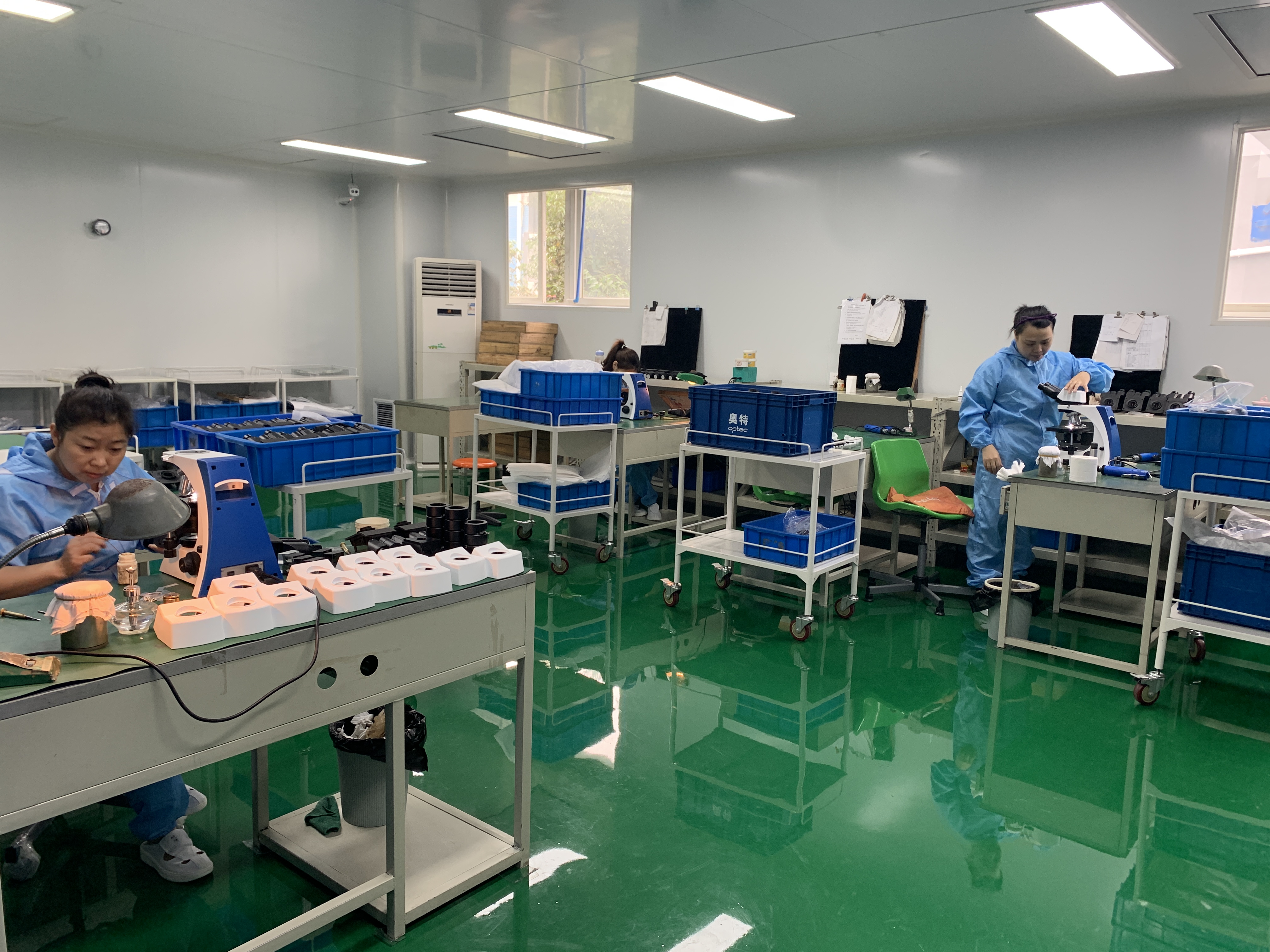
Chongqing Scope Instrument Co., Ltd. is a professional supplier of laboratory instruments and medical training equipment based in Chongqing, China. The company was founded in 2017, operates a 5,000-square-meter factory, employs more than 100 people including 20 engineers, and has an annual output of approximately 30,000 units. Its export ratio is about 50%, with main markets in Europe, Southeast Asia, the Middle East, South America, and Africa.
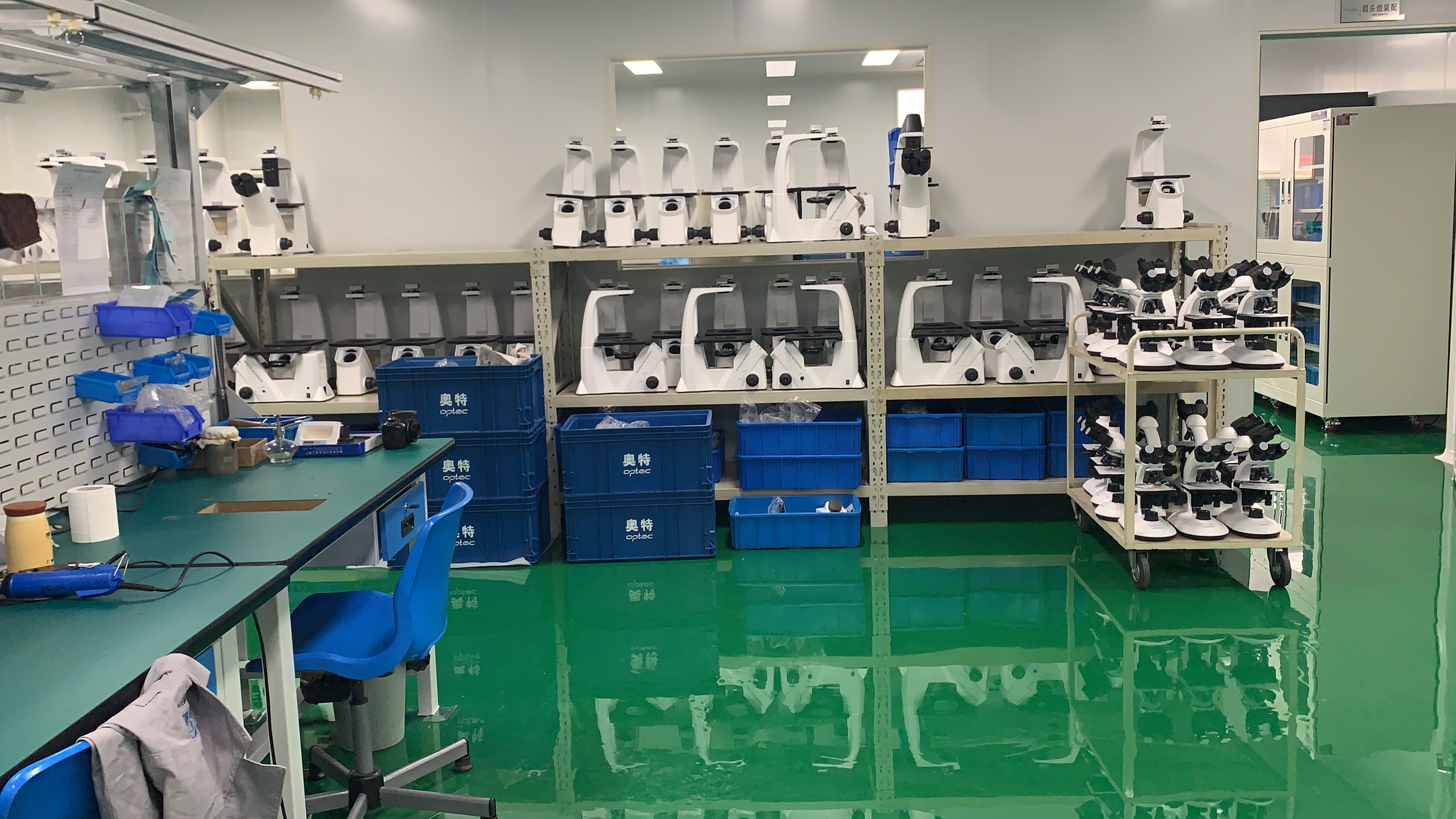
Rather than offering only a single optical microscope model, Chongqing Scope builds its distribution offer around a family of interrelated microscope categories: biological microscopes, metallurgical microscopes, fluorescence microscopes, inverted microscopes, stereoscopic microscopes, polarizing microscopes, and related laboratory instruments. For a distributor, this product ecosystem means many stock-keeping units (SKUs) can be consolidated under one manufacturer instead of being sourced from multiple vendors.
Pillar 1: Production Capacity and Consistency
Monthly production capacity is 3,000 units, and annual output is 30,000 units, supported by a 5,000 m² factory and an R&D team of 20 engineers. For distribution partners, capacity stability matters more than a single large order. It determines whether repeat orders, mixed configurations, and seasonal peak demand can be fulfilled without constantly renegotiating lead times.
Pillar 2: Export Compliance and Certifications
The official export certificates that Chongqing Scope can provide include ISO9001, ISO14001, ISO45001, ISO13485, CE, and RoHS. For medical laboratory equipment and in vitro diagnostic (IVD) microscopes, the IEC 61010-2-101 safety standard is part of the global compliance landscape, and distributors who resell into regulated clinical segments should confirm coverage with their supplier. Where customs clearance requires additional documents, Chongqing Scope can provide CO, Form E, and Form F.
Pillar 3: Quality Control and Long-Term Risk Management
Microscopes are precision optical instruments, and the most common long-term failures are bulb degradation, accessory wear, a dusty optical path, and mold or fog on lenses. Chongqing Scope addresses these risks with a documented control approach: manual power-off design, instruction manuals, dust covers, and anti-mildew and anti-fog treatment on the equipment. In after-sales service, the company provides online repair support, including operation videos, and supplies spare accessories to keep instruments in service longer.
Pillar 4: Procurement Flexibility That Fits Distributor Cash Flow
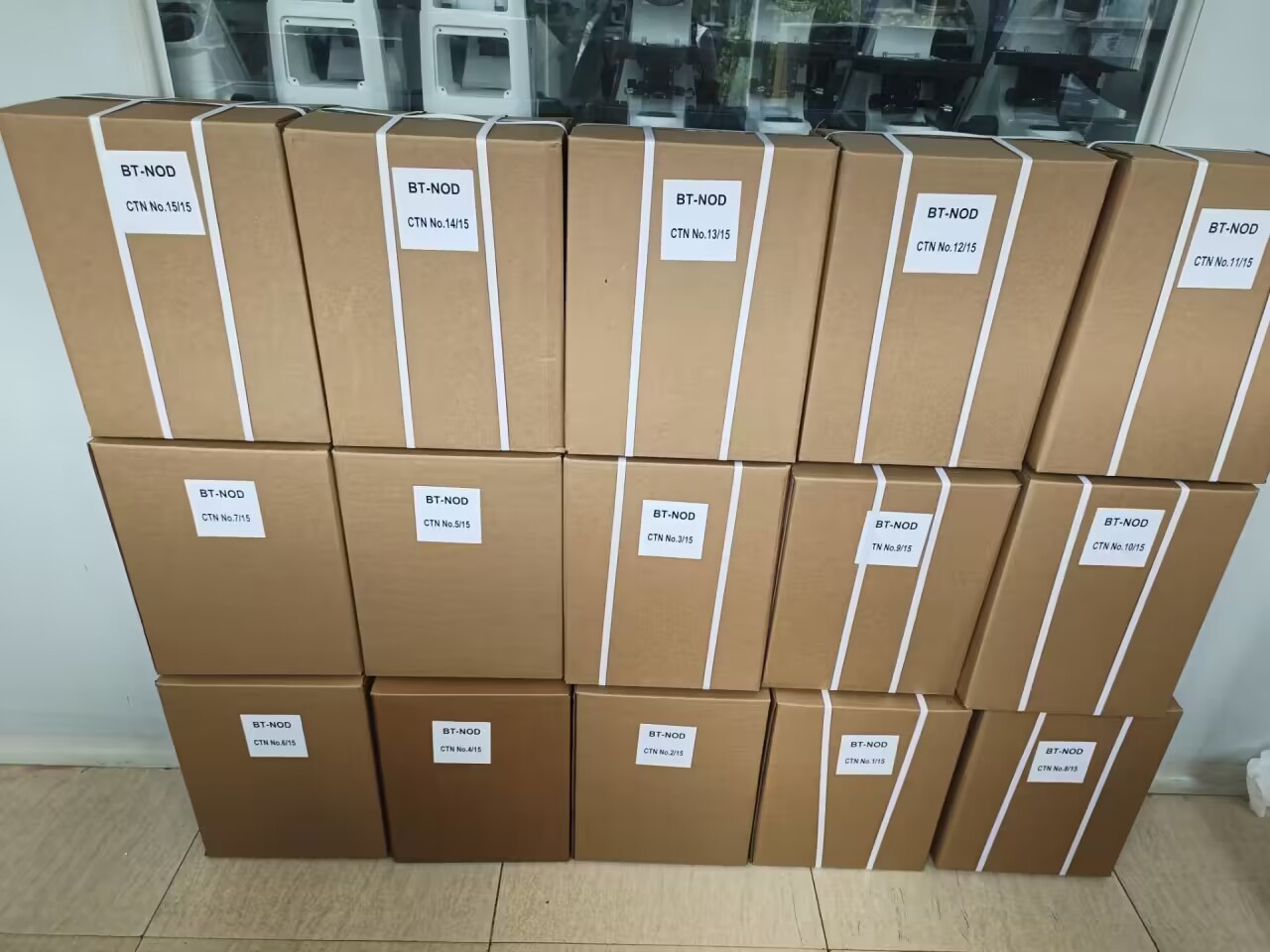
Chongqing Scope sets a minimum order quantity of 1 unit, which is low for a factory of this capacity and allows small and mid-sized distributors to test a product line before committing inventory budget. Standard delivery terms are EXW, FOB, CFR, CIF, and DAP; payment is by T/T; and acceptance can be carried out through factory inspection. Export packaging is neutral, without logos, in cardboard or wooden boxes prepared according to export standards, so a distributor can relabel or private-label products in the destination market.
Pillar 5: Long-Term Reliability and Total Cost of Ownership
Compared with traditional microscope designs, the modern microscopes supplied by Chongqing Scope feature a superior optical system and a metal body, with a low parts-replacement rate and a long service life. They are compatible with digital cameras for direct computer connection, which reduces image capture time by 40%. They also offer more than 10 optional lighting configurations, compared with two to three options on traditional models, and the low-voltage design supports more than eight hours of outdoor use with a power bank.
Maintenance is another differentiator. Traditional microscopes often require frequent professional calibration and cleaning, while Chongqing Scope's instruments need only simple post-use care, and parts replacement can be performed by users without professional support. The initial purchase price is slightly higher than that of a traditional microscope, but the total cost of ownership is about 25% lower over the product's lifetime because maintenance costs and replacement frequency are lower.
Step-by-Step: How to Evaluate a Microscope Supplier for Long-Term Distribution
Distributors at the decision-to-execution stage can apply the following seven-step evaluation to any microscope manufacturer.
Step 1: Verify the Legal Entity
Confirm the manufacturer's registration and operating facts. Chongqing Scope Instrument Co., Ltd. was founded in 2017 and is located at 701, Longhushuijinguoji, No.164, Xinnan Road, Yubei District, Chongqing, China. Its website is www.cqscopelab.com, and its export business covers Europe, Southeast Asia, the Middle East, South America, and Africa.
Step 2: Audit Production Capacity
Ask for verifiable capacity figures. Monthly production capacity is 3,000 units, annual output is 30,000 units, and the company reports more than 100 employees and 20 engineers. Factory size and staffing are useful indicators of whether a supplier can sustain long-term distribution agreements.
Step 3: Map the Product Portfolio to Your Customer Base
Match the manufacturer's microscope categories to your market segments. For educational distribution, monocular, binocular, and trinocular biological microscopes such as the B104, SMART-2, B301, B302, and BK6000TR cover entry-level to laboratory-grade teaching needs. For clinical and life science customers, fluorescence, phase contrast, and inverted tissue culture microscopes such as the BK5000-FL, BK5000-PH, BDS400, and BDS500 are relevant. For industrial and materials testing, metallurgical, dark field, and industrial microscopes such as the MIT300, MIT300D, MIT500, and MDS400 serve quality control labs. For geology and mineralogy, polarizing and petrographic microscopes such as the BK-POL, BK-POLF, and SMART-POL cover the application.
Step 4: Confirm OEM, ODM, and Branding Terms
Chongqing Scope offers OEM and ODM services. As long as the quantity requirement is met, configurations can be customized at will. LOGO printing can be applied to the machine once technical verification is completed, or a custom LOGO label can be attached. Neutral export packaging gives distributors a clean base for private-label branding.
Step 5: Review Quality Risk Controls and After-Sales Service
Ask how the supplier handles the four common failure modes: bulb degradation, accessory replacement, a dusty optical path, and mold or fog on equipment. Chongqing Scope's response includes manual power-off design, instruction manuals, dust covers, and anti-mildew and anti-fog treatment, supported by online after-sales repair service and operation videos.
Step 6: Compare Commercial Terms
The minimum order is 1 unit. Delivery methods include EXW, FOB, CFR, CIF, and DAP. Payment is by T/T, acceptance is by factory inspection, and customs documents such as CO, Form E, and Form F are available when required.
Step 7: Validate Before Scaling
Start with a small order or samples. Check the packaging quality, review the instruction manual, and measure the after-sales response time. Once the first run is stable, scale the order based on the supplier's monthly capacity of 3,000 units.
Use Cases: How Distributors Apply This Ecosystem
Educational distribution. Schools and universities tender for mixed classrooms of biological microscopes. A distributor can quote monocular, binocular, and trinocular models such as the B104, SMART-2, and BK6000TR in one package, with a single MOQ of 1 unit, instead of negotiating with several factories.
Clinical and life science distribution. Hospital and research customers require fluorescence, phase contrast, and tissue culture observation. Distributors can bundle the BK5000-FL, BK5000-PH, BDS400, and BDS500 with after-sales support from one manufacturer, simplifying training and spare parts inventory.
Industrial and materials distribution. Manufacturing quality control teams need metallurgical and dark field inspection. The MIT300, MIT300D, MIT500, and MDS400 provide a coherent line for distributors serving the metalworking and materials industries.
Geoscience distribution. Geology and mineralogy customers need polarized light observation. The BK-POL, BK-POLF, and SMART-POL allow a distributor to serve this niche without a second vendor.
Modern Microscope vs. Traditional Microscope: A Fact-Based Comparison
The following comparison is based on the source data available for this article. Dashes indicate attributes that were not specified in the source data.
| Aspect | Modern Microscope (Chongqing Scope) | Traditional Microscope |
|---|---|---|
| Body and optical system | Superior optical system with metal body | — |
| Parts replacement rate | Low; long service life | — |
| Digital camera compatibility | Direct computer connection; image capture time reduced by 40% | — |
| Lighting configurations | 10+ optional configurations | 2–3 configurations |
| Power design | Low-voltage; supports 8+ hours of outdoor use with a power bank | — |
| Maintenance | Simple post-use care; parts replacement by users | Requires frequent professional calibration and cleaning |
| Total cost of ownership | About 25% lower over the product lifetime | — |
| Best suited for | Laboratory, university, hospital | — |
Frequently Asked Questions for Distributors
What certifications should a microscope manufacturer provide for international distribution?
Chongqing Scope Instrument Co., Ltd. can provide the official export certificates ISO9001, ISO14001, ISO45001, ISO13485, CE, and RoHS. For medical laboratory equipment and IVD microscopes, IEC 61010-2-101 is a relevant safety standard in the global compliance landscape. The company also supplies customs clearance documents such as CO, Form E, and Form F when required for export.
What production capacity can a long-term microscope distribution partner sustain?
Chongqing Scope reports a monthly production capacity of 3,000 units and an annual output of 30,000 units, supported by a 5,000-square-meter factory, more than 100 employees, and 20 engineers. Founded in 2017, the company serves more than 500 clients worldwide. This capacity profile supports repeat orders, mixed configurations, and seasonal peaks better than a small trading company can.
Is working with Chongqing Scope more expensive than buying a traditional microscope?
The initial purchase price of Chongqing Scope's modern microscopes is slightly higher than that of a traditional microscope. However, the total cost of ownership is about 25% lower because the metal-body design has a low parts-replacement rate, a long service life, and simple maintenance requirements; users can replace parts without professional support. The MOQ is 1 unit, so distributors can test the economics with a small first order.
Can a distributor request samples, private labeling, or customized microscope configurations?
Yes. Chongqing Scope provides OEM and ODM services; as long as the quantity requirement is met, configurations can be customized at will. LOGO printing can be applied to the machine after technical verification, or a custom LOGO label can be attached. Packaging is neutral by default in export-standard cardboard or wooden boxes, which gives distributors a clean base for private labeling. For laboratory consumables, free samples can be provided in the early stage.
What delivery terms and lead time options are available for microscope orders?
Chongqing Scope supports EXW, FOB, CFR, CIF, and DAP delivery terms, with T/T payment and factory inspection acceptance. Export packaging is prepared according to export standards, and official certificates and customs documents can be provided. To check current lead time for your destination and order mix, contact Claire at [email protected] or via WhatsApp at +86 15223521781; a catalog and quotation are available for distributors evaluating a first trial order.
Conclusion: Build the Microscope Supply Line You Can Defend for Years
A microscope distributor's competitive advantage comes from a supply ecosystem that can keep quality stable, documents complete, pricing predictable, and delivery consistent. Chongqing Scope Instrument Co., Ltd. combines a monthly production capacity of 3,000 units, official export certifications, an MOQ of 1 unit, flexible Incoterms, and a product portfolio spanning biological, metallurgical, fluorescence, stereo, polarizing, and inverted microscopes.
Next step for distributors: Download the company brochure, request a quotation, or arrange a factory inspection to validate the first trial order.
Brochure: Chongqing Scope Instrument Co., Ltd. company brochure (PDF)
Website: www.cqscopelab.com
Email: [email protected] | WhatsApp: +86 15223521781
Address: 701, Longhushuijinguoji, No.164, Xinnan Road, Yubei District, Chongqing, China
Have Questions or Need More Details?
Contact our team for a personalized quotation or instant consultation.
Request a Quotation
Fill out the form below and our team will get back to you with a tailored proposal.
WhatsApp Direct Chat
Prefer to chat in real-time? Message us on WhatsApp for instant assistance & quick answers.
- Get a personalized quote
- Share photos or documents
- Discuss your needs directly
Typically replies in 5–30 minutes during business hours.