
Microscope Selection by Project Type: A 2026 Scenario Guide for Biological, Industrial, and Materials Laboratories
Microscope Selection by Project Type: A 2026 Scenario Guide for Biological, Industrial, and Materials Laboratories
The right microscope depends on the sample, the workflow, and the task. This guide maps common laboratory and industrial project scenarios to specific optical microscope families so you can match the instrument to the job.
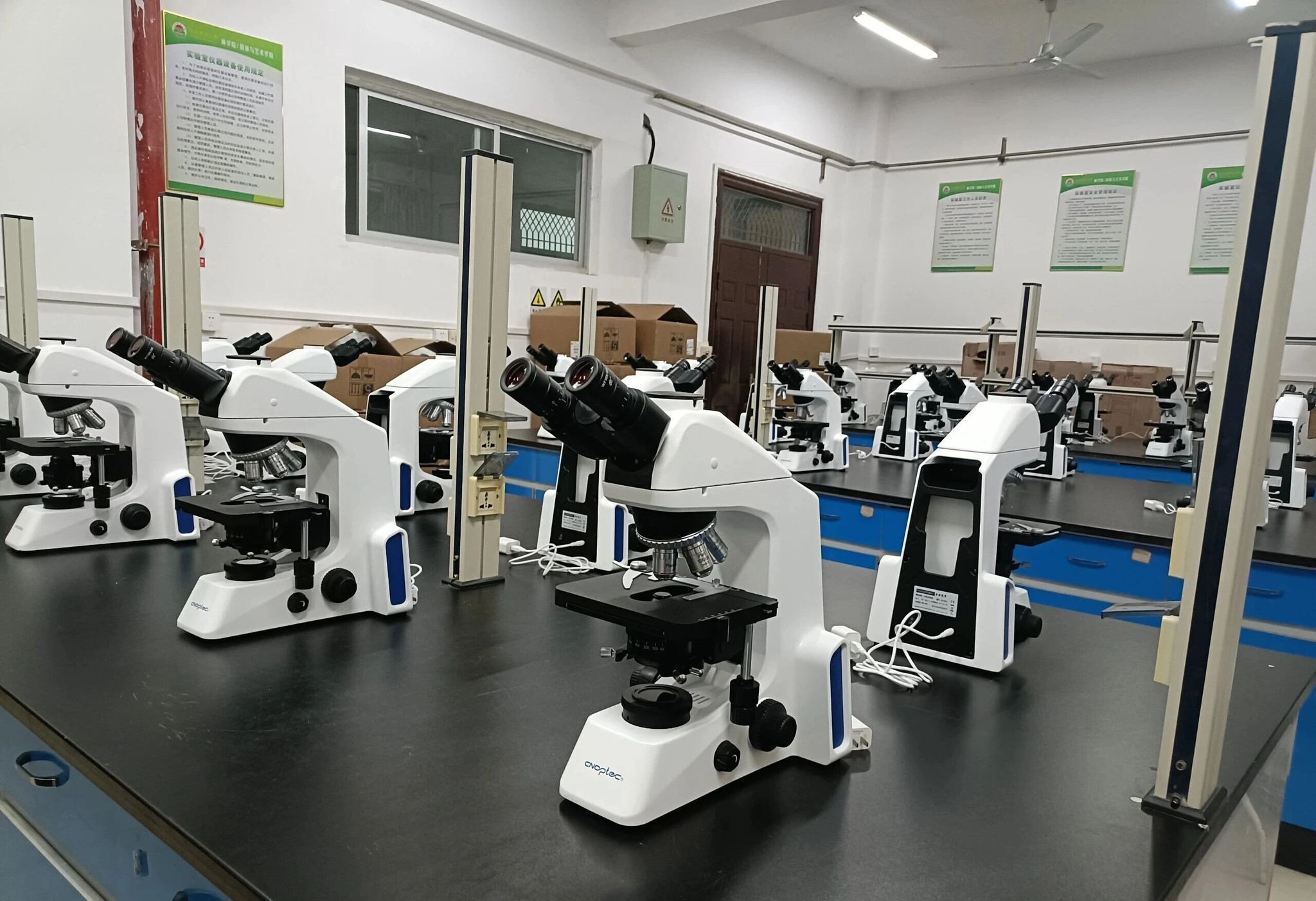
Figure 1: Optical microscopes are used across teaching, laboratory, and industrial inspection workflows.
Why Project Type Should Drive Your Microscope Decision
Optical microscopes are not interchangeable. A biological microscope designed for stained cells, a metallurgical microscope designed for reflected-light inspection of metals, a polarizing microscope designed for minerals and crystals, and a stereo microscope designed for low-magnification observation of larger objects each answer a different question. When buyers choose a microscope before defining the sample type, observation mode, and workflow, they often pay for capability they will not use or miss the one capability the project requires.
This guide covers the most common project scenarios in biology, education, industry, metallography, materials science, and geology; the microscope families that match each scenario; and the configuration details that matter most during evaluation. It also explains what to check in a supplier proposal so the quoted configuration actually suits the stated application.
What Optical Microscopes Do — and What They Cannot Do
Optical microscopes form a magnified image using visible light and a system of lenses. They are widely used when the feature of interest is roughly in the micrometer-to-millimeter range, such as cells, tissue sections, metal microstructures, mineral thin sections, electronic components, or textile surfaces. They do not reach the nanometer-scale resolution of electron microscopes, but they remain the most practical choice for routine laboratory, educational, and industrial inspection work because of their lower cost, ease of use, and fast workflow.
Within optical microscopy, the main divisions are based on the illumination and the optical path:
- Transmitted-light microscopes (also called upright biological microscopes) pass light up through a thin, usually transparent sample. They are typical for biological smears, tissue sections, and cultured cells.
- Reflected-light microscopes (also called metallurgical microscopes) direct light onto an opaque sample surface and collect the reflected light. They are standard for metals, alloys, ceramics, and prepared metallographic samples.
- Inverted microscopes place the objective below the sample. They are designed for cell culture dishes and flasks, allowing observation from below without disturbing the sample.
- Polarizing microscopes use polarized light and analyzers to reveal birefringence, crystal structure, and optical properties in minerals, rocks, polymers, and some biological structures.
- Stereo microscopes provide low magnification with a three-dimensional view, useful for sorting, dissection, assembly inspection, and surface examination of larger objects.
How to Use This Scenario Guide
Each scenario below is organized around four questions: the project type, the recommended microscope family, the configuration details that justify the recommendation, and the evaluation points to raise with the supplier. If your project combines multiple tasks, the table in a later section can help you compare compatible platforms or decide where to build.
Biology and Academic Research
Cell Biology and Routine Laboratory Research
Routine biological research projects typically involve stained smears, tissue sections, and cell morphology. These tasks are best served by an upright biological microscope with bright-field capability, plan objectives, and a mechanical stage for systematic sample scanning. For laboratories that also need photomicrography, a trinocular head allows the camera to share the optical path while the user continues observation.
Relevant configurations include the BK5000, with a binocular or trinocular head, infinity optical system, WF10X/20mm eyepiece, plan 4X/10X/20X/40X/100X objectives, a 175x145mm mechanical stage, and a 3W LED illuminator. The infinity optical design is suitable for teaching and research because it supports a range of accessories, including phase contrast and fluorescence attachments. For buyers who need a simpler classroom or laboratory model, the B301 is a binocular bright-field microscope with achromatic 4X/10X/40X/100X objectives, a 125x115mm mechanical stage, and a 3W LED. For budget-conscious education projects, the B104 offers a monocular head with the same achromatic objective set and mechanical stage in a compact body.
Common biological microscope checkpoints
- Head type: Binocular for routine viewing; trinocular for adding a digital camera or teaching head.
- Objective quality: Plan objectives give a flatter field than achromatic objectives at the edges; infinity plan objectives are common on research-grade platforms.
- Illumination: LED is the standard for modern biological microscopes; some models offer a halogen alternative.
- Mechanical stage: A mechanical stage is needed for comfortable high-magnification scanning and for returning to a feature of interest.
Cell Culture and Tissue Observation
For living cells in culture dishes or flasks, an inverted microscope is the standard tool. Because the objective is below the stage, the user can observe cells through the bottom of the culture vessel without opening it. Inverted microscopes often include long working distance (LWD) objectives and phase contrast to visualize transparent, unstained cells.
Two inverted platforms are relevant to different project budgets. The BDS400 is designed for tissue culture and laboratory research, with a trinocular head, WF10X/22mm eyepieces, LWD infinity phase contrast objectives 10X/20X/40X, a 210x241mm mechanical stage, a 54mm culture dish holder, and a long working distance condenser (N.A.0.3). The BDS500 is a laboratory inverted microscope with a wider objective range: LWD infinity plan objectives 4X, 10X, 20X, 40X for phase contrast and bright field, a 4-hole rotating disc phase contrast condenser, Koehler illumination, and a photography port capable of directing 100% of light to the camera. For projects that mainly require observation of cultured cells and live samples, the BDS400 is a practical fit; for projects that also emphasize high-resolution documentation and advanced contrast, the BDS500 offers more flexibility.
Fluorescence Microscopy
Fluorescence microscopy is used when the project relies on fluorescent labels to identify specific structures inside cells. A fluorescence microscope combines a standard biological microscope with a fluorescence attachment and excitation filters. The BK5000-FL is a biological microscope platform with a binocular or trinocular head, infinity plan objectives 4X/10X/20X/40X/100X, and a fluorescence attachment supporting blue, green, violet, and ultraviolet fluorescence filters. Illumination options include a 5W LED or a 100W mercury lamp, plus a 3W LED or 12V/20W halogen lamp for transmitted observation. Projects planning fluorescence work should confirm which filter sets are included and whether the required excitation bands are covered.
Phase Contrast Microscopy
Phase contrast is a contrast-enhancing technique for transparent, unstained biological samples. It converts small optical path differences into visible brightness differences. The BK5000-PH is a phase contrast biological microscope with a binocular head, WF10X/20mm eyepieces, infinity phase contrast plan objectives 4X/10X/40X/100X, a quintuple nosepiece, a 175x145mm mechanical stage, and a quintuple hole turret Abbe condenser. The phase contrast condenser and matching annular objectives must be specified as a set, so a complete phase contrast kit should be confirmed in the quotation.
Education and Teaching Laboratories
Educational projects emphasize reliability, ease of use, and quantity. School laboratories often need multiple identical units, clear operation, and minimal maintenance. Biological microscopes with a monocular or binocular head, achromatic or plan objectives, and LED illumination meet the needs of general biology teaching. The B104 (monocular), SMART-2 (binocular), and B204 (upright biological microscope) are examples of configurations that cover basic teaching requirements.
For distributors supplying schools, the purchase decision is often made at a program level. Chongqing Scope Instrument Co., Ltd. has supported a distributor project supplying 30 units for school teaching in Romania with a two-year operating record of stable operation. The project used an OEM approach for an integrated teaching and learning setup, which allowed the distributor to align the microscope package with the curriculum. For educational buyers, a proposal should specify the head type, objective set, illumination, and training or documentation support, because these determine how easily the instruments can be used by students and maintained by teachers.
Industrial Inspection and Metallography
Metals, Alloys, and Manufactured Parts
Industrial laboratories inspect the microstructure of metals, alloys, welds, and coated surfaces. These samples are opaque and require a reflected-light metallurgical microscope. The light path is reflected from the prepared surface, so the instrument design differs from a biological microscope. A metallurgical microscope typically uses long working distance plan objectives, a large mechanical stage, and a reflected illuminator. The MIT300 is an industrial microscope with a trinocular head, WF10X/22mm eyepieces, LWD infinity plan semi-apo objectives 5X/10X/20X/50X, a quintuple nosepiece, a 200x150mm mechanical stage, a polarizing unit, and a 5W LED reflected illuminator. The MIT500 is a metallurgical microscope with semi-apochromatic plan objectives 5X/10X/20X/40X, a 182x140mm mechanical stage, and a 5W LED reflected/transmitted illuminator with a blue filter for transmission.
Bright-Field and Dark-Field Metallography
Some industrial projects require both bright-field and dark-field observation. Dark-field illumination highlights surface irregularities, scratches, inclusions, and grain boundaries by excluding the directly reflected light from the image. The MIT300D is a dark-field metallurgical microscope with a trinocular head, LWD infinity plan M Plan objectives 5X/10X/20X/50X for bright and dark field, a quadplex nosepiece, a 200x150mm mechanical stage, a polarizing unit, and a 12V/50W halogen reflected illuminator. For failure analysis and surface inspection tasks, dark-field capability is an important specification to verify, because it changes both the objective set and the illumination path.
Inverted Metallurgical Microscopy
For large or heavy metallographic samples, an inverted metallurgical microscope places the observation system below the specimen, so the sample sits flat on the stage without requiring a perfectly parallel top and bottom. The MDS400 is an inverted metallurgical microscope with a trinocular head, LWD infinity plan semi-apo objectives 5X/10X/20X/50X, light distribution 100:0 and 80:20, a 210x180mm mechanical stage, a polarizing unit, and a 12V/50W halogen or 5W LED illuminator. Projects involving heavy samples, large cross-sections, or frequent sample changes may benefit from this platform.
Geology, Minerals, and Materials Science
Polarizing Microscopy
Polarizing microscopes are used for geological thin sections, minerals, polymers, and other birefringent materials. They include a polarizer, an analyzer, and often compensator slots (such as 1/4λ, λ slip, and quartz wedge) to measure optical properties. The BK-POL is a polarizing microscope with non-stress infinity plan objectives 4X/10X/20X/40X, a quintuple nosepiece, a rotating round stage of 174mm, a swing-out condenser N.A.0.9/0.13, and a 5W LED or 12V/30W halogen illuminator. The SMART-POL is a mineralogical microscope with a rotating round stage of 142mm, an analyzer unit rotating 0-90°, a Bertrand lens, and non-stress infinity objectives 4X/10X/20X/40X.
For projects that need both transmitted and reflected polarized light, the BK-POLF is a petrographic microscope with a reflected illumination option and non-stress LWD plan semi-apo objectives 5X/10X/20X/50X. This makes it suitable for ore microscopy and reflected-light studies of opaque minerals. The distinction between transmitted-light polarizing and reflecting polarizing systems matters in geology and materials science, so the request should specify whether samples are thin sections, polished sections, or both.
Sorting, Assembly, and Large-Surface Work
Stereo microscopes provide low magnification and a wide, erect, three-dimensional image. They are used for sorting, dissection, soldering inspection, textile inspection, and other tasks that require observing the surface of larger objects. The SZ810 is a stereo microscope with a binocular head, zoom range 0.65X to 5.3X, zoom ratio 1:8.1, working distance 110mm, and WF10X/24mm eyepieces. The arm stand and 330x300mm base suit bench-top inspection. For industrial and textile projects, a stereo microscope is often the correct first choice because the sample preparation is minimal and the working distance is comfortable.
Comparison: Which Microscope Family Fits Which Project
| Project Type | Recommended Family | Key Configuration Points | Representative Models |
|---|---|---|---|
| Routine biology, teaching, bright-field observation | Upright biological microscope | Binocular or trinocular head; achromatic or plan objectives; mechanical stage; LED illumination | BK5000, B301, B302, B204, SMART-2, B104 |
| Cell culture, live-cell observation | Inverted biological microscope | LWD objectives; phase contrast; culture dish holder; trinocular head for documentation | BDS400, BDS500 |
| Fluorescent labeling and localization | Fluorescence microscope | Fluorescence attachment; filter sets (blue, green, violet, UV); LED or mercury lamp | BK5000-FL |
| Transparent, unstained biological samples | Phase contrast microscope | Phase contrast objectives; matching condenser with turret holes; complete kit | BK5000-PH |
| Metals, alloys, surface inspection | Metallurgical / industrial microscope | Reflected illumination; LWD plan objectives; large stage; polarizing unit for some tasks | MIT300, MIT500, MIT300D |
| Heavy or large metallographic samples | Inverted metallurgical microscope | Flat stage; objectives below sample; polarizing unit; trinocular head | MDS400 |
| Geology, minerals, crystals, polymers | Polarizing / petrographic microscope | Polarizer and analyzer; rotating stage; Bertrand lens; compensators; reflected option for ores | BK-POL, SMART-POL, BK-POLF |
| Sorting, dissection, assembly, textile inspection | Stereo microscope | Low zoom magnification; long working distance; wide field; arm stand | SZ810 |
Environmental Conditions and Installation Planning
Regardless of the family selected, an optical microscope is a precision instrument with defined operating conditions. Chongqing Scope products are designed for indoor operation at temperatures from 0°C to 40°C and a maximum relative humidity of 85%. High temperature or high humidity can cause mildew, fog, or dew on optical components and prevent the instrument from working properly. The product operates by connecting to a power plug and may require supporting equipment such as a digital camera. Special handling requirements include keeping the instrument away from moisture, cleaning it regularly, and handling it with care.
For the project plan, this means the installation room must have a stable electrical outlet, reasonable temperature control, and humidity management. Laboratories near coastal areas, tropical regions, or facilities with poor ventilation should consider air conditioning and desiccator cabinets for storage. If the project includes digital imaging, the camera, software, and interface cables should be listed in the procurement specification so the microscope is not configured without the capture chain.
A Step-by-Step Selection Method for Project Buyers
- Define the sample. State whether the sample is transparent, opaque, living, fixed, bulk, or sectioned. This alone rules out most microscope families.
- Define the observation mode. Bright field, dark field, phase contrast, fluorescence, polarized light, or stereo observation each requires specific components.
- Define the documentation need. A trinocular head and digital camera port are needed for image capture; if documentation is not needed, a binocular head may be sufficient.
- Select the objective range. The magnification range must cover the features of interest. A metallurgical 5X to 50X set and a biological 4X to 100X set serve different workflows.
- Check the stage and working distance. The stage must accommodate the sample holder, culture dish, or large industrial specimen.
- Check the illumination. Confirm whether reflected, transmitted, or both are needed, and whether LED, halogen, or a fluorescence source is appropriate.
- Verify the accessory set. Polarizing units, phase contrast condensers, filter sets, and compensation plates must be included in the quotation and must match the objective configuration.
- Review installation conditions. Ensure the room temperature and humidity remain within the operating range of 0°C to 40°C and up to 85% relative humidity.
What to Check in a Supplier Proposal or Quotation
- The quotation should list a complete optical system: head, eyepieces, objectives, nosepiece, stage, condenser, illumination, and accessories.
- The objective set and the contrast accessories must be compatible. For example, phase contrast objectives must be paired with a phase contrast condenser and matching annular holes.
- If the project needs image capture, confirm the trinocular head, light distribution ratio (such as 100:0 and 80:20), and camera adapter.
- For industrial and geological work, confirm whether the microscope includes a polarizing unit and whether reflected and transmitted paths are both available.
- Ask about factory quality inspection, export packaging, and available documentation. Export certificates can include ISO9001, ISO14001, ISO45001, ISO13485, CE, and RoHS; additional customs documents such as CO, Form E, and Form F can also be provided.
- For OEM projects, confirm the customization points: logo printing or logo label attachment, packaging, manual language, and minimum order quantity.
Supplier Capability and Long-Term Fit
Chongqing Scope Instrument Co., Ltd. is a manufacturer and supplier of laboratory and medical training instruments and metallographic equipment based in Chongqing, China. The company reports more than 20 years of sales experience and serves more than 500 clients worldwide. Its product range includes biological microscopes, metallurgical microscopes, fluorescence microscopes, inverted microscopes, stereoscopic microscopes, hardness testers, metallographic sample preparation equipment, medical manikins, and laboratory consumables. Around 50% of production is exported, with main markets in Europe, Southeast Asia, the Middle East, South America, and Africa.
For a project-specific purchase, the relevant capabilities are: a 5,000m² factory, over 100 employees, a monthly capacity of 3,000 units for OEM production, a lead time of 15 days, an MOQ of 1 unit, and factory quality inspection. All instruments can be exported with neutral packaging in carton or wooden cases prepared to export standards. OEM and ODM services are available, including logo customization once technical verification is completed. For distributors and labs evaluating a supplier for a specific project, these production figures help size the relationship: a small lab order of one unit and a distributor order of hundreds of units can be handled by the same production line.
The company's stated annual output capacity is 30,000 units, and its engineering team includes 20 engineers. For microscope projects, this means custom configuration, accessory integration, and quality documentation can be managed without routing the buyer through a separate trading company.
Industry Context for 2026 Buyers
In 2025, the global microscope market was estimated at USD 11.9 billion and is projected to reach USD 21.2 billion by 2033. Optical microscopes remain the largest product segment, accounting for approximately 37% of the global market share in 2025. The life sciences segment is the dominant application segment, holding a 32.4% revenue share in 2025, driven by research and development in genomics and drug discovery. The electron microscope segment held a dominant revenue share of 41.9% in 2025, driven by nanotechnology and semiconductor demands.
These figures explain why biology, cell culture, and materials quality are common starting points for microscope procurement. For project buyers, they also indicate a market in which both life-science and industrial configurations are in steady demand. The practical implication is not that every lab should buy a research-grade instrument, but that the choice should follow the workflow and the required observation mode.
Frequently Asked Questions
What are the operating temperature and humidity limits for laboratory microscopes?
Chongqing Scope microscopes are designed for indoor operation at temperatures from 0°C to 40°C and a maximum relative humidity of 85%. High temperature or high humidity can cause mildew, fog, or dew on optical components and make the instrument unable to work. The installation room should have a stable power plug, ventilation, and humidity control within these limits.
Does a biological microscope require additional equipment to capture digital images?
Yes. A digital camera is commonly required for image capture. Products such as the BK5000 trinocular biological microscope can be equipped with a digital camera port. Operation requires the microscope to be connected to a power plug, and the camera plus capture software should be included in the project specification so the imaging chain is complete.
Can the microscope be customized for a distributor's school teaching project?
Yes. Chongqing Scope offers OEM and ODM services, with a monthly capacity of 3,000 units, a lead time of 15 days, and an MOQ of 1 unit. Logo customization can be done by printing the logo on the machine once technical verification is completed, or by attaching a custom logo label. A distributor project in Romania supplied 30 units for school teaching with a two-year stable operation record.
How do I match an inverted microscope to a cell culture workflow?
Select an inverted biological microscope with long working distance objectives and phase contrast if the cells are transparent and unstained. The BDS400 is a tissue microscope with LWD infinity phase contrast objectives 10X/20X/40X, a 54mm culture dish holder, and a trinocular head. The BDS500 adds LWD infinity plan objectives 4X, 10X, 20X, 40X, a 4-hole rotating disc phase contrast condenser, Koehler illumination, and a 100% photography port for documentation.
When should a project choose a metallurgical microscope instead of a biological microscope?
Choose a metallurgical microscope when the sample is opaque, such as a metal, alloy, coated surface, or prepared metallographic section. Metallurgical microscopes use reflected illumination and LWD plan objectives with typical magnifications from 5X to 50X. The MIT300 and MIT500 are trinocular industrial and metallurgical microscopes; the MIT300D adds bright-field and dark-field objectives; the MDS400 is an inverted metallurgical microscope for large or heavy samples.
What export and quality documents are available for a microscope project?
Export certificates include ISO9001, ISO14001, ISO45001, ISO13485, CE, and RoHS. All instruments are packed in neutral packaging without logos, in cardboard or wooden cases prepared to export standards. Additional customs clearance documents such as CO, Form E, and Form F can be provided. After-sales support includes a 1-year warranty and online support.
Planning a microscope project and need a configuration that matches your samples and workflow?
Chongqing Scope Instrument Co., Ltd. can help you select or customize the right optical microscope for your lab. Send your project description and application details to [email protected] or contact us via WhatsApp at +86 15223521781 for a proposal.
Have Questions or Need More Details?
Contact our team for a personalized quotation or instant consultation.
Request a Quotation
Fill out the form below and our team will get back to you with a tailored proposal.
WhatsApp Direct Chat
Prefer to chat in real-time? Message us on WhatsApp for instant assistance & quick answers.
- Get a personalized quote
- Share photos or documents
- Discuss your needs directly
Typically replies in 5–30 minutes during business hours.