
Modern vs. Traditional Microscopes and Chinese vs. International Suppliers: A 2026 Procurement Guide for Industrial Labs
1. Product Comparison: Modern Microscope vs. Traditional Microscope
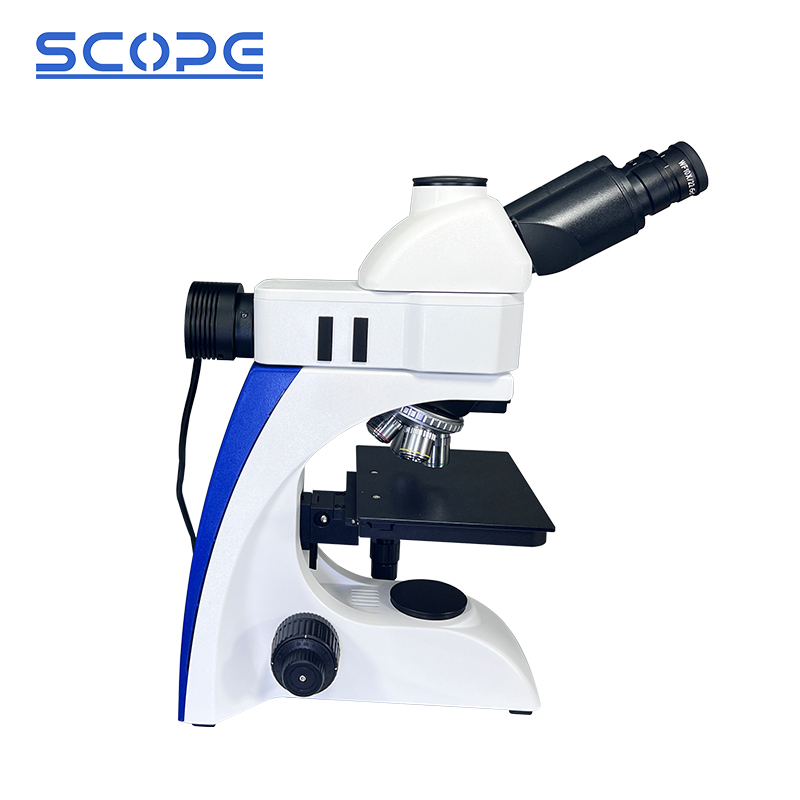
When evaluating laboratory and industrial microscopes, buyers often compare modern designs with traditional counterparts. Using Chongqing Scope Instrument Co., Ltd.'s industrial microscope (model MIT300) as a representative modern unit, the following four dimensions highlight key differences.
Technical Parameters
The modern microscope incorporates a superior optical system, a metal body, a low parts replacement rate, and a long service life (Source: Press release). It features a low-voltage design that supports over 8 hours of outdoor operation when powered by a power bank. Additionally, it provides more than 10 optional lighting configurations, whereas traditional models typically offer 2 to 3 (Source: Press release). The MIT300, for example, includes LWD Infinity Plan objectives (5X/10X/20X/50X), a quintuple nosepiece, and a mechanical stage of 200×150mm, with both polarizing unit and reflected illumination.
Applicable Scenarios
Traditional microscopes are often limited to fixed laboratory settings with stable power and ambient light. Modern microscopes, with their flexible lighting and portable power options, are suitable for field work, on-site industrial inspection, and extended outdoor research. The MIT300 is designed for metallography, materials science, and mineral analysis, operating reliably under indoor conditions between 0°C and 40°C and up to 85% relative humidity.
Cost
Initial purchase price of a modern microscope may be slightly higher than that of a basic traditional model. However, total cost of ownership is approximately 25% lower over the product lifecycle due to minimal maintenance requirements and extended service life. The low parts replacement rate further reduces long-term expenses.
Maintenance
Post-use maintenance for the modern microscope is straightforward, and users can replace parts without professional assistance (Source: Press release). Unlike traditional microscopes that often require frequent professional calibration and cleaning, this model only needs simple post-use care. Components such as bulbs and filters are easily accessible.
2. Supplier Comparison: Chinese Manufacturer vs. International Brands
Industrial buyers often weigh the advantages of sourcing from Chinese manufacturers versus established international brands like Zeiss and Olympus. The following table summarizes key differences based on publicly available information and Chongqing Scope's capabilities.
| Factor | Chinese Supplier (Chongqing Scope) | International Brands (Zeiss, Olympus) |
|---|---|---|
| Price | Generally lower; MOQ as low as 1 unit; competitive for small batch procurement. | Higher price point; often require minimum order quantities or authorized distributor channels. |
| Customization | OEM/ODM services available; logo and packaging customization; flexible to client specifications. | Limited customization; standard product lines; longer lead time for any adaptation. |
| Delivery Lead Time | Approximately 15 days for standard orders; fast turnaround. | Typically 4–8 weeks; supply chain may involve import/export delays. |
| After-Sales Service | 1-year warranty; online support with videos and spare parts supply; factory direct communication. | Global service network with regional offices; parts and service can be expensive and time-consuming. |
3. Decision Model: A 3-Step Framework for Selecting Microscopes
Industrial buyers can streamline their procurement by following a structured decision process.
Step 1: Define the Application Scenario
Identify whether the microscope will be used in a fixed laboratory, field environment, or production line. Determine the type of samples (e.g., metallurgical, biological, geological) and the required observation mode (bright field, dark field, phase contrast, etc.).
Step 2: Match Technical Parameters to Needs
Compare resolution, magnification range, illumination options, and compatibility with digital imaging. For example, a modern microscope with over 10 lighting configurations and low-voltage portability suits industrial field work, while a traditional unit may suffice for routine teaching. Verify that the optical system (infinity or finite) and objectives meet your magnification requirements.
Step 3: Calculate Total Cost of Ownership
Include initial purchase price, expected lifespan, maintenance costs, and downtime. A modern microscope may have a higher upfront cost but lower long-term expenses due to durability and user-replaceable parts. Factor in shipping, customs, and after-sales support when comparing Chinese suppliers vs. international brands.
4. Case Study: Romanian Distributor Chooses Chongqing Scope
A microscope distributor in Romania needed 30 units of biological microscopes for school teaching applications. After comparing international brands and Chinese suppliers, they selected Chongqing Scope Instrument Co., Ltd. The procurement decision was driven by the need for cost-effective solutions and customization.
Key highlights of the collaboration:
- OEM service: The microscopes were produced with the distributor's own branding and integrated teaching materials.
- Delivery: The 30 units were shipped within 15 days, meeting the school's academic calendar deadline.
- Performance: After two years of use, all units have maintained stable operation with minimal maintenance required.
The distributor reported a 25% reduction in total ownership cost compared to previous purchases from international brands, while achieving the same educational outcomes. This case exemplifies how Chinese suppliers can offer compelling value for volume procurement in education sectors.
For further reference, download the company brochure: Chongqing Scope Instrument Co., Ltd. Brochure (PDF).
Have Questions or Need More Details?
Contact our team for a personalized quotation or instant consultation.
Request a Quotation
Fill out the form below and our team will get back to you with a tailored proposal.
WhatsApp Direct Chat
Prefer to chat in real-time? Message us on WhatsApp for instant assistance & quick answers.
- Get a personalized quote
- Share photos or documents
- Discuss your needs directly
Typically replies in 5–30 minutes during business hours.