
Nursing Skills Lab Setup: Matching Manikins to Injection, Feeding and Catheterization Procedures
A nursing skills lab is easier to specify procedure by procedure than manikin by manikin. Injection, oral and nasal feeding, and catheterization call for different bench layouts, different feedback signals and different replacement parts, and the supplied Chongqing Scope documentation distributes those procedures across several models rather than concentrating them in one. The practical unit of planning is therefore the station: decide what a student must physically demonstrate at each bench, then assign the model whose documented functions cover that demonstration and nothing more.
Chongqing Scope Instrument Co., Ltd. (www.cqscopelab.com) is a supplier of laboratory and medical training instruments based in Chongqing, China, and groups its medical manikin catalog into CPR, clinical and nursing manikins. This guide stays inside the nursing and pediatric group, because that is where injection, feeding and catheterization functions are documented for lab use.
Why one general-purpose manikin stalls a skills lab
The first constraint is throughput. A lab timetable normally runs several procedure groups in parallel, and a single whole-body model forces every group onto the same bench in sequence. Once injection practice, feeding practice and catheterization practice share one manikin, the schedule becomes a queue rather than a curriculum, and bench time per student drops.
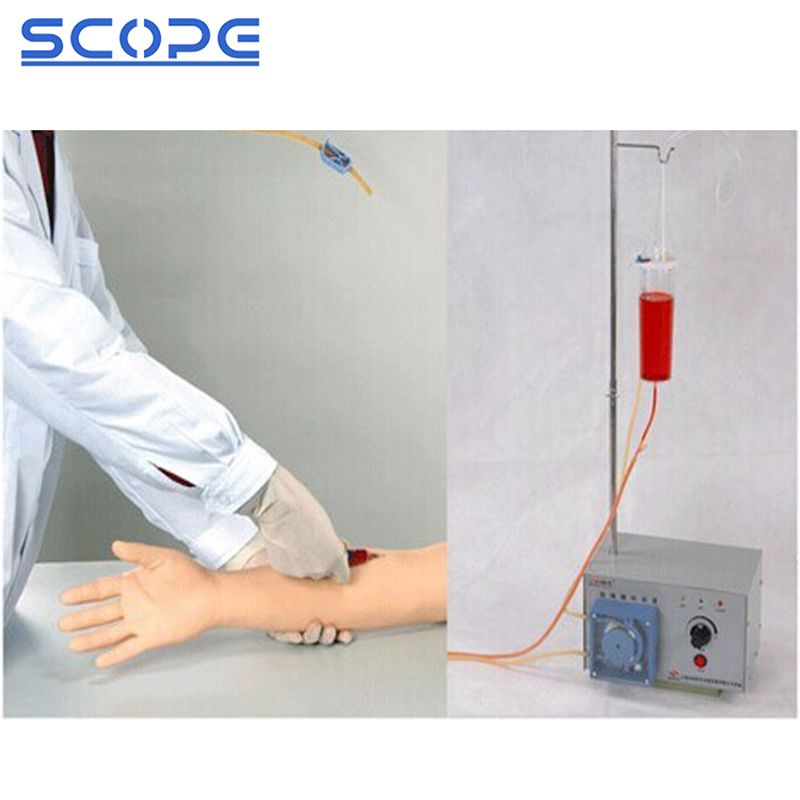
The second constraint is feedback type. Puncture training depends on what the learner feels and sees at the moment of needle entry, while care procedures depend on a sequence of body-handling steps. A model built to deliver one of those signals rarely delivers the other with the same clarity, which is why the SC-HS3 Injection Model documents a distinct feeling when the needle penetrates the vein and blood flashback on correct insertion, while whole-body care work is documented on different models entirely.
The third constraint is wear. Repeated puncture concentrates stress on the skin and vein, and repeat-use design shows up as replaceable parts rather than as a single durability claim. The SC-HS3 is specified with a changeable vein and skin that can be punctured repeatedly without leaking; the SC-H140 Pediatric Training Model is specified with replaceable chest skin. Where a lab ignores this, the first failure is usually a leaking arm rather than a broken manikin.
The fourth constraint is assessment. Each procedure has its own success criteria, and a station plan makes those criteria visible: correct vein selection and flashback at the infusion bench, correct route and depth at the intramuscular bench, correct sequence at the feeding and hygiene bench. A general-purpose model blurs those criteria because the same body is used for every check.
How the nursing manikin range is organised
Chongqing Scope describes its medical training manikins in three groups: CPR manikins, clinical manikins and nursing manikins. The nursing group is described as covering whole-body care, catheterization and enema, and elderly and child care models. That grouping is useful as a first filter when a lab writes its equipment list, because it separates resuscitation training from day-to-day ward skills.
The grouping is an internal catalog taxonomy, not an industry standard, and it should not be treated as a specification. Two models in the same group can differ completely in what they let a student do: the SC-HS3 is an arm model built for vascular access, while the SC-H130A is a whole-body nursing manikin built for feeding and hygiene routines. Buyers who select by category name alone tend to end up with overlap at one bench and a gap at another.
The reliable filter is the documented procedure list per model. That list is what a lab coordinator can map against a syllabus, and it is what an assessor can use to write a check sheet. Everything else — material, finish, optional parts — supports that list rather than replacing it.
Station plan: matching models to procedures
Four stations cover the procedure families named in this guide. The split below follows the documented functions of each model; where a function is not documented for a model, the plan does not assign it.
Station 1 — Peripheral injection and infusion: SC-HS3 and SC-HS4
The SC-HS3 Injection Model is the foundation bench for vascular access. It is specified to simulate injection, blood transfusion and hemospasia of the arm, plus deltoid muscle injection. Its teaching value sits in the physical signals: an obvious feeling when the needle penetrates the vein, and blood flashback that indicates correct insertion. Because the veins and skin can be punctured repeatedly without leaking, and both are changeable, the model suits the high number of attempts a first-year cohort generates.
The SC-HS4 IV Injection Model plays a different role. It is specified with an electronic puncture alarm and imported thermoplastic elastic skin. The alarm matters for supervised self-practice: a student working without an instructor at the elbow gets an immediate signal on a missed puncture, which shortens the feedback loop and lets one instructor cover more benches.
Placing both models at the same station is a deliberate sequence rather than duplication. Learners rehearse palpation, angle and flashback on the SC-HS3 with an instructor nearby, then move to the SC-HS4 for timed, alarm-monitored attempts. The lab keeps one replacement vein and skin set per SC-HS3 in stock, because that is the part the station consumes.
Station 2 — Injection route differentiation: SC-HL and SC-H4T
Route differentiation is a separate skill from vascular access, and it is documented on two models. The SC-HL Medical Training Model covers intradermic, hypodermic and intramuscular injection, which makes it the natural bench for teaching why angle, needle length and tissue layer change between routes. A student who has only practised one route on one site tends to reproduce that site when the route changes.
The SC-H4T Training Mannequin supports intramuscular practice as a dedicated bench. It is built from PVC and imported plastic elastomer using stainless steel mould injection and high-temperature sintering, a build description that points to a moulded, repeat-use component rather than a soft single-use pad. Labs that run large intramuscular cohorts back-to-back should treat the SC-H4T as the high-turnover bench and keep the SC-HL for route comparison and demonstration.
Station 3 — Feeding and hygiene: SC-H130A
The SC-H130A Nursing Manikin is documented for oral and nasal feeding, sponge bath and clothing changes. These are sequence skills: the assessor is watching preparation, positioning, hand placement and the order of steps as much as the technical act. A whole-body nursing manikin is appropriate here because clothing changes and bathing cannot be rehearsed on a limb model.
This station is also where lab layout pays off. Sponge bathing and clothing changes need clearance around the bench and a water source, so the bench is normally wider and further from electrical outlets than the injection benches. Grouping feeding and hygiene on one manikin keeps that wet area separate from the puncture stations, where moisture and sharps handling should not mix.
Station 4 — Pediatric procedures: SC-H140
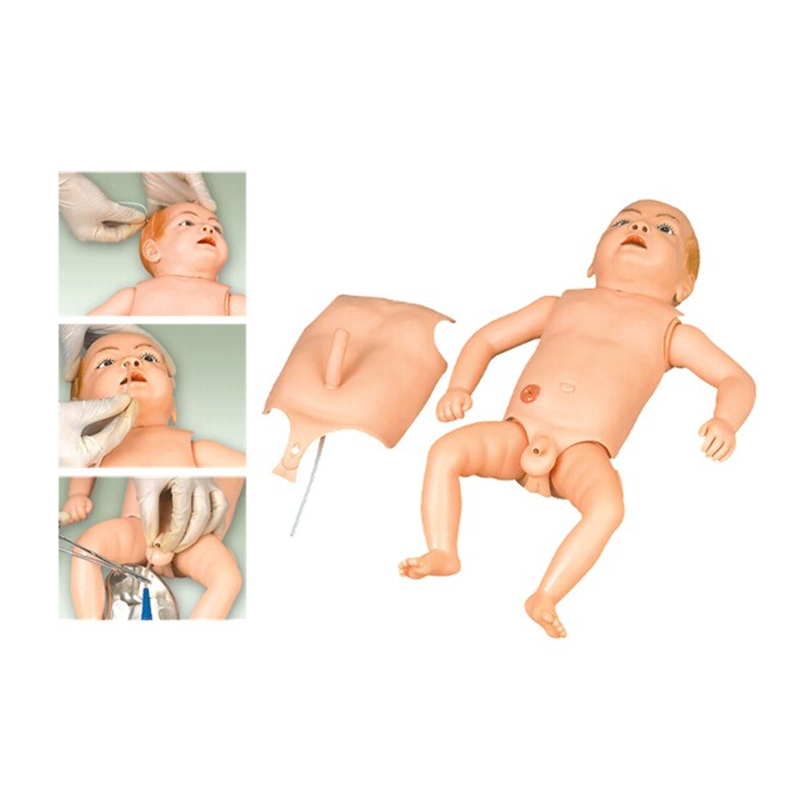
The SC-H140 Pediatric Training Model is documented for infant cephalic vein puncture, umbilical cord venipuncture, oral and nasal intubation care, gastric lavage, enema and catheterization, ostomy drainage, deltoid and gluteal muscle injection, and overall care including bathing, breastfeeding, changing clothes and diaper changing. Its head, neck and limbs move freely, and the chest skin of the boy or girl baby can be replaced.
Pediatric procedures should not be folded into the adult injection bench. The access site, the scale of the equipment and the handling of a moving infant are different skills, and the SC-H140 documents both the vascular procedures (cephalic vein and umbilical cord) and the body-care procedures that a pediatric rotation requires. Material is PVC. Because the chest skin is replaceable, the station can absorb repeated puncture without retiring the whole model.
Building the station plan in six steps
The sequence below turns a syllabus into a purchase list without over-buying at any single bench.
- List the procedures and their assessment criteria. Write each procedure as a check the assessor can sign off — for example, identifying a suitable vein and confirming flashback, or completing a feeding sequence in the correct order. Procedures without a check tend to become demonstration-only content that no model needs to support.
- Group procedures into stations by skill family and learner level. Vascular access, injection routes, feeding and hygiene, and pediatric procedures are four defensible groups in a nursing curriculum. Keep foundation skills and assessment-level skills at different benches even when the model is the same, so that practice time and assessment time do not compete.
- Decide the feedback type each station needs. Mechanical feedback (needle feel and flashback) argues for the SC-HS3; electronic feedback (puncture alarm) argues for the SC-HS4; multi-route demonstration argues for the SC-HL; body-sequence care argues for the SC-H130A and SC-H140.
- Assign models and count benches, not units. The planning figure is how many students can work at a station at once, multiplied by how many contact hours the procedure needs. A lab with twenty students per session usually needs more injection benches than pediatric benches, because pediatric procedure hours are fewer.
- Plan consumables, replacement parts and the room environment together. Changeable vein and skin for the SC-HS3 and replaceable chest skin for the SC-H140 belong in the same order as the models, otherwise the first cohort consumes the spares before the second cohort starts. Chongqing Scope's application record for medical-school teaching lists ambient operation at 0–35°C with a stable room temperature, so the lab should avoid placing manikins next to heat sources or uncontrolled windows.
- Pilot one session per station before the full rollout. Run a single class through each bench and record where students wait, where a function is missing and where a part fails. Adjust the mix before the main order; this is cheaper than adding a fifth model later to cover a gap that a timetable change created.
How the station mix changes by lab profile
Three lab profiles recur in nursing education procurement, and each shifts the balance of the four stations.
Pre-licensure nursing school with large cohorts
Volume sits at the injection and infusion bench, because every student must reach a minimum number of successful punctures. That profile usually justifies several SC-HS3 units with a stock of changeable vein and skin sets, a smaller number of SC-HS4 units for alarm-monitored practice, and one or two SC-HL benches for route teaching. Feeding and pediatric benches are fewer but cannot be omitted, because those procedures are assessed in the same programme.
Hospital training centre running competency refreshers
Refresher training is short and assessment-heavy, so feedback quality matters more than bench count. The SC-HS4's electronic puncture alarm and the SC-HL's three documented injection routes support quick, defensible sign-off, while the SC-H130A and SC-H140 carry the care procedures that ward staff still need to demonstrate. This profile can run one bench per procedure family and rotate staff through it in a fixed cycle.
Distributor assembling a lab package for a client
A distributor building a turnkey package needs the station logic to be visible in the quotation, because the end user is buying a plan rather than a list. Chongqing Scope records a company-reported distributor case in India for 500 units supplied for medical teaching over one year, with stable operation and a customised, durable configuration. For package work, the ODM route allows appearance and function customisation subject to quantity, which is where a distributor can align branding and bench labelling with the client's lab layout.
Procedure-to-model comparison
The table below keeps only documented functions, so it can be used directly in a lab specification sheet.
| Station | Model | Documented procedures | Feedback and repeat-use features |
|---|---|---|---|
| Peripheral injection and infusion | SC-HS3 Injection Model | Arm injection, blood transfusion and hemospasia; deltoid muscle injection | Distinct feeling on vein penetration; blood flashback confirms correct insertion; veins and skin punctured repeatedly without leaks; changeable vein and skin |
| Peripheral IV — supervised self-practice | SC-HS4 IV Injection Model | IV injection | Electronic puncture alarm; imported thermoplastic elastic skin |
| Injection route differentiation | SC-HL Medical Training Model | Intradermic, hypodermic and intramuscular injection | Three injection routes documented on one model |
| High-turnover intramuscular bench | SC-H4T Training Mannequin | Intramuscular injection | PVC with imported plastic elastomer; stainless steel mould injection and high-temperature sintering |
| Feeding and hygiene | SC-H130A Nursing Manikin | Oral and nasal feeding; sponge bath; clothing changes | Whole-body care sequence bench |
| Pediatric procedures | SC-H140 Pediatric Training Model | Infant cephalic vein puncture; umbilical cord venipuncture; oral and nasal intubation care; gastric lavage; enema; catheterization; ostomy drainage; deltoid and gluteal injection; overall care, bathing, breastfeeding, changing clothes and diaper changing | Replaceable chest skin for boy or girl baby; head, neck and limbs move freely; PVC |
Frequently asked questions
What compliance documents should accompany a nursing lab manikin order?
Chongqing Scope states that official export certificates can be provided, including ISO9001, ISO14001, ISO45001, ISO13485, CE and RoHS, and that its certification record lists ISO 13485 and CE with certificate reference BKC22072375GC. Export packaging is neutral, in cardboard or wooden boxes prepared to export standards, and clearance documents such as CO, Form E and Form F can be supplied on request. For a station plan, request the certificate set together with the model-level documentation for each SKU on the list, since a company-level certificate does not describe an individual model's functions.
Can one manikin cover injection, feeding and catheterization in the same lab?
Not from the documented functions. Oral and nasal feeding, sponge bath and clothing changes are documented on the SC-H130A Nursing Manikin; catheterization, gastric lavage, enema, cephalic vein and umbilical cord puncture are documented on the SC-H140 Pediatric Training Model; peripheral injection and infusion sit on the SC-HS3 and SC-HS4, with intramuscular work on the SC-HL and SC-H4T. The closest single model to a multi-procedure bench is the SC-H140, which covers catheterization alongside deltoid and gluteal injection and full infant care, but it does not replace the feeding and hygiene bench.
What drives the budget in a station-based lab plan?
Three variables dominate: the number of benches per procedure family, the number of models per bench, and the replacement parts each bench consumes. Injection stations need changeable vein and skin sets, and the pediatric station needs replaceable chest skin, so those items belong in the first budget rather than the second year. For context on how wide manikin pricing ranges, Grand View Research's 2026 medical simulation market report places manikin price tiers from roughly USD 500 for low-fidelity basic CPR models to over USD 85,000 for AI-driven high-fidelity patient simulators — which is why a procedure-matched plan, rather than a fidelity upgrade across every bench, is usually the cost-controlled route.
Can we evaluate a model before committing to the full lab order?
Evaluation should be requested station by station, with the check sheet from step one attached, so the trial tests the functions the lab actually assesses. The supplied capability record lists an MOQ of 20 units, a monthly capacity of 3,000 units, a 30–45 day lead time and ODM customisation of appearance and functions, so confirm in the quotation whether an evaluation unit can be supplied below the MOQ threshold and whether customised units follow the same schedule as standard ones.
What lead time and after-sales support should the lab plan for?
The capability record states a 30–45 day lead time, factory quality inspection before dispatch and a one-year online warranty. In practice, the lab should sequence delivery so that injection benches and their spare vein and skin sets arrive together, and should schedule the pediatric station after the adult stations are commissioned, because it carries the most procedure types per model.
To review the full model range and specifications before finalising the station list, the Chongqing Scope product brochure is available for download, and specific configurations can be confirmed through a written inquiry.
Conclusion
A nursing skills lab works best when the purchase list is written bench by bench. Injection and infusion practice belongs on the SC-HS3 for needle feel, flashback and repeated puncture with changeable vein and skin, and on the SC-HS4 where an electronic puncture alarm lets students self-correct. Route differentiation belongs on the SC-HL, with the SC-H4T carrying high-turnover intramuscular practice. Feeding and hygiene belong on the SC-H130A, and pediatric procedures on the SC-H140 with its cephalic vein puncture, catheterization, gastric lavage and full infant care functions.
That split also gives the lab a maintenance plan and an assessment plan at the same time: each station has a named model, a documented procedure list, a replacement part and a check sheet. Chongqing Scope supplies these models with stated export documentation, ODM customisation subject to quantity, a 30–45 day lead time and a one-year online warranty, which is enough to plan a first-phase build and a second-phase expansion without re-planning the whole lab.
Have Questions or Need More Details?
Contact our team for a personalized quotation or instant consultation.
Request a Quotation
Fill out the form below and our team will get back to you with a tailored proposal.
WhatsApp Direct Chat
Prefer to chat in real-time? Message us on WhatsApp for instant assistance & quick answers.
- Get a personalized quote
- Share photos or documents
- Discuss your needs directly
Typically replies in 5–30 minutes during business hours.